The Great Mango Wave: Tracking the 2027 Harvest Across 3,000 Kilometers
In the Indian subcontinent and across global mango-growing regions, summer is not merely a change in weather—it is a cultural and culinary awakening marked by the arrival of the undisputed King of Fruits (Mangifera indica). Yet, among casual shoppers, one persistent misconception causes endless disappointment year after year: the belief that "mango season" is a single, static summer window.
In reality, the mango season is a 3,000-kilometer rolling geographic wave. It awakens in the sun-drenched, humid coastal soils of southern India in late February, climbs northward across the Deccan Plateau and the Konkan coast in April and May, surges through the fertile Indo-Gangetic alluvial plains of Bengal, Bihar, and Uttar Pradesh in June and July, and culminates in late August and September with magnificent late-bearing varieties and prized international heirlooms.
[!TIP]
The Connoisseur's Golden Rule: Eat by the calendar and terroir, never by brand name alone. Buying a celebrated Alphonso in late July means purchasing cold-storage fruit that has lost its volatile aroma, just as buying a Chausa in April means buying chemically forced, unpalatable pulp. True mango appreciation requires aligning your palate with the natural ripening clock.
The upcoming 2027 mango season promises to be one of the most intriguing harvest cycles in recent memory. Influenced by the timing of late 2026 monsoon withdrawals and winter chill hours across major fruit belts, the 2027 season will exhibit clear staggered windows of peak sweetness (Brix levels reaching 20° to 24°).
Whether you are seeking the dense, saffron-buttery richness of a GI-tagged Ratnagiri Hapus, the floral perfume of a Lucknow Dasheri, the syrupy indulgence of an August Chausa, or the melt-in-the-mouth aristocracy of an Imam Pasand, this guide provides your definitive roadmap to sourcing, identifying, and enjoying the finest mangoes of 2027.
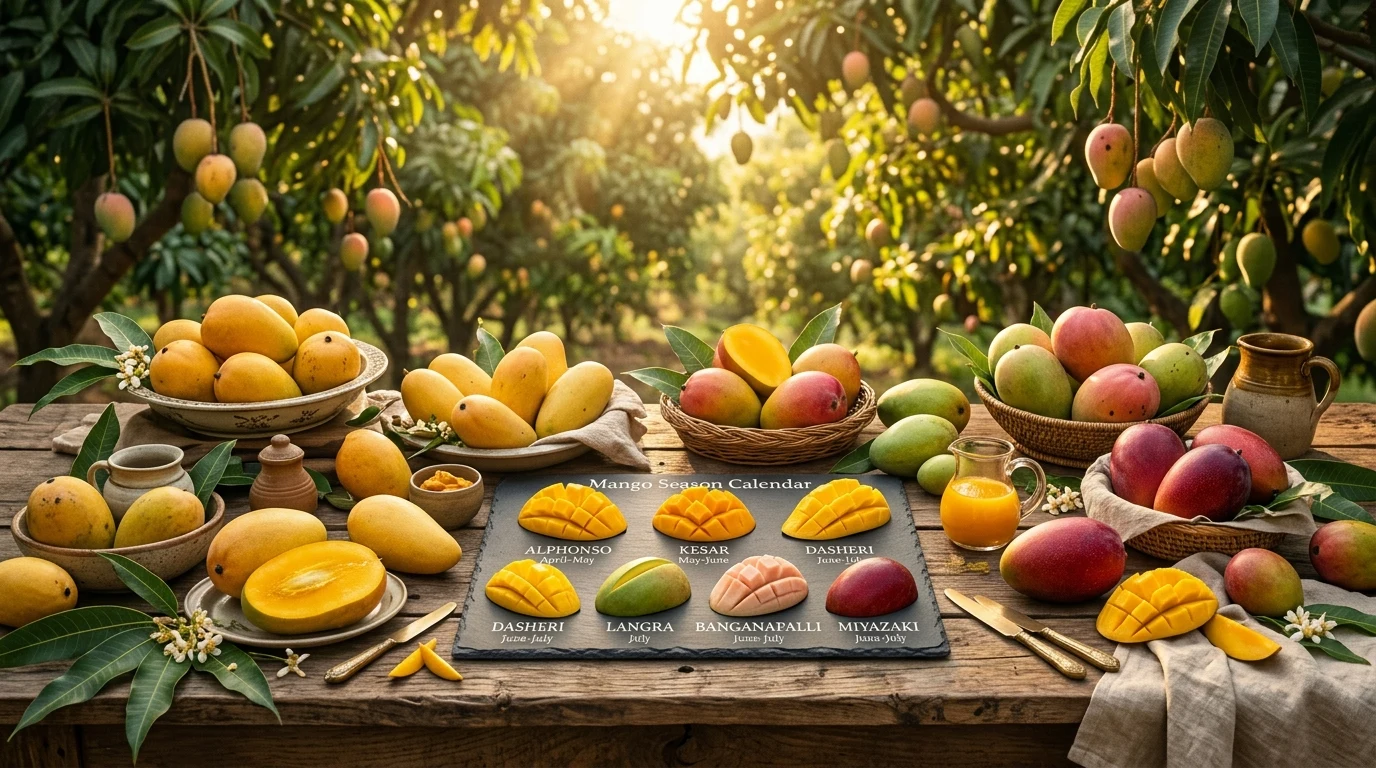
Interactive Visual Master Calendar 2027: Month-by-Month Varieties & Harvest Windows
To help you navigate the 2027 season with precision, explore our month-by-month visual harvest calendar below. Each monthly card highlights the seasonal harvest phase, peak sweetness ratings, terroir notes, and recommended culinary uses.
🌸 March 2027: The Early Coastal Awakening
Early Harvest • High Acidity
Tender, fiberless golden pulp with a balanced sweet-acid finish. Goa's most guarded early treasure.
King of wild pickling tender mangoes. Extremely pungent camphor aroma that keeps pickles crunchy for years.
Small cluster mango with sweet-tangy liquid juice, traditionally boiled into authentic Kerala Manga Pulissery.
Juicy, spicy-sweet flesh with vibrant acidity. Traditionally blended with Alphonso to create the ultimate Aamras.
☀️ April 2027: The Royal Konkan & Deccan Influx
Commercial Launch • High Demand
Volcanic laterite soil magic. Velvety, non-fibrous saffron pulp with intense floral terpene bouquet.
Massive, obliquely oval golden fruit with clean, firm, fiberless pulp and dependable mild honey sweetness.
Stunning scarlet-crimson blush over golden yellow. Pleasantly sweet-tangy profile ideal for fruit platters.
Appealing orange-yellow hue when ripe with mild, honeyed pulp free of irritating fibers.
🏆 May 2027: The Golden Super-Peak Confluence
National Super-Peak • Best Value
The Saffron Queen. Intense amber pulp, phenomenal sugar concentration, and rich honey fragrance. Unmatched for Aamras.
The 'Alphonso of Karnataka'. Pale golden thin skin, luscious creamy texture, and great sweetness at honest pricing.
The Royal Connoisseur. Velvety, coconut-cream flesh with paper-thin seed. Widely considered superior to Alphonso.
Stays greenish-yellow when ripe. Silky, 100% fiberless golden flesh with a soothing floral aroma that defines Bengal summer.
Creamy yellow jacket with an intoxicating floral perfume that fills entire rooms. Delicate sweetness.
Classic sucking mangoes. Loaded with sweet, fragrant, juicy nectar meant to be kneaded and sucked directly.
👑 June 2027: The Northern & Eastern Empire
Alluvial Harvest • Complex Spices
Pride of Awadh. Elongated silhouette, thin seed, melting fiberless texture, and unforgettable perfumed sweetness.
Stays stubbornly olive-green when ripe. Deep yellow flesh with an electrifying balance of intense sweetness and spicy tang.
Deep mahogany-orange pulp with the highest carotenoid (Vitamin A) content of any Indian mango. Syrupy sweetness.
Large, elongated fruits boasting delightful notes of citrus, melon, and rich honey. Exceptional table keeping quality.
Coastal Karnataka heirloom. Prominent aroma, thin peel, soft melting pulp, and remarkable culinary versatility.
Appealing golden-orange skin with non-fibrous, sweet, delicate pulp that does not easily crack during rainy weather.
🍯 July 2027: The Luscious Late-Harvest Royalty
Late Monsoon • Highest Brix (22°–26°)
The sweetest mango on earth. Nectar-like golden juice with an opulent honey-caramel finish that coats the mouth.
The gentle giant. Fruits routinely weigh 700g to 1.5kg. Plentiful, juicy, mildly sweet pulp for late-summer feasting.
'Special Rose'. Features a blush of pink and a distinct floral rose-water fragrance suffusing dense golden flesh.
Bright apricot-yellow when ripe. Renowned for outstanding shelf life and dependability when early varieties vanish.
Huge, round fruit with thick skin and rich, custardy, decadent flesh that is traditionally scooped with a spoon.
🍂 August & September 2027: The Grand Finale & Global Imports
Autumn Finale • Exotic Imports
Iconic curved beak shape. Crisp, tangy flesh that forms the backbone of India's commercial mango pulp industry.
Striking red-purple blush on yellow skin with exceptional shelf life and sweet, fiberless table quality.
Ruby-red skin with zero acidity and velvety, melting flesh. The world's most expensive luxury gifting fruit.
Silky, elongated golden mango with tender, floral flesh and no fiber. The quintessential mango sticky rice companion.
Heavyweight cultivars remaining green outside while providing rich, sweet, fiberless interior flesh into autumn.
State-by-State / Regional Sourcing Guide: All 14 Mango Belts
To make your 2027 procurement effortless, use this regional sourcing roadmap to source mangoes directly from their native terroir and official APMC markets.
Regional Mango Belts Overview
Detailed State-by-State Procurement Guide
# 1. Maharashtra
- Peak Season Window: April – June
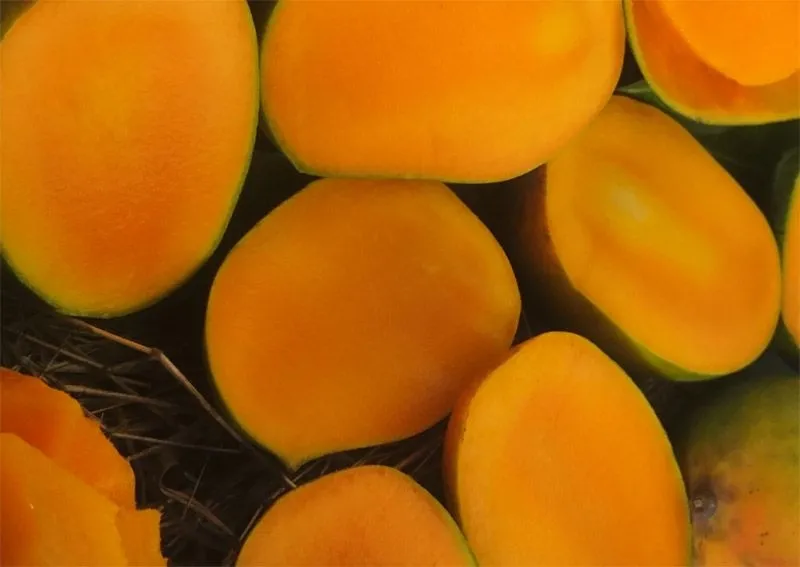
- Signature Cultivars: Alphonso / Hapus (GI Tag Ratnagiri & Devgad), Pairi, Rajapuri, Marathwada Kesar.
- Terroir Insight: The laterite red soil and warm coastal sea breezes of the Konkan strip impart Alphonso with its trademark orange-saffron flesh and complex terpene aroma.
- Best Mandis to Buy: Vashi APMC Fruit Market (Navi Mumbai), Ratnagiri Mandi, Devgad Farmer Cooperatives, Gultekdi APMC (Pune).
# 2. Gujarat
- Peak Season Window: May – June
- Signature Cultivars: Gir Kesar (GI Tag Talala Gir), Valsad Hapus, Rajapuri, Vanraj, Jamadar.
- Terroir Insight: The lime-rich soils and dry, intense heat of Saurashtra concentrate sugars up to 24° Brix, making Gir Kesar the premier choice for Gujarati and Rajasthani Aamras.
- Best Mandis to Buy: Talala Gir Marketing Yard (Junagadh), Sardar Patel APMC (Ahmedabad), Surat Wholesale Fruit Market.
# 3. Andhra Pradesh
- Peak Season Window: April – June
- Signature Cultivars: Banganapalli / Benishan (GI Tag Kurnool), Suvarnarekha, Pedda & Chinna Rasalu, Panchadara Kalasa, Cheruku Rasalu.
- Terroir Insight: The hot, semi-arid Rayalaseema tracts produce gigantic, fiberless table mangoes, while the Krishna-Godavari delta yields succulent juice mangoes.
- Best Mandis to Buy: Nunna Mango Market (Vijayawada — one of Asia's largest mango yards), Tirupati APMC, Chittoor Market.
# 4. Telangana
- Peak Season Window: April – June
- Signature Cultivars: Himayat / Imam Pasand, Banganapalli, Collector (Totapuri), Khammam Dasheri.
- Terroir Insight: Favored by the Nizams of Hyderabad, Himayat from Jagtial and Sangareddy boasts a velvety texture that melts on the palate like clotted coconut cream.
- Best Mandis to Buy: Batasingaram Fruit Market (Hyderabad), Gaddiannaram, Jagtial Mango Yard.
# 5. Karnataka
- Peak Season Window: April – July
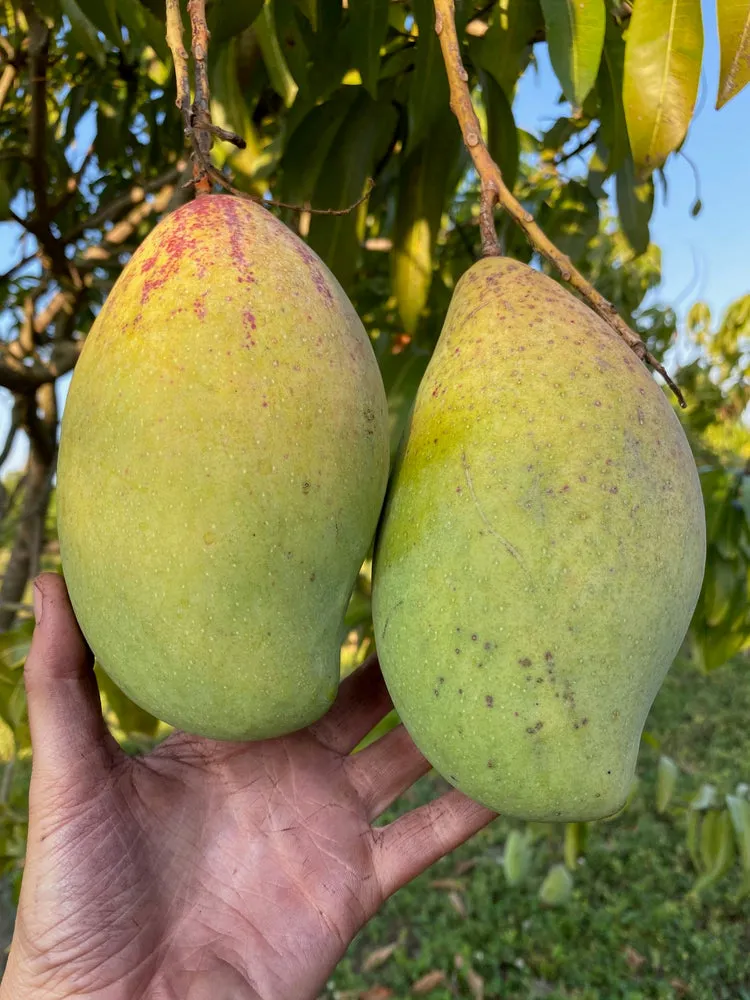
- Signature Cultivars: Badami (Dharwad), Kari-Ishad (GI Tag Ankola), Appemidi (GI Tag Western Ghats), Raspuri, Malgova, Totapuri.
- Terroir Insight: Karnataka spans diverse agro-climatic zones: coastal Uttara Kannada yields aromatic wild Appemidi, while the red loams of Kolar harvest millions of tons of Totapuri.
- Best Mandis to Buy: Annual Lalbagh Mango Mela (Bengaluru), Srinivaspur APMC (Kolar — Asia's Totapuri capital), Dharwad APMC.
# 6. Tamil Nadu
- Peak Season Window: May – July
- Signature Cultivars: Salem Gundu (Alphonso), Imam Pasand, Salem Malgova, Nadusalai, Sindoori / Senthoora, Neelum.
- Terroir Insight: The Salem mango belt at the foothills of the Shevaroy Hills produces round, firm, fragrant varieties that hold up exceptionally well for long-distance transport.
- Best Mandis to Buy: Salem Mango Market, Koyambedu Wholesale Fruit Complex (Chennai), Dharmapuri Mandi.
# 7. Kerala
- Peak Season Window: March – May (India's Earliest Harvest)
- Signature Cultivars: Kuttiattoor Mango (GI Tag Kannur), Chandrakaran, Muvandan, Priyoor.
- Terroir Insight: Palakkad's Muthalamada village is celebrated as the "Mango Village of India." Shielded by the Western Ghats, it harvests India's very first commercial mangoes as early as late January and February.
- Best Mandis to Buy: Muthalamada Mango Village (Palakkad), Kozhikode Palayam Market, Kannur Central Market.
# 8. Goa
- Peak Season Window: March – June
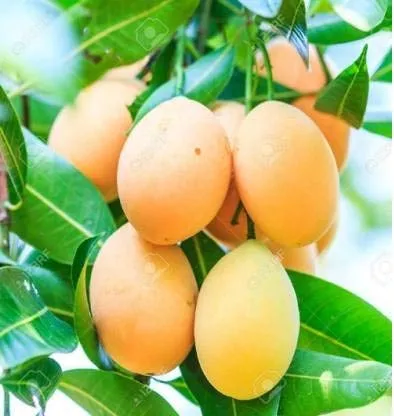
- Signature Cultivars: Mankurad / Mancurado (GI Tag), Fernandina, Xavier, Monserrate, Hilario.
- Terroir Insight: Maritime humidity and laterite coastal cliffs give Mankurad its tender, fiberless pulp and exquisite balance of sweetness and light acidity.
- Best Mandis to Buy: Mapusa Friday Market, Panaji Municipal Market, Margao Gandhi Market.
# 9. Uttar Pradesh
- Peak Season Window: June – August
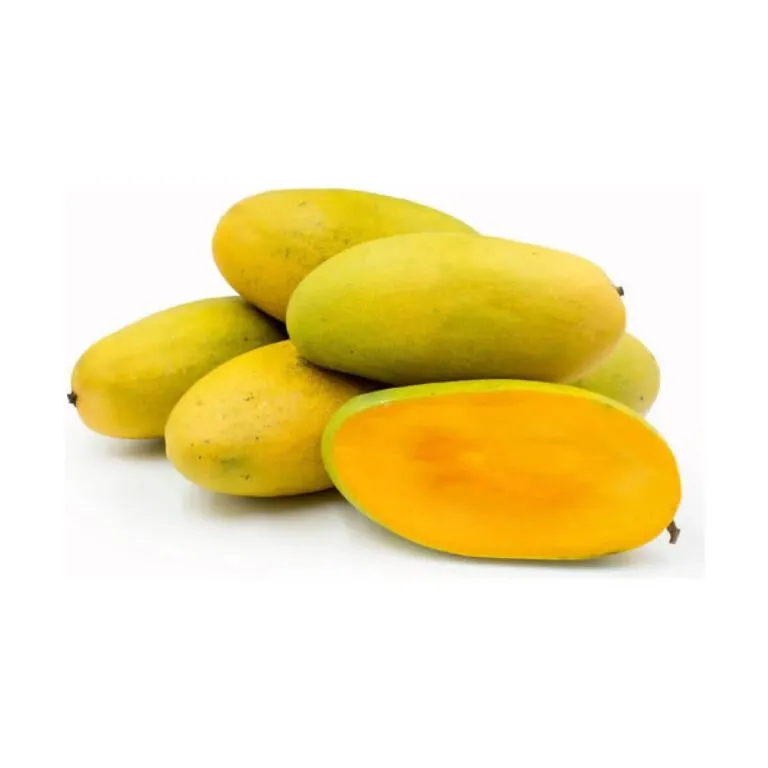
- Signature Cultivars: Malihabad Dasheri (GI Tag Lucknow), Banarasi Langra (GI Tag Varanasi), Sandila Chausa, Rataul (GI Tag Baghpat), Bombay Green.
- Terroir Insight: The deep, alluvial deposits of the Indo-Gangetic plain create unmatched aroma and depth. Malihabad alone features over 300 named heritage mango varieties.
- Best Mandis to Buy: Malihabad Mango Belt (Lucknow), Varanasi Mandi, Saharanpur Wholesale Fruit Yard.
# 10. Bihar
- Peak Season Window: May – July
- Signature Cultivars: Bhagalpur Zardalu (GI Tag), Digha Malda (Langra of Patna), Gulabkhas, Sukul, Bathua.
- Terroir Insight: The silt-rich banks of the Ganges around Bhagalpur give Zardalu an intoxicating floral perfume that earned it royal patronage and official diplomatic gift status.
- Best Mandis to Buy: Bhagalpur Mandi, Digha Ghat Market (Patna), Muzaffarpur Bazaar.
# 11. West Bengal
- Peak Season Window: May – July
- Signature Cultivars: Himsagar (GI Tag Nadia & Murshidabad), Malda Fazli (GI Tag), Laxman Bhog (GI Tag Malda), Kishen Bhog, Ashwina.
- Terroir Insight: Murshidabad's historical Nawabi orchards nurtured prized dessert mangoes with zero fiber and high sugar content, ideal for classic Bengali mishti and aam kheer.
- Best Mandis to Buy: English Bazar (Malda), Krishnanagar Market (Nadia), Mechua Fruit Mandi (Kolkata).
# 12. Odisha
- Peak Season Window: May – July
- Signature Cultivars: Amrapali, Banganapalli, Sundari (Suvarnarekha), Dasheri, Totapuri.
- Terroir Insight: The red lateritic soils of Mayurbhanj and Dhenkanal have turned Odisha into a major modern producer of high-density Amrapali orchards with deep orange pulp.
- Best Mandis to Buy: Unit-1 Haat (Bhubaneswar), Dhenkanal APMC, Rayagada Fruit Hub.
# 13. Madhya Pradesh
- Peak Season Window: May – July
- Signature Cultivars: Rewa Sunderja (GI Tag), Noor Jahan (Alirajpur — legendary giant mango reaching up to 4 kg each!), Langra, Dasheri.
- Terroir Insight: The Vindhyan plateau in Rewa gives Sunderja a delicate fiber-free sweetness with low natural sugar content, making it uniquely prized by wellness enthusiasts.
- Best Mandis to Buy: Rewa Fruit Mandi, Katthiwada Orchard Gate (Alirajpur), Choithram Mandi (Indore).
# 14. Punjab & Haryana
- Peak Season Window: July – August
- Signature Cultivars: Chausa, Langra, Dasheri, Malda.
- Terroir Insight: In the foothills of the Shivalik range around Hoshiarpur and Yamunanagar, high summer sunshine and canal irrigation extend the mango calendar well into August.
- Best Mandis to Buy: Hoshiarpur Fruit Yard, Yamunanagar Mandi, Sector 26 APMC (Chandigarh).
Master 2027 Mango Buyer's Comparison Matrix
| Variety | Terroir / Origin | 2027 Harvest Window | Peak Quality Window | Sweetness (Brix) | Fiber Content | Best Culinary Use | Head-to-Head Comparison |
|---|---|---|---|---|---|---|---|
| Alphonso | Ratnagiri / Devgad | April 5 – June 10 | May 1 – May 25 | 19°–22° | Zero (Buttery) | Fresh table, Aamras | Alphonso vs. Kesar |
| Kesar | Gir, Gujarat | April 20 – June 25 | May 15 – June 10 | 20°–24° | Negligible | Pure Aamras, Kulfi | Kesar vs. Banganapalli |
| Banganapalli | Kurnool, AP | April 10 – June 30 | May 5 – June 5 | 16°–19° | Low | Everyday table fruit | Rumani vs. Banganapalli |
| Badami | Dharwad, Karnataka | April 25 – June 20 | May 10 – June 5 | 18°–21° | Zero | Affordable table delicacy | Alphonso vs. Badami |
| Dasheri | Malihabad, UP | May 25 – July 20 | June 10 – July 5 | 18°–21° | Completely fiberless | Fresh slicing, desserts | Langra vs. Dasheri |
| Langra | Varanasi / Malda | June 5 – July 25 | June 20 – July 15 | 19°–22° | Light, melting fiber | Connoisseur degustation | Langra vs. Chausa |
| Chausa | Hardoi / Punjab | June 25 – August 25 | July 15 – August 10 | 22°–26° | Low | Sucking, syrupy pulp | Gulabkhas vs. Chausa |
| Himsagar | Murshidabad, WB | May 10 – June 20 | May 20 – June 10 | 20°–23° | Zero (Silky) | Aam kheer, table fruit | Himsagar vs. Alphonso |
| Imam Pasand | AP & Tamil Nadu | May 5 – June 20 | May 15 – June 5 | 20°–23° | Melting cream | Royal luxury dessert | Imam Pasand vs. Alphonso |
| Mankurad | Coastal Goa | March 20 – May 15 | April 10 – May 5 | 18°–21° | Tender, low | Goan morning table | Mankurad vs. Alphonso |
| Amrapali | IARI / Pan-India | June 10 – July 20 | June 20 – July 10 | 20°–23° | Fiberless | Purees, smoothies | Amrapali vs. Mallika |
| Mallika | IARI / Pan-India | June 5 – July 25 | June 15 – July 10 | 19°–22° | Low | Slicing, baking | Amrapali vs. Mallika |
| Malgova | Salem, Tamil Nadu | May 15 – July 30 | June 10 – July 10 | 18°–20° | Low-medium | Custardy spoon dessert | Alphonso vs. Malgova |
| Neelum | Southern India | June 15 – August 25 | July 1 – July 25 | 17°–19° | Slight fiber | Late-season table fruit | Neelum vs. Alphonso |
| Totapuri | Karnataka / AP | June 1 – August 30 | June 20 – July 20 | 13°–16° | Crisp & fibrous | Salads, pickles, pulps | Totapuri vs. Alphonso |
| Fazli | Malda / Bihar | July 1 – August 30 | July 15 – August 10 | 16°–18° | Medium | Jams, large family feast | Himsagar vs. Langra |
| Rewa Sunderja | Rewa, MP | May 20 – July 10 | June 5 – June 25 | 17°–19° | Zero (Delicate) | Low-sugar dessert table | Alphonso vs. Kesar |
| Kari-Ishad | Ankola, Karnataka | May 25 – July 5 | June 5 – June 25 | 18°–21° | Melting, soft | Coastal breakfast table | Alphonso vs. Badami |
| Miyazaki | Japan / Specialty | May 15 – July 20 | June 1 – June 30 | 15°–18° | Zero (Melts) | Ultra-luxury gifting | Miyazaki vs. Alphonso |
| Nam Doc Mai | Thailand | April 15 – July 15 | May 1 – May 30 | 18°–21° | Zero | Mango sticky rice | Nam Doc Mai vs. Ataulfo |
The Biennial Bearing Mystery: 2027 Crop Yield & Price Forecast
Ever wonder why mangoes are abundant and affordable one summer, only to become scarce and expensive the following year? The answer lies in a biological phenomenon known as Alternate Bearing (Biennial Bearing).
Most heritage Indian cultivars—including Alphonso, Langra, and Dasheri—naturally alternate between an "On-Year" (a season of explosive flowering and heavy fruit yield) and an "Off-Year" (a season where the tree channels its energy into vegetative branch growth, producing 30% to 50% less fruit).
Year N (On-Year):    Massive Bloom -> Bumper Harvest -> Exhausted Carbohydrate Reserves -> Low Prices
Year N+1 (Off-Year): Vegetative Flush -> Sparse Bloom -> Reduced Yield -> High Scarcity Prices
What to Expect in 2027:
- Flowering Triggers (Dec 2026 – Jan 2027): Mango floral differentiation requires a crisp, dry winter with night temperatures dipping below 15°C. Unseasonal winter rain or high humidity causes trees to produce vegetative leaves instead of flower panicles (inflorescences).
- The Price Wave:
- Phase 1 (March 15 – April 15): Early hype and export competition keep prices high (often ₹1,200 to ₹2,500 per dozen for prime Alphonso).
- Phase 2 (May 1 – June 10): The Golden Value Window. As Karnataka Badami, Gujarat Kesar, and Andhra Banganapalli arrive in volume, prices stabilize to their seasonal lows (often ₹400 to ₹800 per dozen).
- Phase 3 (Late June – August): Northern varieties like Dasheri and Langra offer exceptional value per kilogram across northern mandis.
Consumer Food Guard: 4 Tests to Avoid Artificially Ripened Mangoes
To maximize profits during early season scarcity, unscrupulous traders often harvest mature green mangoes prematurely and treat them with illegal industrial calcium carbide (CaC2), commonly known as masala.
When calcium carbide comes into contact with moisture in the air or fruit, it generates acetylene gas, which artificially triggers external color breakdown. However, calcium carbide contains toxic impurities of arsenic hydride (arsine) and phosphorus hydride (phosphine), which pose serious health hazards including nausea, headache, dizziness, mouth ulcers, and chronic gastrointestinal distress.
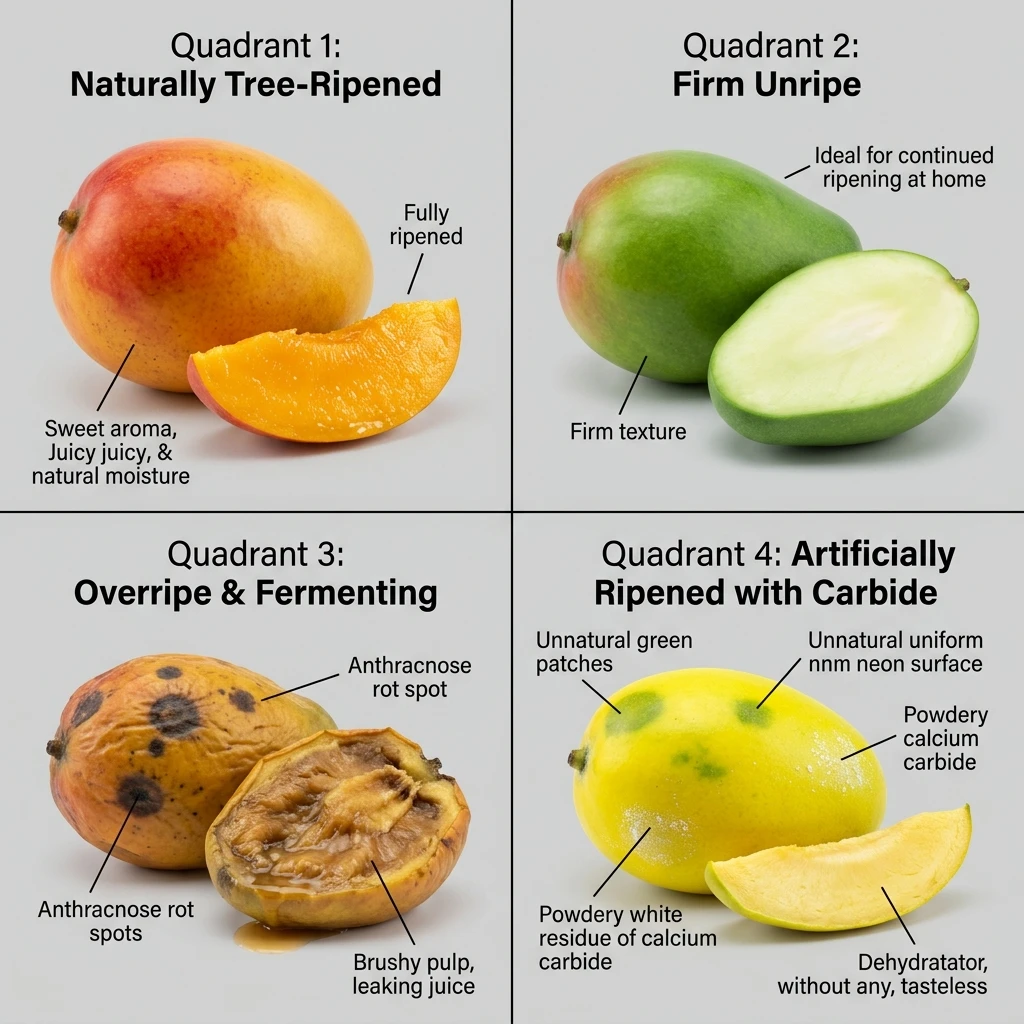
Fortunately, nature leaves unmistakable clues. Use these 4 diagnostic field tests before purchasing:
1. The Water Bucket Float Test
- How to Perform: Fill a bucket with clean room-temperature water and submerge the mangoes.
- Naturally Ripened Fruit: Dense, sugar-rich, and properly mature mangoes will sink to the bottom.
- Carbide-Treated Fruit: Prematurely harvested, chemically gassed mangoes are lower in specific gravity and float on the surface.
2. The Color Uniformity Inspection
- Naturally Ripened: Matures from the inside out. Displays subtle, organic color gradients—soft yellow with green shoulders or gentle red blushes.
- Carbide-Treated: Displays an unnatural, bright canary-yellow or neon glow across the skin, while the stem cavity often remains unnaturally pale or green.
3. The Stem-End Aroma Sniff Test
- Naturally Ripened: Hold the stem cavity to your nose. A naturally ripe mango releases an intoxicating, rich terpene and honey fragrance even before cutting.
- Carbide-Treated: Completely devoid of aroma, or worse, emits a faint sulfur, petroleum, or garlic chemical odor.
4. Juice & Pulp Texture Upon Slicing
- Naturally Ripened: Slicing reveals uniform deep yellow or saffron pulp from the skin all the way to the seed, accompanied by abundant, sweet natural juice.
- Carbide-Treated: Cutting reveals a bright yellow exterior layer with pale, hard, sour, or pithy white flesh near the stone. The fruit lacks juicy sweetness.
[!IMPORTANT]
If you suspect chemical contamination, thoroughly wash fruit under running water and peel the skin generously before eating. Explore our comprehensive Food Safety Diagnostic Guide and deep dive into Avoiding Carbide-Ripened Mangoes for full veterinary and human health protocols.
Head-to-Head Variety Showdowns: Resolving the Great Mango Debates
Every summer, mango lovers engage in spirited debates over which cultivar reigns supreme. Here is our objective pomological breakdown of the three biggest rivalries:
1. Alphonso vs. Kesar: The Battle of Western Royalty
- Alphonso (Maharashtra): The aristocrat. It wins on exquisite aroma, complex floral notes, and completely fiber-free, velvety mouthfeel. Best enjoyed freshly sliced at room temperature.
- Gir Kesar (Gujarat): The sugar queen. It wins on pure sweetness (Brix up to 24°), intense golden-saffron color, and consistency. The indisputable champion for Aamras, kulfi, and desserts.
- The Verdict: If eating fruit slices plain, choose Alphonso. If making Aamras or desserts, choose Kesar.
2. Langra vs. Dasheri: The Northern Classic
- Malihabad Dasheri: Elegant, elongated, gently perfumed, and completely fiberless. It is sweet, mellow, and approachable for all palates.
- Banarasi Langra: Piquant, assertive, intensely sweet with an exhilarating citrus-tang punch that lingers on the tongue.
- The Verdict: Dasheri is royal finesse; Langra is explosive character. True connoisseurs almost universally favor Langra for its multidimensional depth.
3. Chausa vs. Langra: The Late-Season Powerhouse
- Chausa: Extreme syrupy indulgence. High liquid juice, caramel tones, and the highest sugar concentration of any Indian mango (Brix 22°–26°).
- Langra: Spicy, complex, and balanced between acid and sugar.
- The Verdict: If you crave honeyed decadence that drips down your fingers, Chausa in late July is unmatched. For refreshing zesty sweetness, stick with Langra.
Storage, Ripening & Culinary Preservation
1. How to Ripen Semi-Ripe Mangoes at Home
- The Brown Paper Bag Method: Place semi-ripe mangoes inside a brown paper bag with an apple or banana. Apples naturally release ethylene gas, accelerating ripening within 48 hours.
- The Raw Rice Bin Method: Traditional Indian households submerge green mangoes inside a container of uncooked rice. The rice traps natural ethylene while absorbing excess moisture, promoting even, golden ripening.
- Temperature Rule: Ripen mangoes strictly at room temperature (22°C to 26°C). Never refrigerate unripe mangoes! Cold temperatures arrest enzymatic sugar conversion and cause permanent chilling injury (pithy, blackened pulp).
2. When to Refrigerate
- Once fully ripe and fragrant, transfer mangoes to the refrigerator crisper drawer. This slows senescence and preserves peak texture for 4 to 6 days. Serve fruit slightly cool (15°C to 18°C) rather than ice-cold, as extreme cold numbs taste buds to subtle aromatic esters.
3. Freezing Mango Pulp for Year-Round Enjoyment
- To preserve summer sunshine into winter, peel and puree ripe Alphonso, Kesar, or Dasheri pulp without adding water. Mix in 1 tablespoon of fresh lemon juice per liter of pulp to prevent browning, pour into airtight freezer-safe containers, and freeze at -18°C. The puree stays vibrant for up to 12 months!
Frequently Asked Questions (FAQ)
Which month is the absolute best time to buy mangoes in India?
May is the golden sweet spot. During May, the western (Alphonso, Kesar), southern (Banganapalli, Badami, Imam Pasand), and eastern (Himsagar) harvests overlap. You will find the widest selection, peak sugar levels (Brix 20°+), and the most competitive pricing per dozen.How do I verify if an Alphonso mango is authentic GI-tagged Devgad or Ratnagiri?
Genuine GI-tagged fruit comes in serialized farmer-branded crates equipped with QR codes linking to certified grower registries. Look for natural saffron coloring with organic green patches near the shoulder, a prominent indentation at the base, and an intense aroma at the stem. Avoid uniform canary-yellow fruit lacking fragrance.Are green mangoes like Langra ripe enough to eat?
Yes! Langra and Himsagar are famous for retaining an olive-green or yellowish-green exterior even when fully mature and soft. Judge ripeness by gentle thumb pressure near the shoulder and the sweet aroma, not by skin color alone.What is the sweetest mango variety in the world?
Chausa, harvested in July from Uttar Pradesh and Punjab, routinely records the highest natural sugar concentration in the world, with Brix readings ranging from 22° to 26°. It is followed closely by Gujarat's Gir Kesar (20°–24° Brix).Can diabetics eat mangoes?
Mangoes have a moderate Glycemic Index (GI around 51–56). While high in natural fructose, they are rich in dietary fiber, polyphenols, and mangiferin, which moderate glucose spikes. Diabetics should enjoy mangoes in moderation (e.g., 2–3 fresh slices after a protein-rich meal) and avoid processed mango juices, shakes, and purees.Identify Any Mango Variety Instantly with BioLens AI
Spotted an intriguing mango at your local fruit mandi or received a gift crate and wondering which heirloom cultivar it is?
Launch the BioLens AI Scanner on your smartphone. Snap a clear photo of the fruit from the side and stem end. BioLens instantly identifies the cultivar, estimates Brix sweetness, provides terroir provenance, checks for artificial ripening anomalies, and suggests the ideal culinary pairings.
Explore our full Mango Variety Encyclopedia to master the aromas, heritage, and history of over 40+ world-class cultivars!