
📚 Regional Mango Names Guide
Did you know that Alphonso is called Badami in Karnataka and Hapus in Maharashtra? Explore our complete state-by-state guide mapping 30+ regional names across India.
Also known as: Fajli, Fazli Babu, Elephant Mango, Gadha
Typical diseases and disorders affecting this variety:
Detect these early using our Plant Guard AI.
Read our detailed Mango Diseases & Safety Guide.
The Fazli mango is legally protected under India's Geographical Indications of Goods Act. Genuine Fazli mangoes must originate from the certified soils of its designated region (e.g., Konkan coast for Alphonso, Saurashtra for Kesar) to carry this designation.
Fazli (also known as Fazli Malda or the 'Giant of Malda') is the largest and most commercially significant late-season mango variety in Eastern India. Native to the Malda district of West Bengal and the Rajshahi region of Bangladesh, it is famous for its massive size and its role in concluding the annual mango season.
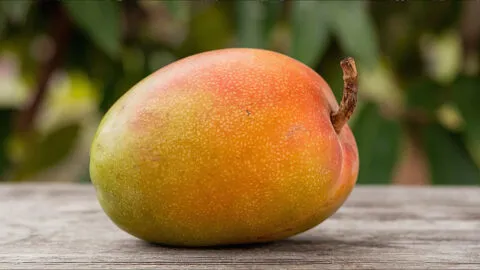
Physically, Fazli is a giant among mangoes, typically weighing between 600 grams and 1 kilogram, with some exceptional fruits reaching up to 1.5 kilograms. It has a distinctive elongated-oblique shape. The skin is smooth and remains primarily greenish-yellow even when fully ripe, often with very fine lenticels.
The flavor profile is sweet and mild with a pleasant, refreshing tang. The pulp is a light yellow, firm, and extremely plentiful due to the fruit's size. While it has a minimal amount of soft fiber, it is generally considered smooth and enjoyable. It carries a mild, sweet tropical aroma.
The Fazli season is ultra-late, typically starting in mid-July and peaking in August and early September. It is cultivated extensively in the Malda and Murshidabad districts of West Bengal. Its massive size and late availability make it a staple for the late-monsoon markets.
When comparing it to Fajri or Himsagar, Fazli is defined by its scale. While Langra is more aromatic and Himsagar is sweeter, Fazli offers the most pulp per fruit of any commercial variety. Discover more giant varieties at our Mango Identifier hub.
Post-harvest, Fazli has a respectable shelf life of 6-8 days. Its large size and firm flesh make it highly resistant to bruising, although its sheer weight requires careful handling to avoid pressure damage at the base. It is the preferred variety for bulk pulp production, making pickles, and for satisfying large households.
Mildly sweet, balanced
Mild, pleasant
Firm, slightly fibrous
Moderate
How to tell if it's a genuine Fazli:
Did you know that Alphonso is called Badami in Karnataka and Hapus in Maharashtra? Explore our complete state-by-state guide mapping 30+ regional names across India.
Named after 'Fazli Bibi', a woman from Malda who traditionally cultivated the original tree in her garden centuries ago.
Fazli mango from Malda holds a prestigious Geographical Indication (GI) tag, recognizing its unique regional quality.
Deeply integrated into the folk songs and culture of the Malda and Rajshahi regions.
Quick reference for identifying common healthy vs. problematic conditions:
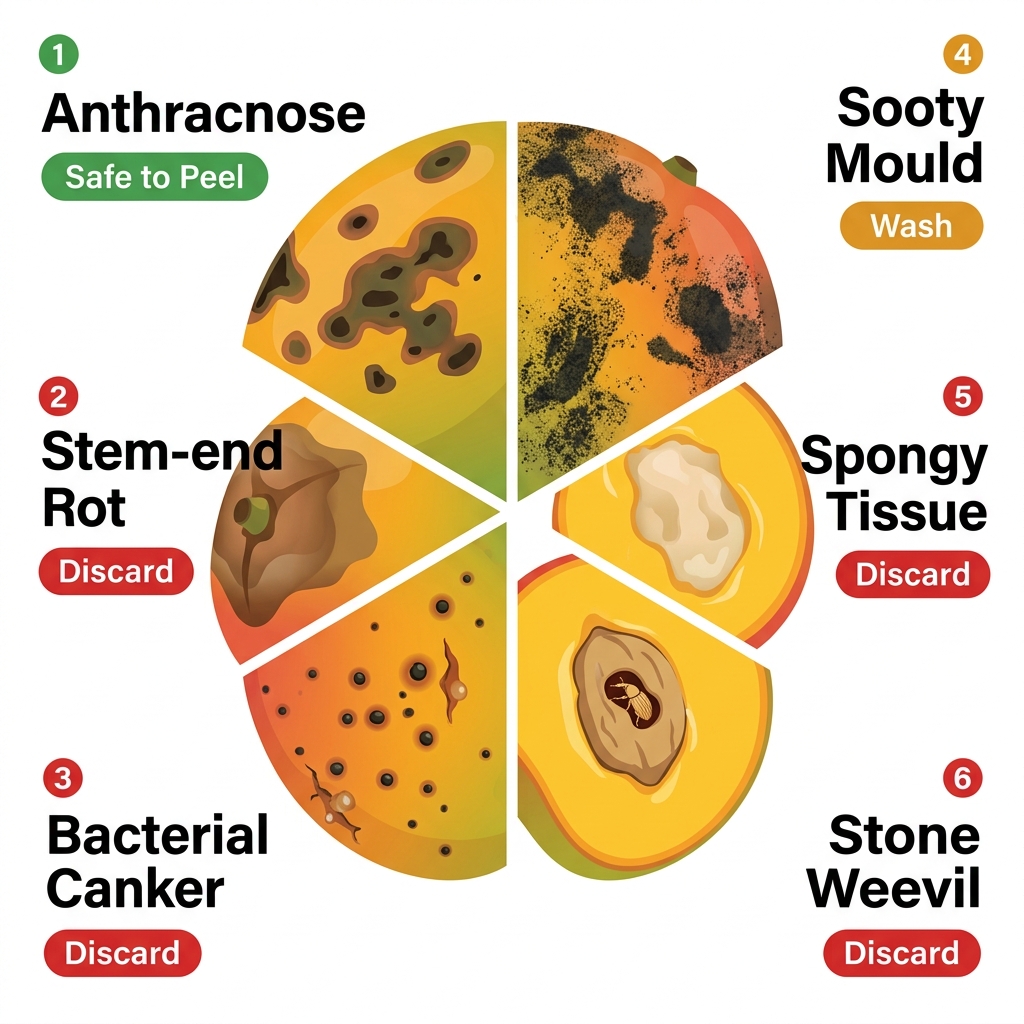
Pro Tip: Surface spots like Anthracnose are often harmless to the fruit inside, while Bacterial Canker or Stem-end Rot usually require discarding the fruit.
Ensure your Fazli mango is naturally ripened. Use Food Guard to detect Calcium Carbide and other chemical ripeners.