
📚 Regional Mango Names Guide
Did you know that Alphonso is called Badami in Karnataka and Hapus in Maharashtra? Explore our complete state-by-state guide mapping 30+ regional names across India.
Also known as: Hybrid of Dasheri x Neelum, Aamrapali
Typical diseases and disorders affecting this variety:
Detect these early using our Plant Guard AI.
Read our detailed Mango Diseases & Safety Guide.
Amrapali is one of India's most successful and highly acclaimed modern hybrid mango varieties. Developed in 1971 at the Indian Agricultural Research Institute (IARI), New Delhi, it is a cross between Dasheri and Neelum, specifically bred for its small tree size, high yield, and exceptional fruit quality.
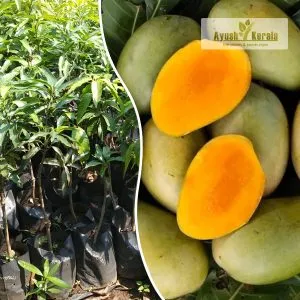
Physically, Amrapali is a small to medium-sized mango, typically weighing between 200 and 300 grams. It has an attractive, symmetric round-oval shape with a smooth skin that ripens to a beautiful greenish-yellow. Its most striking internal feature is its pulp, which is a spectacularly deep, vibrant orange-red color.
The flavor profile is intensely sweet, often surpassing even its parent Dasheri in pure sugar content. It offers a rich, complex taste with distinct honeyed notes and a powerful, sweet aroma that is highly pleasant. The pulp is incredibly smooth, meaty, and completely fiberless (none).
The Amrapali season is mid-to-late, typically starting in June and peaking in July. It is cultivated across India but has found immense popularity in West Bengal, Bihar, and Orissa. Its dwarfing nature makes it the absolute gold standard for high-density orcharding and kitchen gardens.
When comparing it to its parents Dasheri and Neelum, Amrapali is essentially the 'super-sweet' version of both. It also competes with Mallika, another IARI hybrid. Discover more high-yielding hybrids at our Mango Identifier hub.
Post-harvest, Amrapali has a good shelf life of 6-8 days, inheriting the sturdy genetics of Neelum. Its small size and firm flesh make it highly resistant to bruising. It is a preferred variety for fresh table consumption, premium desserts, and for making exceptionally colorful and sweet mango pulps and juices.
Very sweet, rich, excellent
Strong, sweet
Smooth, soft, minimal fiber
Minimal
How to tell if it's a genuine Amrapali:
Did you know that Alphonso is called Badami in Karnataka and Hapus in Maharashtra? Explore our complete state-by-state guide mapping 30+ regional names across India.
Named after the legendary 'Amrapali', the beautiful royal dancer and Buddhist nun of ancient India, symbolizing beauty and grace.
A landmark achievement of Indian horticultural science, proving that hybrid mangoes can match or exceed traditional varieties in taste.
The most recommended variety for terrace gardening and urban spaces due to its naturally dwarf tree habit.
Quick reference for identifying common healthy vs. problematic conditions:
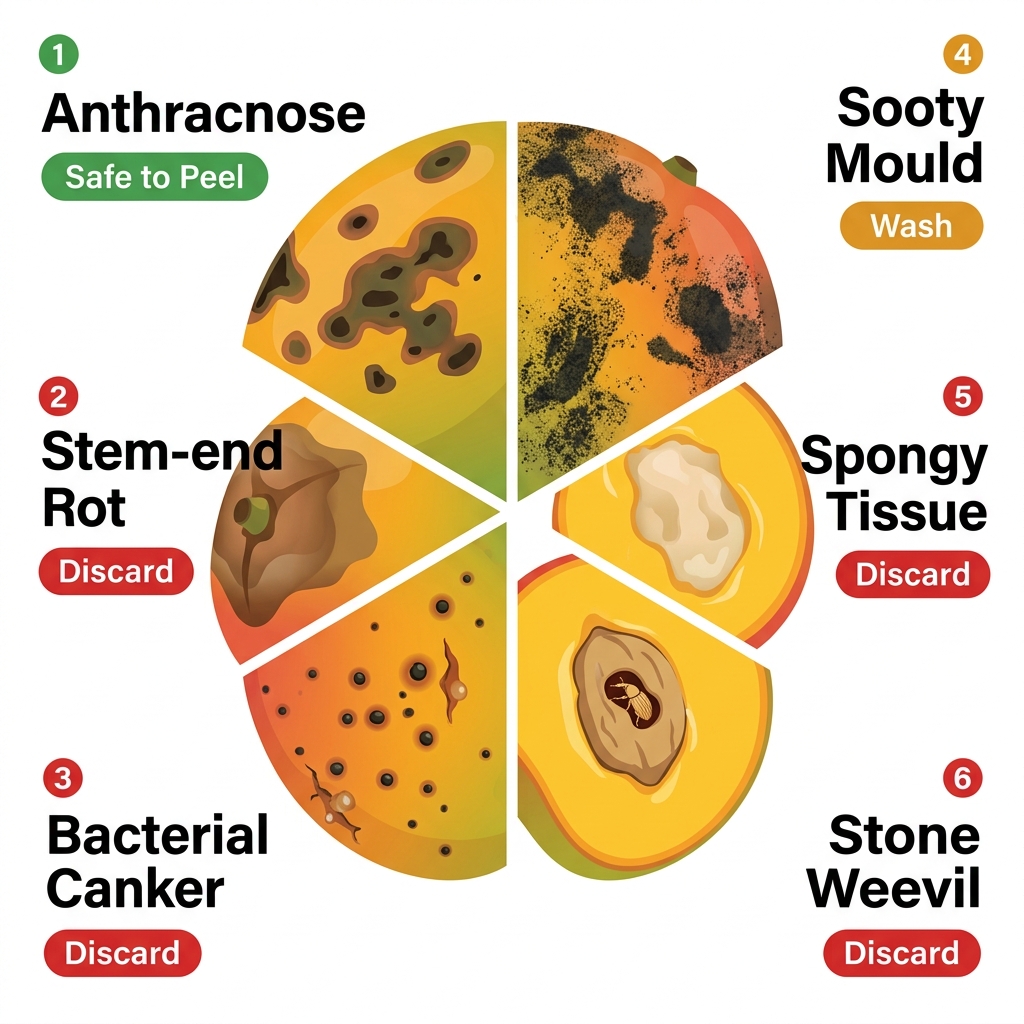
Pro Tip: Surface spots like Anthracnose are often harmless to the fruit inside, while Bacterial Canker or Stem-end Rot usually require discarding the fruit.
Ensure your Amrapali mango is naturally ripened. Use Food Guard to detect Calcium Carbide and other chemical ripeners.