
📚 Regional Mango Names Guide
Did you know that Alphonso is called Badami in Karnataka and Hapus in Maharashtra? Explore our complete state-by-state guide mapping 30+ regional names across India.
Also known as: Gulab Khas, Madrazi Golapkhas
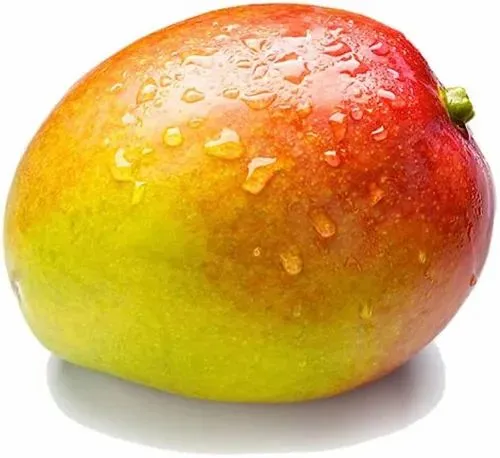
Typical diseases and disorders affecting this variety:
Detect these early using our Plant Guard AI.
Read our detailed Mango Diseases & Safety Guide.
Gulabkhas (also known as Gulab Khas or Rose Mango) is an exquisitely aromatic and flavorful mango variety native to Bihar and West Bengal. It is named after its most defining characteristic: a distinct, delicate fragrance and taste that strongly resembles the scent of fresh roses (Gulab), making it a favorite among collectors of heritage mangoes.
Physically, Gulabkhas is a small to medium-sized mango, typically weighing between 200 and 250 grams. It has an elegant oblong-oval shape with a smooth, thin skin that ripens to a beautiful light yellow, often accented by a spectacular reddish-pink blush on the shoulders that further enhances its rose-like aesthetic.
The flavor profile is delightfully sweet with a unique floral complexity that is truly one of a kind. The pulp is a vibrant saffron-yellow, firm, and juicy, with a minimal amount of soft fiber. Its intoxicating rose-like aroma is highly potent and becomes even more pronounced as the fruit reaches full maturity.
The Gulabkhas season is relatively early, typically starting in mid-May and peaking in June. It is primarily cultivated in the fertile plains of Bihar (Bhagalpur and Darbhanga districts) and West Bengal (Malda and Murshidabad). Its delicate nature makes it a prized local delicacy that is highly sought after in regional markets.
When comparing it to Himsagar, Zardalu, Dasheri, and Langra, Gulabkhas is often appreciated for its unique perfume, similar to how Himsagar is prized for its sweetness. While Dasheri and Langra are more commercially dominant, Gulabkhas offers a more boutique sensory experience. Discover more aromatic varieties at our Mango Identifier hub.
Post-harvest, Gulabkhas is a delicate fruit with a short shelf life of 4-6 days. Its thin skin and soft flesh mean it requires very careful handling and rapid transport. It is best enjoyed fresh or used in high-end desserts where its unique rose-flavored profile can be showcased.
Sweet, aromatic, rich
Strong rose-like fragrance
Smooth, soft, minimal fiber
Minimal
How to tell if it's a genuine Gulabkhas:
Did you know that Alphonso is called Badami in Karnataka and Hapus in Maharashtra? Explore our complete state-by-state guide mapping 30+ regional names across India.
A traditional heritage variety from the Nawabi orchards of Bihar and Bengal, selected for its unique floral mutation.
Deeply valued in the Indo-Gangetic plains for its association with the peak of the Indian summer and traditional hospitality.
Often used in the preparation of premium 'Mango Shrikhand' and artisanal fruit preserves due to its natural rose scent.
Quick reference for identifying common healthy vs. problematic conditions:
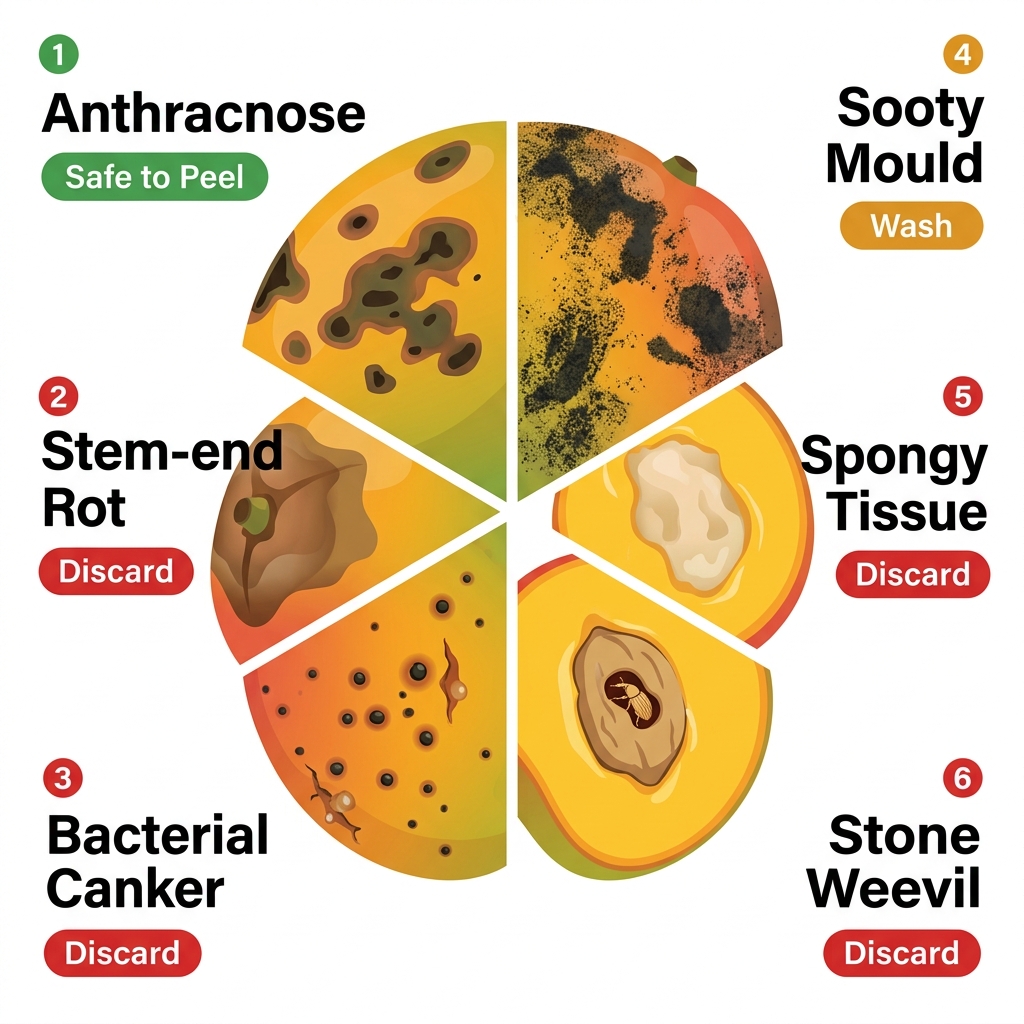
Pro Tip: Surface spots like Anthracnose are often harmless to the fruit inside, while Bacterial Canker or Stem-end Rot usually require discarding the fruit.
Ensure your Gulabkhas mango is naturally ripened. Use Food Guard to detect Calcium Carbide and other chemical ripeners.