
📚 Regional Mango Names Guide
Did you know that Alphonso is called Badami in Karnataka and Hapus in Maharashtra? Explore our complete state-by-state guide mapping 30+ regional names across India.
Also known as: Chandrakaran Pazham, Moon Fruit Mango, Chandrakkaran, Karpooram Maanga
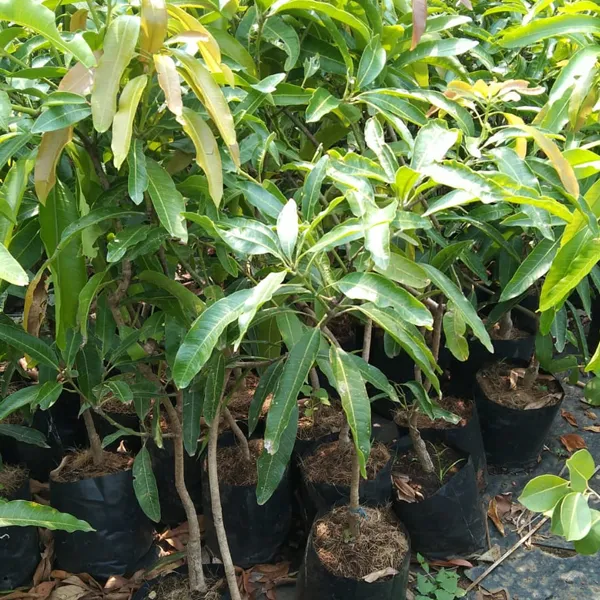
Typical diseases and disorders affecting this variety:
Detect these early using our Plant Guard AI.
Read our detailed Mango Diseases & Safety Guide.
Chandrakaran is an iconic, highly traditional heritage mango variety native to Kerala, India. It is celebrated as one of the oldest wild-selected cultivars in the state and is deeply woven into the cultural, culinary, and agricultural history of the region.
Physically, Chandrakaran is a small, round mango, with individual fruits typically weighing between 100 and 150 grams. It has a delicate, thin skin that remains green-yellow even at full maturity, often marked by tiny black lenticels and a slightly sticky natural resin near the stem.
The taste is intensely sweet and tangy, offering a powerful burst of tropical sugars balanced by a refreshing, sharp acidity. The pulp is highly juicy, soft, and completely fiberless (none), yielding an exceptionally high volume of golden-orange juice. It carries a powerful, highly distinctive perfume-like aroma.
The Chandrakaran season is early and short, starting in late March, peaking in mid-April, and ending by mid-May. It is grown widely across the Alappuzha, Kottayam, Thrissur, and Ernakulam districts of Kerala, thriving in the high humidity and heavy rainfall of the southwest coast.
Compared to southern commercial varieties like Raspuri or Pairi, Chandrakaran is much smaller, rounder, and far more juicy. While Raspuri has a firm flesh, Chandrakaran is incredibly soft and pulpy, designed by nature for squeezing and juicing rather than clean slicing.
Because of its high moisture content and thin, delicate skin, Chandrakaran has a very short post-harvest shelf life of just 2 to 3 days. It is highly perishable and must be consumed or processed immediately after harvesting, making it a rare treat outside of Kerala.
Sweet with a mild tang
Strong, camphor-like (Karpooram)
Soft, very juicy
None
How to tell if it's a genuine Chandrakaran:
Did you know that Alphonso is called Badami in Karnataka and Hapus in Maharashtra? Explore our complete state-by-state guide mapping 30+ regional names across India.
Chandrakaran is legendary in Kerala, frequently mentioned in classical Malayalam literature, folklore, and traditional royal recipes.
It is the absolute gold standard for making 'Manga Curry' (traditional Kerala sweet mango curry) and 'Kadumanga' (whole baby mango pickles).
Almost every traditional ancestral home (Tarawad) in central Kerala historically planted a Chandrakaran tree in their courtyard for domestic use.
Quick reference for identifying common healthy vs. problematic conditions:
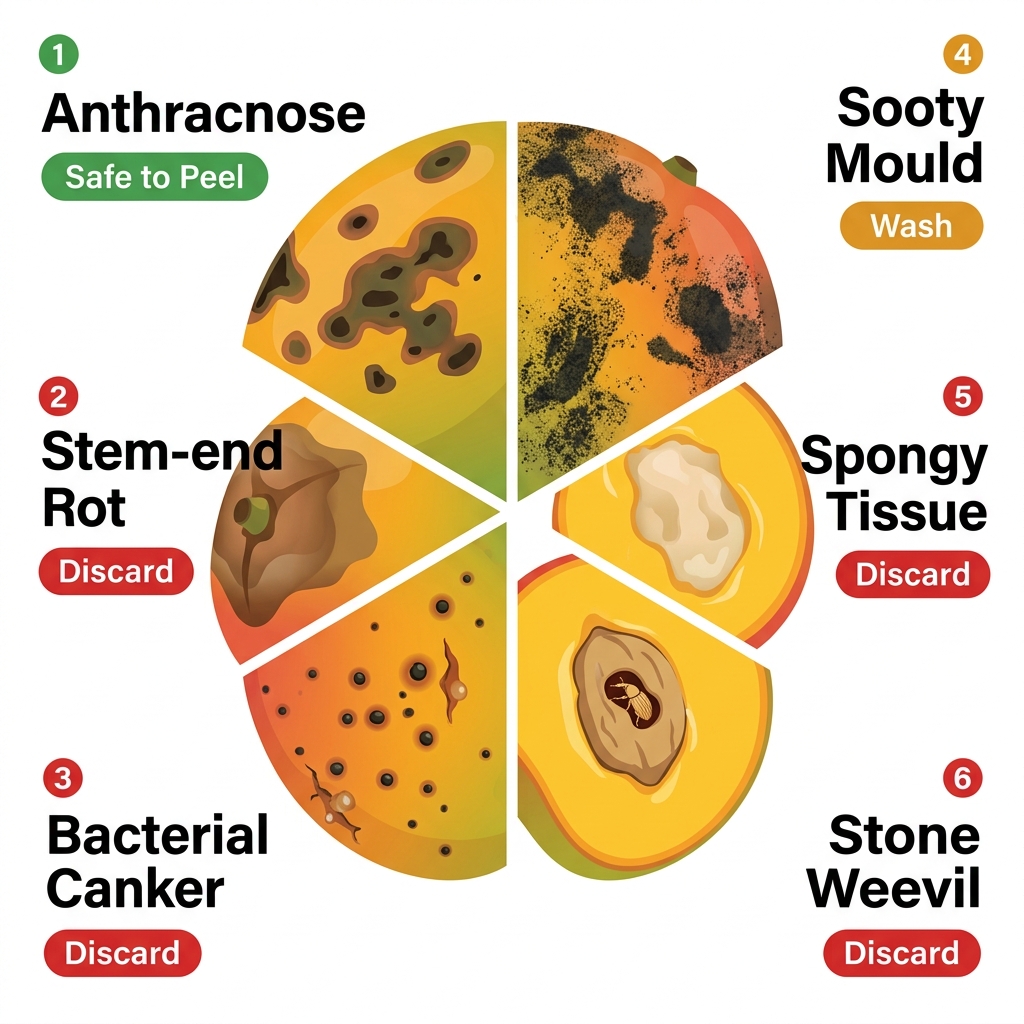
Pro Tip: Surface spots like Anthracnose are often harmless to the fruit inside, while Bacterial Canker or Stem-end Rot usually require discarding the fruit.
Ensure your Chandrakaran mango is naturally ripened. Use Food Guard to detect Calcium Carbide and other chemical ripeners.