
📚 Regional Mango Names Guide
Did you know that Alphonso is called Badami in Karnataka and Hapus in Maharashtra? Explore our complete state-by-state guide mapping 30+ regional names across India.
Also known as: Lakshman Bhog, LakshmanBhog, Malda Mango, Malda Grafted Hybrid
Typical diseases and disorders affecting this variety:
Detect these early using our Plant Guard AI.
Read our detailed Mango Diseases & Safety Guide.
The Laxman Bhog mango is legally protected under India's Geographical Indications of Goods Act. Genuine Laxman Bhog mangoes must originate from the certified soils of its designated region (e.g., Konkan coast for Alphonso, Saurashtra for Kesar) to carry this designation.
Laxman Bhog is an exceptionally premium and visually stunning mango variety native to the Malda district of West Bengal. It is considered one of the 'Big Three' of Bengal mangoes alongside Himsagar and Langra, specifically prized for its spectacular golden color and its status as a high-value export variety.
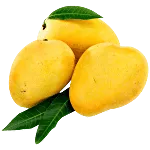
Physically, Laxman Bhog is a medium-sized mango, typically weighing between 250 and 350 grams. It has an attractive oval shape with a smooth, thin skin that ripens to a brilliant, uniform golden-yellow or deep orange-yellow, often with very fine, light-colored lenticels.
The flavor profile is delightfully sweet with a refined, pleasant aroma that is sweet but not overpowering. The pulp is a vibrant yellow-orange, firm, and extremely smooth. It is 100% fiberless (none), offering a melting, buttery texture that rivals the finest premium varieties in India.
The Laxman Bhog season is mid-season, typically starting in late May and peaking in June. It is cultivated almost exclusively in the Malda district of West Bengal. Its exceptional quality and vibrant color have made it a preferred variety for international exports, particularly to European markets.
When comparing it to Himsagar or Langra, Laxman Bhog is prized for its appearance and shelf life. While Himsagar stays green and Langra is aromatic, Laxman Bhog offers a spectacular golden color and a firmer bite. Discover more export-grade varieties at our Mango Identifier hub.
Post-harvest, Laxman Bhog exhibits excellent shelf life and durability, lasting 7-9 days at room temperature. Its firm flesh and sturdy skin make it highly resistant to bruising and transit injury, ensuring it reaches distant markets in perfect condition. It is a top choice for fresh table consumption and premium gift boxes.
Exceptionally sweet, rich
Very strong, aromatic
Smooth, soft, minimal fiber
Minimal
How to tell if it's a genuine Laxman Bhog:
Did you know that Alphonso is called Badami in Karnataka and Hapus in Maharashtra? Explore our complete state-by-state guide mapping 30+ regional names across India.
Laxman Bhog from Malda holds a prestigious Geographical Indication (GI) tag, cementing its status as a unique regional product of West Bengal.
A traditional favorite of the local zamindars of Malda, who propagated it for its spectacular color and balanced sweetness.
Often chosen by the Government of West Bengal as a representative variety for international food festivals and trade fairs.
Quick reference for identifying common healthy vs. problematic conditions:
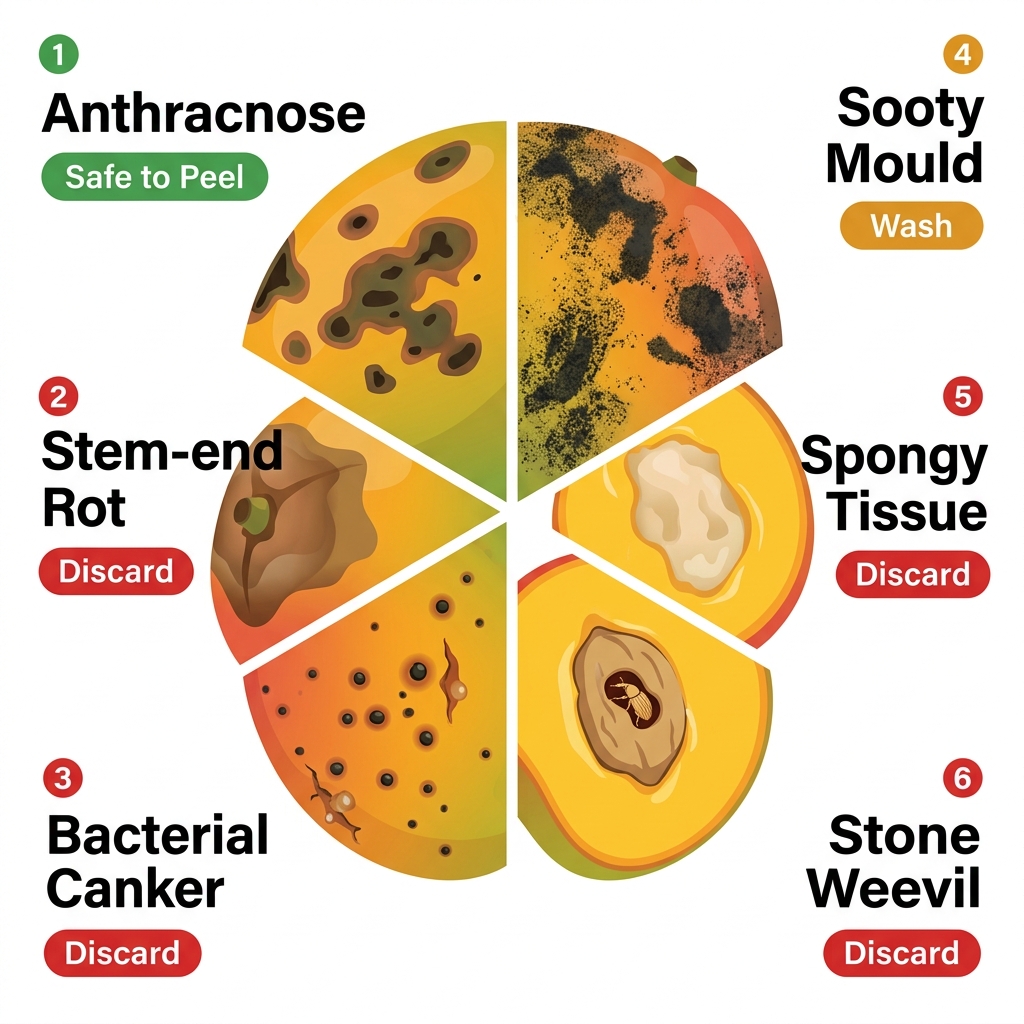
Pro Tip: Surface spots like Anthracnose are often harmless to the fruit inside, while Bacterial Canker or Stem-end Rot usually require discarding the fruit.
Ensure your Laxman Bhog mango is naturally ripened. Use Food Guard to detect Calcium Carbide and other chemical ripeners.