
Gulabkhas vs Chausa
Compare Gulabkhas and Chausa mangoes. Learn the differences in rose-like aroma, intense honeyed sweetness, harvesting seasons, and colors.
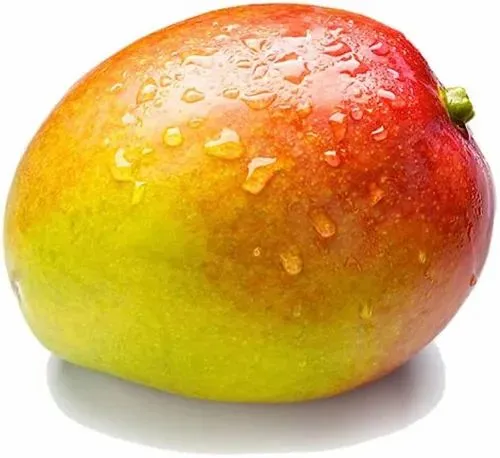
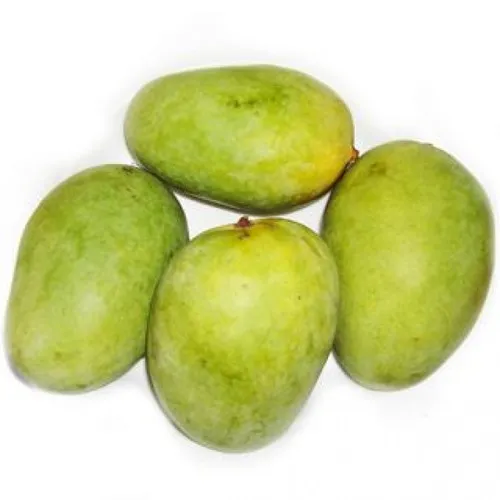
Key Differences: Gulabkhas vs Chausa
Gulabkhas and Chausa are two famous mangoes of North and East India, offering completely different sensory experiences. Gulabkhas is an early-season delicacy, small to medium in size, famous for its distinct rose (gulab) fragrance and pinkish blush skin. Chausa is a late-season heavyweight, medium to large, famous for its golden-yellow color and intense, honeyed sweetness that is considered by many to be the sweetest mango in the world.
Botanical & Cultivar Comparison Table
| Feature | Gulabkhas | Chausa |
|---|---|---|
| Shape | Small round-oval | Oval-oblong, curved beak |
| Ripe Color | Yellow-green with pink-red blush | Bright golden-yellow |
| Taste Profile | Sweet with delicate floral rose notes | Intensely sweet, honeyed |
| Texture | Firm, fiberless, moderately juicy | Soft, extremely juicy, minimal fiber |
| Size Category | Medium | Medium |
| Weight (Single Fruit) | 200g - 300g | 200g - 350g |
| Harvest Season | Early (May) J F M A M J J A S O N D | Late (June to August) J F M A M J J A S O N D |
| Average Price | Mid-Range (Rs 80 - 150 per kg) | Mid-Range (Rs 100 - 200 per kg) |
| State of Origin | Bihar & Uttar Pradesh | Uttar Pradesh (Malihabad) & Punjab |
| GI Tag Protected | No | Yes (Chausa) |
| Best Use Case | Table consumption, early summer fruit salads | Direct sucking, juices, milkshakes, late-season eating |
| Adulteration Risk | Low-Medium (Mostly sold locally) | Medium (Ripening check required due to green skin) |
| Vulnerable Pests/Diseases | Vulnerable to Anthracnose | Vulnerable to Anthracnose and Fruit Fly |
🛡️ Chemical Ripening & Adulteration Guide
Artificial ripening using Calcium Carbide and Ethylene is common in commercial mango trades. Use our Food Guard tool to check for chemical traces, verify natural ripening signs, and protect your family's health.
Which is Better For...?
Gulabkhas is popular early in the season due to its unique pink color and floral scent. Chausa is highly valued late in the season.
Chausa is superior for juices and milkshakes due to its high liquid content and extreme sweetness.
Gulabkhas is delightful for those who enjoy floral notes. Chausa is the ultimate choice for sugar-lovers.
Both are exported, but Chausa has a much larger international presence in Gulf countries.
How to Spot the Differences (Visual Spotting Guide)
Examine these visual markers and close-up identification features to tell them apart:
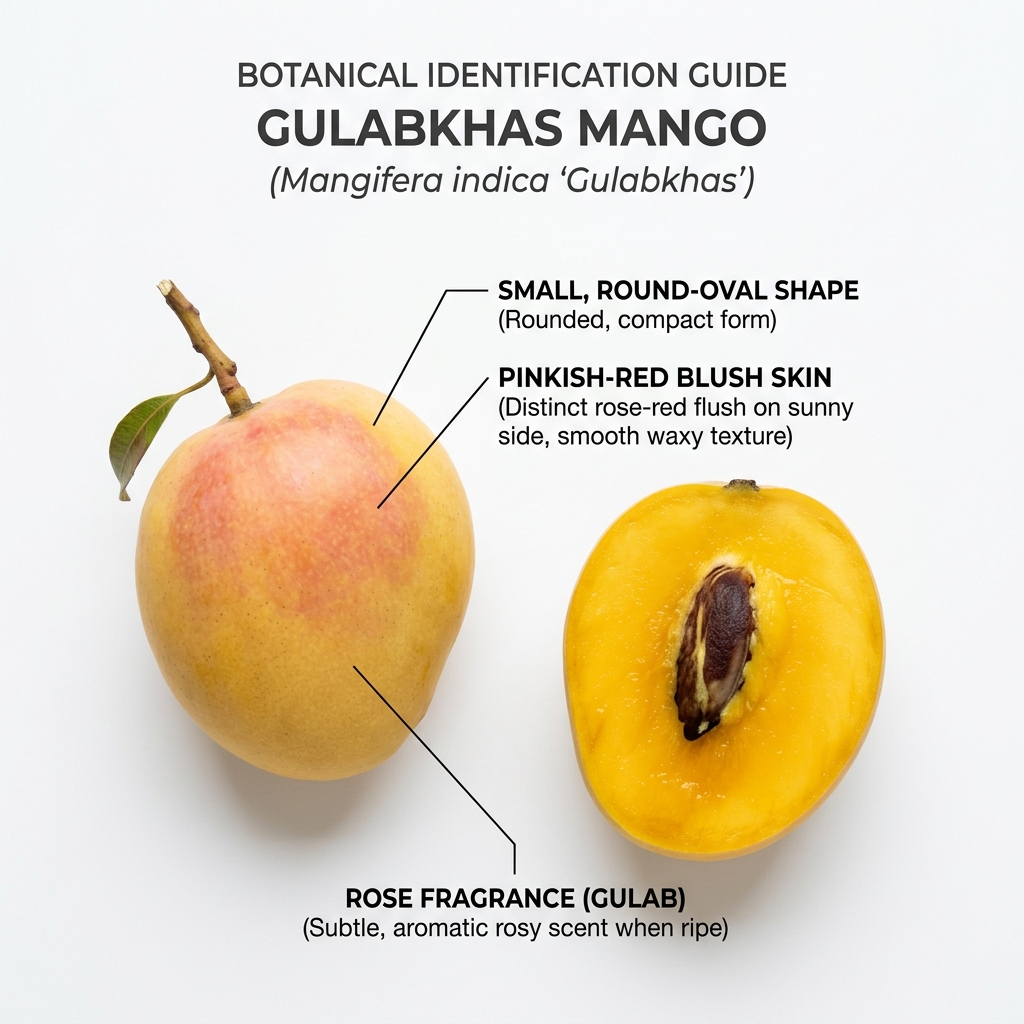 Gulabkhas Guide
- Small, round-oval shape: Gulabkhas is relatively small, with a cute roundish-oval shape.
- Pinkish-red blush skin: The skin is yellow-green with a beautiful rose-pink blush on the shoulders.
- Deep yellow flesh: Cut pulp is firm, deep yellow, and moderately juicy.
- Rose fragrance: Emits a unique floral aroma resembling rose petals.
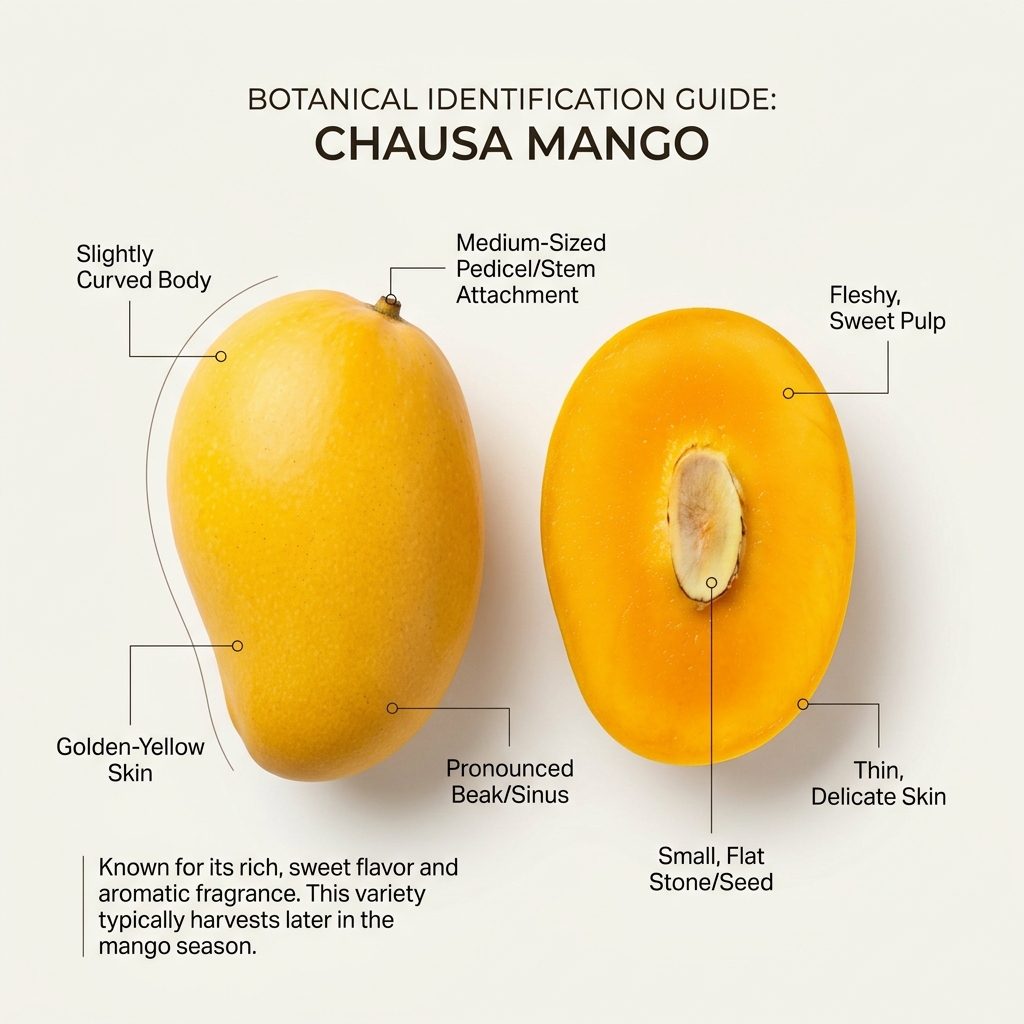 Chausa Guide
- Oval-oblong shape: Chausa has a plump, oval-oblong shape with a prominent beak curve at the bottom.
- Bright golden-yellow skin: Ripe skin is a uniform, rich golden-yellow color.
- Soft, highly juicy flesh: Cut fruit reveals a soft, juicy pulp that is excellent for sucking.
- Honeyed aroma: Emits a heavy, sweet honey-like scent.
Detailed Attribute Breakdown
👅 Flavor Comparison
Gulabkhas offers a delicate, medium sweetness with a distinct rose-water floral undertone. Chausa is an intense sugar bomb, delivering a thick, syrupy, honeyed sweetness that dominates the palate.
👃 Aroma Profile
Gulabkhas has a highly unique, sweet rose-petal fragrance. Chausa has a heavy, rich, sweet honeyed scent.
📦 Shelf Life & Storage
Gulabkhas has a decent shelf life of 5-7 days due to its firmer pulp. Chausa is very soft when fully ripe and must be eaten within 3-4 days.
🛒 Market Availability
Gulabkhas is available early in May. Chausa is one of the last mangoes of the season, available from late June through August.
Which Should You Choose?
- Choose Gulabkhas if you appreciate unique, delicate floral aromas, firm pulp, and want a beautiful pink-blushed early-season mango.
- Choose Chausa if you want the absolute sweetest, juiciest honey-mango experience, perfect for direct sucking or making fresh summer juice in late July.