
📚 Regional Mango Names Guide
Did you know that Alphonso is called Badami in Karnataka and Hapus in Maharashtra? Explore our complete state-by-state guide mapping 30+ regional names across India.
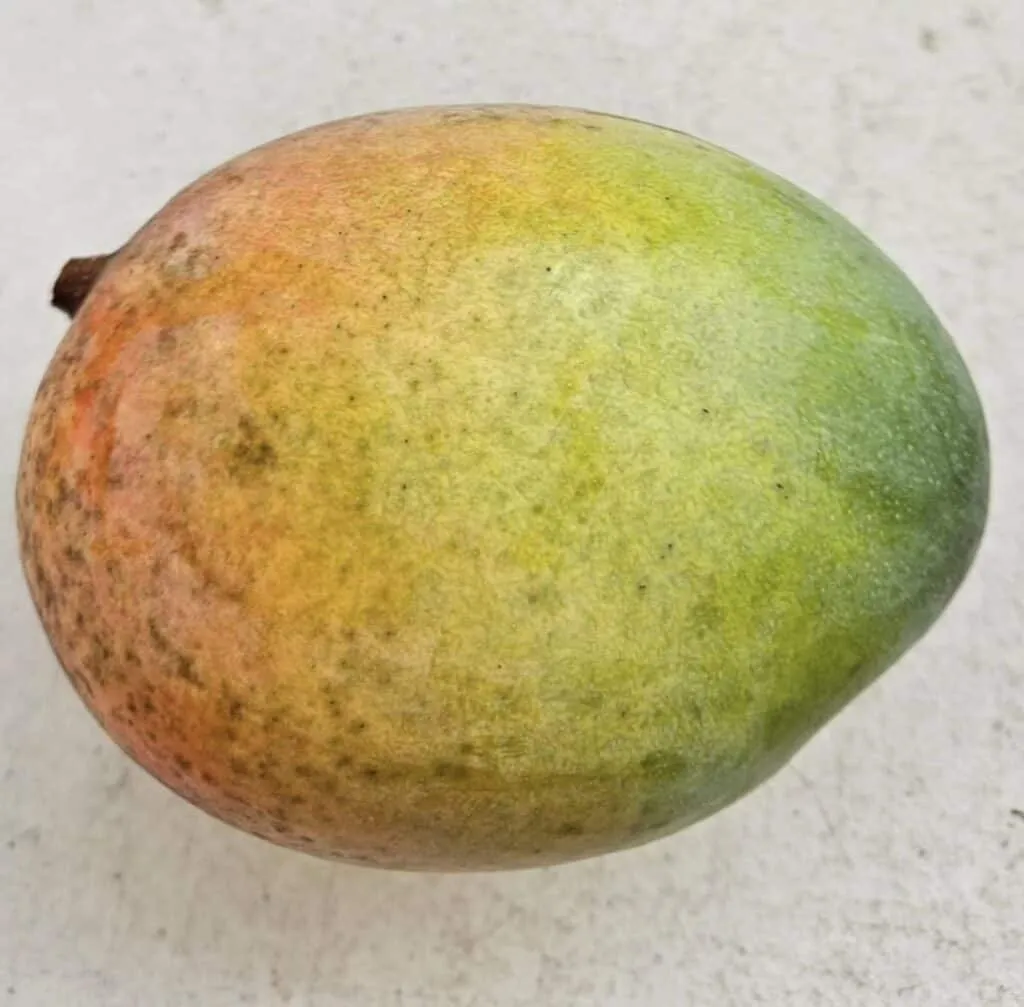
Typical diseases and disorders affecting this variety:
Detect these early using our Plant Guard AI.
Read our detailed Mango Diseases & Safety Guide.
Keitt is a premium international mango variety that originated in Florida, USA, in the 1930s. Known for its outstanding quality and remarkably late ripening period, it has been successfully introduced into several mango-producing states in India, helping extend the domestic mango season well into the autumn months.
In terms of physical appearance, Keitt is a large to very large fruit, typically weighing between 500 and 750 grams. It has an oval-oblong shape with a rounded base and a slightly flattened profile. The skin remains primarily green-yellow even when fully ripe, often accented with a beautiful, soft pinkish-red blush on the shoulder exposed to the sun.
The flavor is sweet, mild, and wonderfully refreshing with a subtle tangy undertone. The pale-yellow flesh is firm, thick, and completely fiberless (none), containing a remarkably small, flat stone. The aroma is pleasant and moderately sweet, lacking the heavy perfume of early-season Indian cultivars.
Keitt is a classic ultra-late season variety. In India, its season starts in August, peaks in September, and can extend into mid-October depending on the state. It is primarily cultivated in late-season microclimates in Maharashtra, Gujarat, Andhra Pradesh, and Tamil Nadu.
Compared to Kent, Tommy Atkins, and Haden, Keitt is distinguished by its ultra-late harvest window, higher flesh-to-stone ratio, and green-dominant skin color at maturity. While Tommy Atkins and Haden are more colorful but contain some fiber, Keitt remains mostly green and offers a smooth, melting texture that rivals the finest dessert mangoes.
Storage and post-harvest characteristics of Keitt are world-class. It boasts an exceptional shelf life of 12 to 14 days at room temperature and handles shipping extremely well without bruising or internal breakdown. This makes it a highly lucrative variety for growers aiming for domestic off-season premiums and export markets.
Sweet, balanced
Mild, pleasant
Smooth, minimal fiber
Minimal
How to tell if it's a genuine Keitt:
Did you know that Alphonso is called Badami in Karnataka and Hapus in Maharashtra? Explore our complete state-by-state guide mapping 30+ regional names across India.
Keitt was selected as a seedling of the Mulgoba variety in Homestead, Florida, in 1939 by J.N. Keitt, and quickly became a dominant commercial cultivar globally due to its exceptional late-season productivity.
Its introduction to India has revolutionized late-season farming, allowing growers to fetch premium prices when traditional Indian varieties like Alphonso or Kesar are long out of season.
It is widely appreciated by export houses for its resistance to internal physiological disorders like spongy tissue.
Quick reference for identifying common healthy vs. problematic conditions:
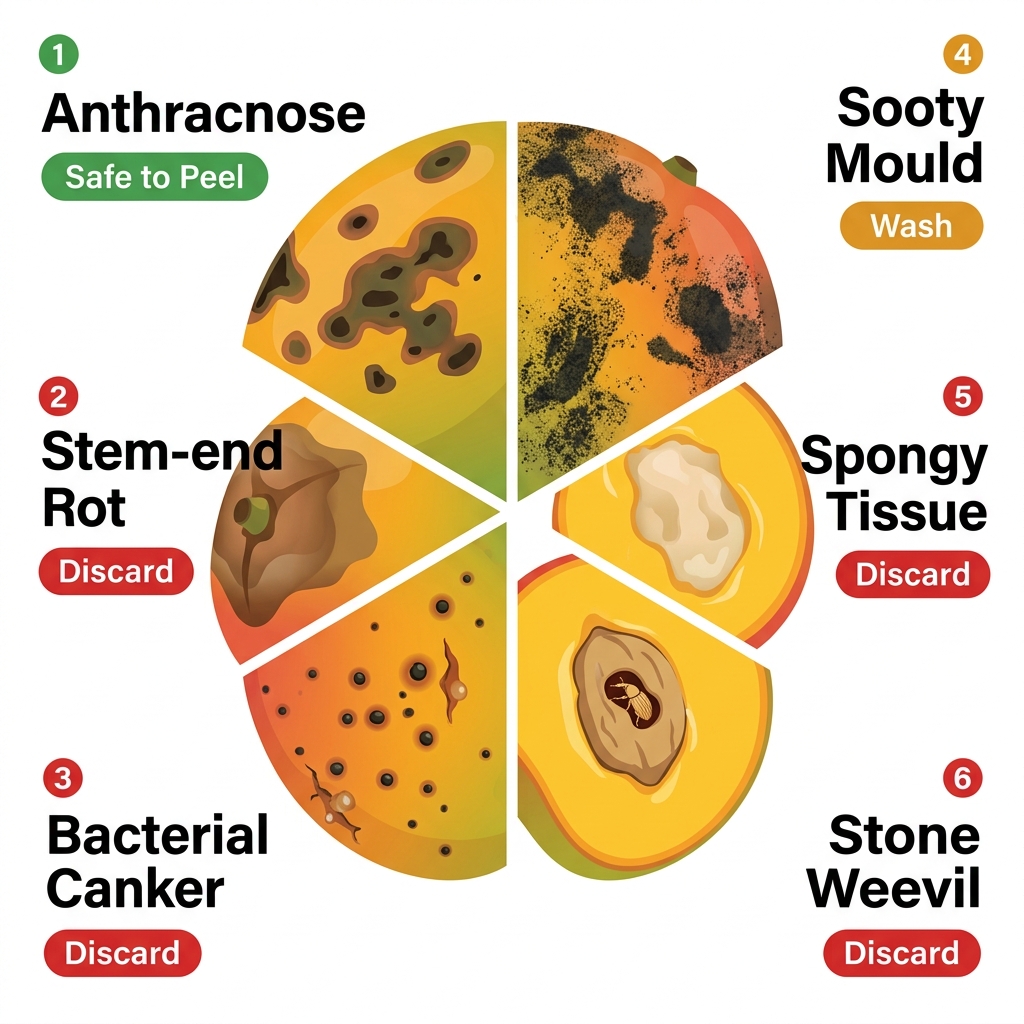
Pro Tip: Surface spots like Anthracnose are often harmless to the fruit inside, while Bacterial Canker or Stem-end Rot usually require discarding the fruit.
Ensure your Keitt mango is naturally ripened. Use Food Guard to detect Calcium Carbide and other chemical ripeners.