
Mankurad vs Alphonso
Mankurad vs Alphonso mango difference. Compare Goan Mankurad and Ratnagiri Hapus on taste, fiber, pricing, harvesting season, and color.
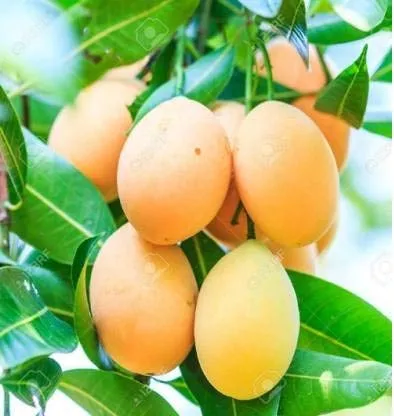
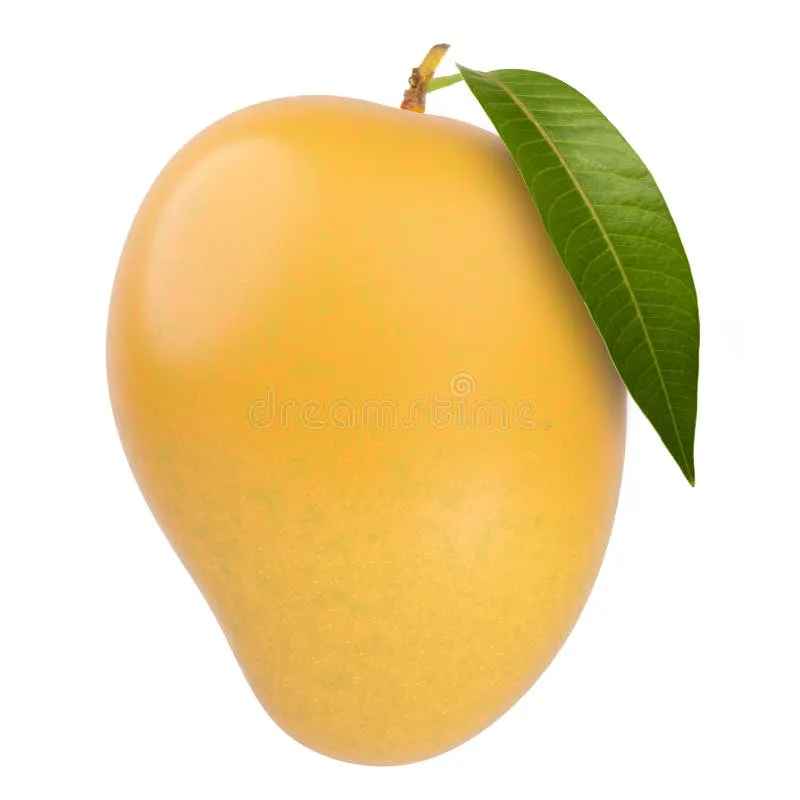
Key Differences: Mankurad vs Alphonso
Mankurad and Alphonso are two elite mangoes of India's west coast. Mankurad is the pride of Goa, featuring a yellow-orange skin, an incredibly sweet, rich flavor with zero fiber, and a high pulp content. Alphonso, grown in neighboring Maharashtra, is the export king, known for its buttery-smooth texture, saffron pulp, and strong tropical aroma.
Botanical & Cultivar Comparison Table
| Feature | Mankurad | Alphonso |
|---|---|---|
| Shape | Flat-oval, slightly elongated | Roundish-oval, plump |
| Ripe Color | Yellow-orange with red/brown highlights | Vibrant golden-orange yellow |
| Taste Profile | Intensely sweet, rich, honeyed | Rich, buttery, mildly acidic-sweet balance |
| Texture | Extremely smooth, juicy, fiberless | Extremely smooth, buttery, fiberless |
| Size Category | Small | Medium |
| Weight (Single Fruit) | 150g - 200g | 250g - 350g |
| Harvest Season | Very Early (April to May) J F M A M J J A S O N D | Early (April to mid-May) J F M A M J J A S O N D |
| Average Price | Ultra-Premium (Rs 1000 - 2000 per dozen in Goa) | Ultra-Premium (Rs 800 - 1500 per dozen) |
| State of Origin | Goa state districts | Konkan region, Maharashtra (Ratnagiri & Devgad) |
| GI Tag Protected | Yes (Mankurad) | Yes |
| Best Use Case | Fresh eating, local Goan delicacies, gifting | Fresh table slices, premium desserts, export |
| Adulteration Risk | Medium (Mostly local production, lower artificial ripening risk) | High (Highly sought-after, carbide risk is high) |
| Vulnerable Pests/Diseases | Vulnerable to Anthracnose and Hopper | Highly vulnerable to Anthracnose and Spongy Tissue |
🛡️ Chemical Ripening & Adulteration Guide
Artificial ripening using Calcium Carbide and Ethylene is common in commercial mango trades. Use our Food Guard tool to check for chemical traces, verify natural ripening signs, and protect your family's health.
Which is Better For...?
Alphonso is the standard for national gifting, but Mankurad is the ultimate gift in Goa.
Both are too premium for juice, but Mankurad is highly prized for local Goan mango sweets.
Mankurad is favored by locals for its pure sweetness, while Alphonso wins on complex buttery texture.
Alphonso dominates exports. Mankurad has limited Goan production and is mostly consumed locally.
How to Spot the Differences (Visual Spotting Guide)
Examine these visual markers and close-up identification features to tell them apart:
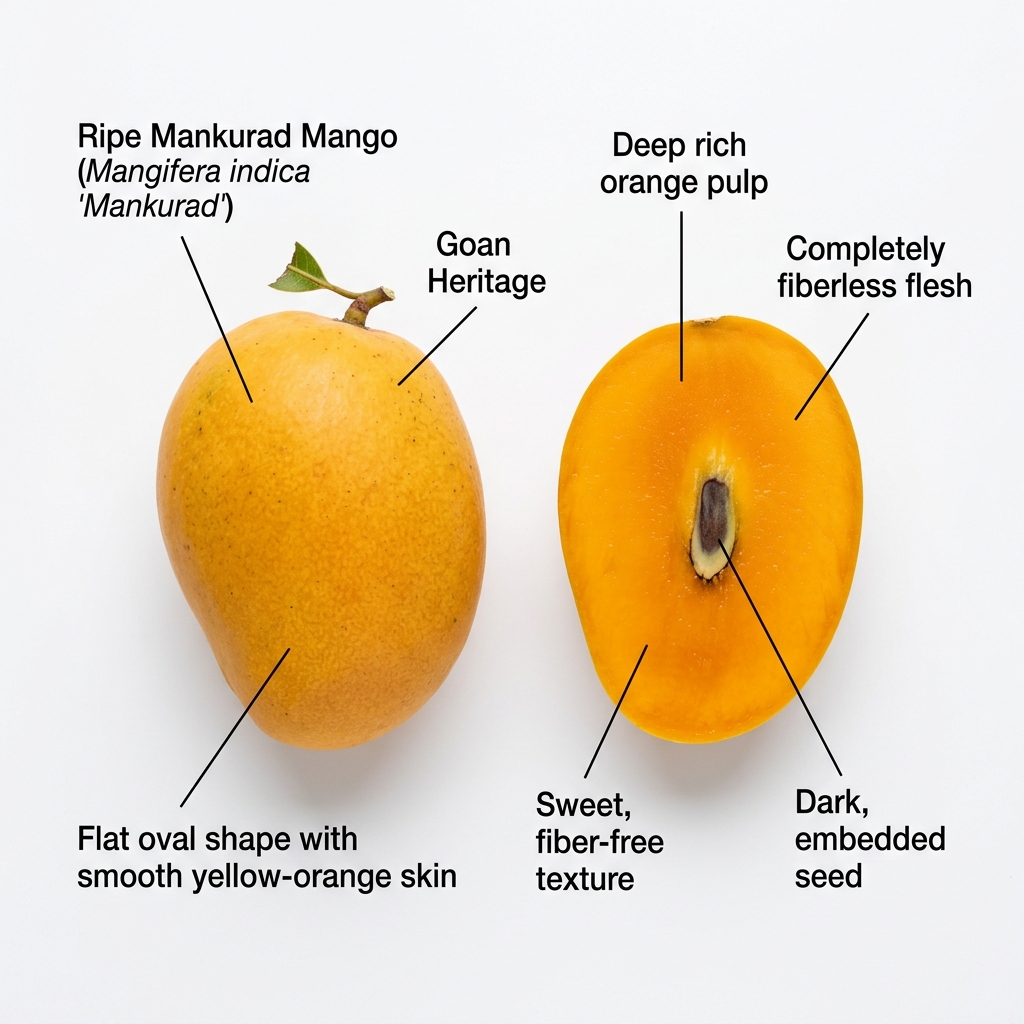 Mankurad Guide
- Oval-oblong shape: Mankurad has a flat-oval shape, slightly elongated compared to Alphonso.
- Bright yellow-orange skin: Ripe skin is yellow-orange with small brown spots.
- Completely fiberless: The pulp is extremely smooth, yielding a very rich, sweet juice.
- Goan coastal origin: Bears the signature Goan Mankur heritage stamp.
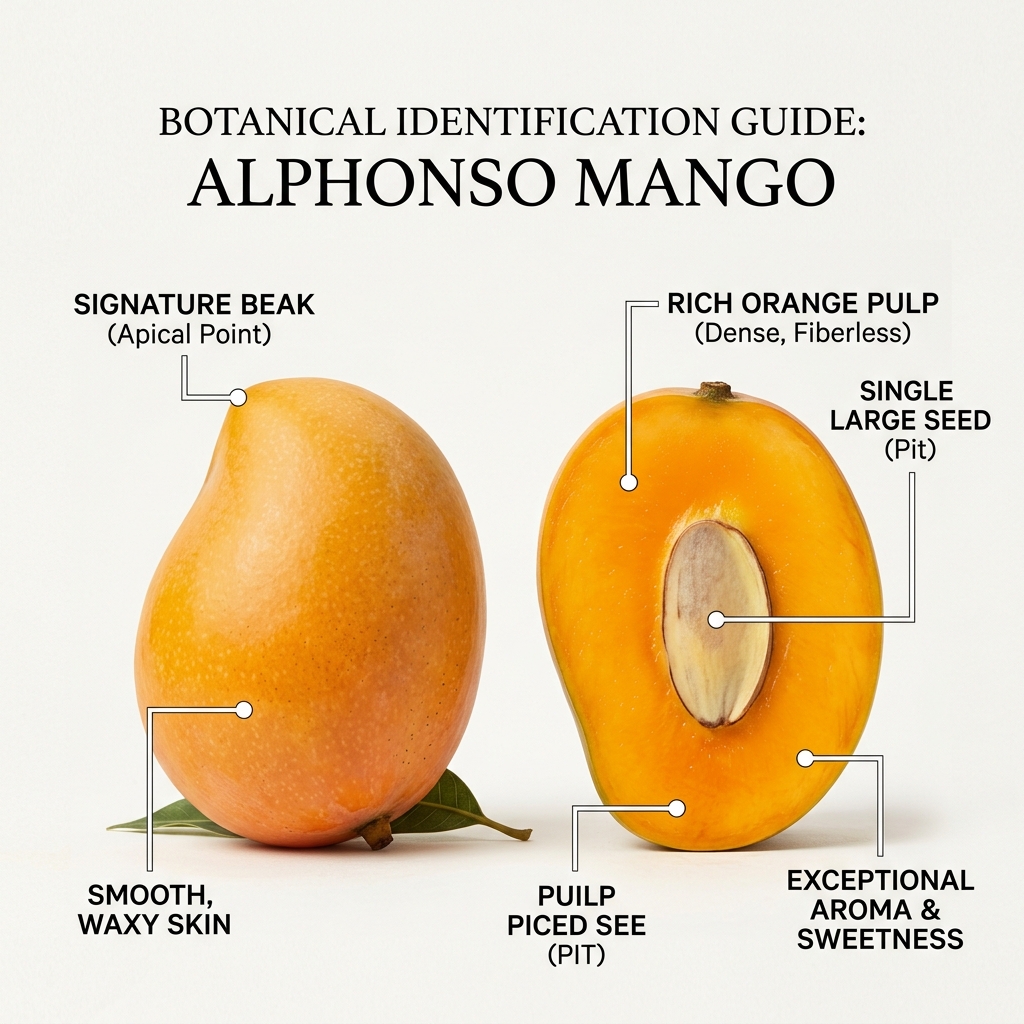 Alphonso Guide
- Oblong shape with rounded base: Alphonso has a round-ovoid shape without any sharp angles.
- Golden-orange skin: Ripe skin is a uniform, rich golden-yellow with an orange undertone.
- Signature small beak: Features a tiny, barely noticeable beak curve near the bottom tip.
- Saffron-orange flesh: Cut fruit reveals a deep, vibrant saffron-colored pulp that is completely fiberless.
Detailed Attribute Breakdown
👅 Flavor Comparison
Mankurad has a very intense, sweet, tropical flavor with a clean finish. Alphonso is famous for its rich, heavy, buttery flavor balanced with a delicate acidity.
👃 Aroma Profile
Mankurad has a sweet, fruity, pleasant aroma. Alphonso has an intense, heavy, room-filling tropical perfume fragrance.
📦 Shelf Life & Storage
Mankurad is delicate and has a short shelf life of 3-5 days. Alphonso holds up slightly better during transport.
🛒 Market Availability
Mankurad starts early in Goa (sometimes March/April) and sells out quickly. Alphonso dominates the national market from April to May.
Which Should You Choose?
- Choose Mankurad if you want to experience Goa's most prized, intensely sweet, fiberless treasure with a rich heritage.
- Choose Alphonso if you prefer the famous buttery mouthfeel, strong tropical perfume, and prestigious saffron pulp of Maharashtra's Hapus.