
📚 Regional Mango Names Guide
Did you know that Alphonso is called Badami in Karnataka and Hapus in Maharashtra? Explore our complete state-by-state guide mapping 30+ regional names across India.
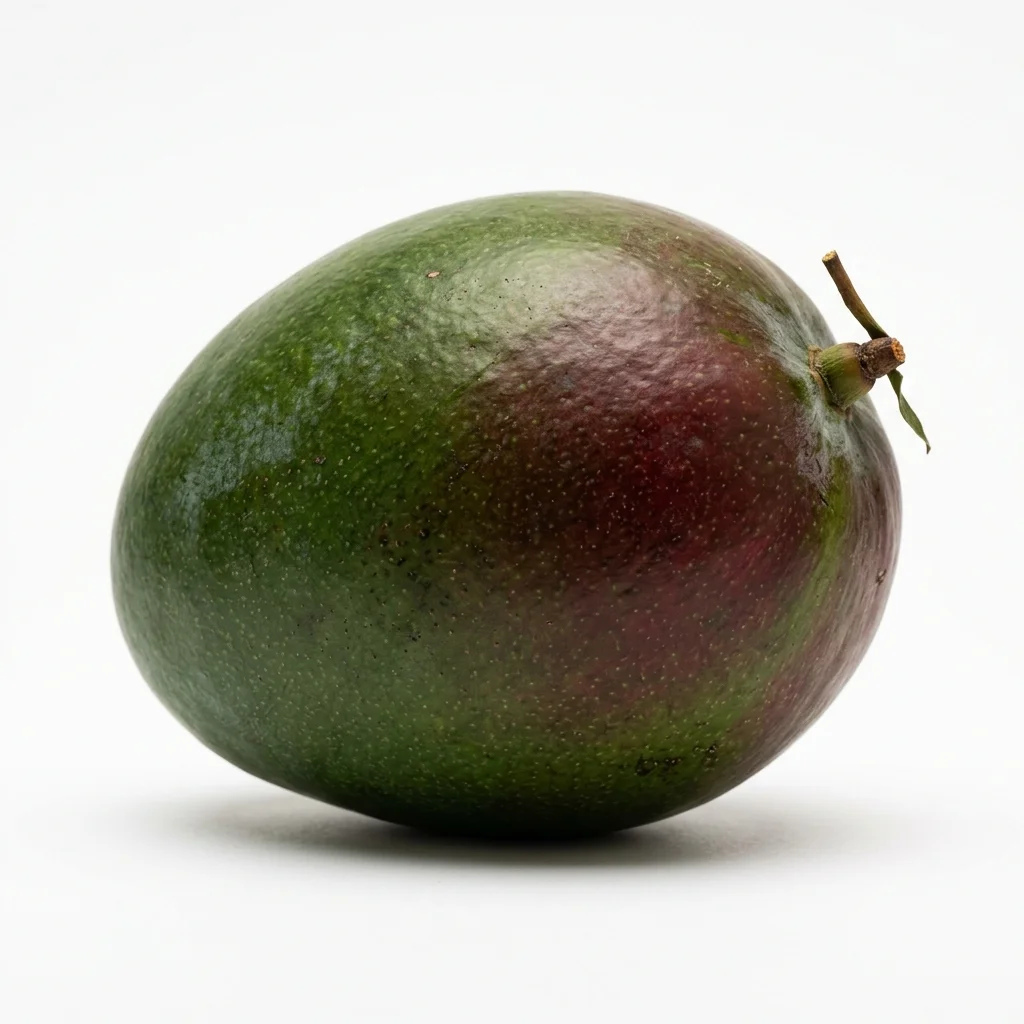
Typical diseases and disorders affecting this variety:
Detect these early using our Plant Guard AI.
Read our detailed Mango Diseases & Safety Guide.
Kent is a world-renowned premium international mango variety that originated in Florida, USA, in the 1940s. Highly celebrated for its exceptional quality, visual beauty, and late-season ripening, it is grown in late-season horticultural belts in India to bridge the gap between summer and autumn.
Physically, Kent is a large mango, typically weighing between 450 and 600 grams, with a neat, regular oval shape and a smooth, thick skin. The skin turns a beautiful greenish-yellow when ripe, highlighted by a rich, deep red or purple blush on the shoulders and small yellow lenticels.
The flavor is intensely sweet, rich, and buttery with a delightful tropical overtone. The deep-yellow pulp is exceptionally smooth, tender, and contains a minimal (almost none) amount of very soft fiber near the stone. It carries a pleasant, aromatic scent that is sweet and clean.
Kent is a late-season variety, ripening from July to September, with its peak harvest in August. In India, it is primarily cultivated in Maharashtra, Gujarat, and Andhra Pradesh, where dry, warm late-summer conditions allow the fruit to ripen to perfection on the tree.
Compared to Keitt, Tommy Atkins, and its predecessor Haden, Kent is rounder than Keitt and far less fibrous than both Haden and Tommy Atkins. While Keitt remains mostly green, Kent develops a much richer red-purple blush and a slightly sweeter, more buttery, completely fiberless flavor profile that makes it a top-tier dessert mango.
Post-harvest characteristics of Kent are outstanding. It has a robust shelf life of 10 to 12 days at room temperature, maintaining its firmness and resisting internal decay. Its thick skin and firm flesh allow it to withstand long-distance marine shipping and handling, making it a global export favorite.
Sweet, rich (better than most international varieties)
Moderate, sweet
Smooth, minimal fiber
Minimal
How to tell if it's a genuine Kent:
Did you know that Alphonso is called Badami in Karnataka and Hapus in Maharashtra? Explore our complete state-by-state guide mapping 30+ regional names across India.
Kent was selected as a seedling of the Brooks variety in Coconut Grove, Florida, in 1945 by L.H. Kent, quickly earning a reputation as one of the best tasting mangoes in the world.
Its cultivation in India has provided growers with a highly dependable, export-grade late cultivar that commands premium prices in urban centers.
It is highly resistant to common post-harvest physiological disorders, ensuring high pack-out rates for packing houses.
Quick reference for identifying common healthy vs. problematic conditions:
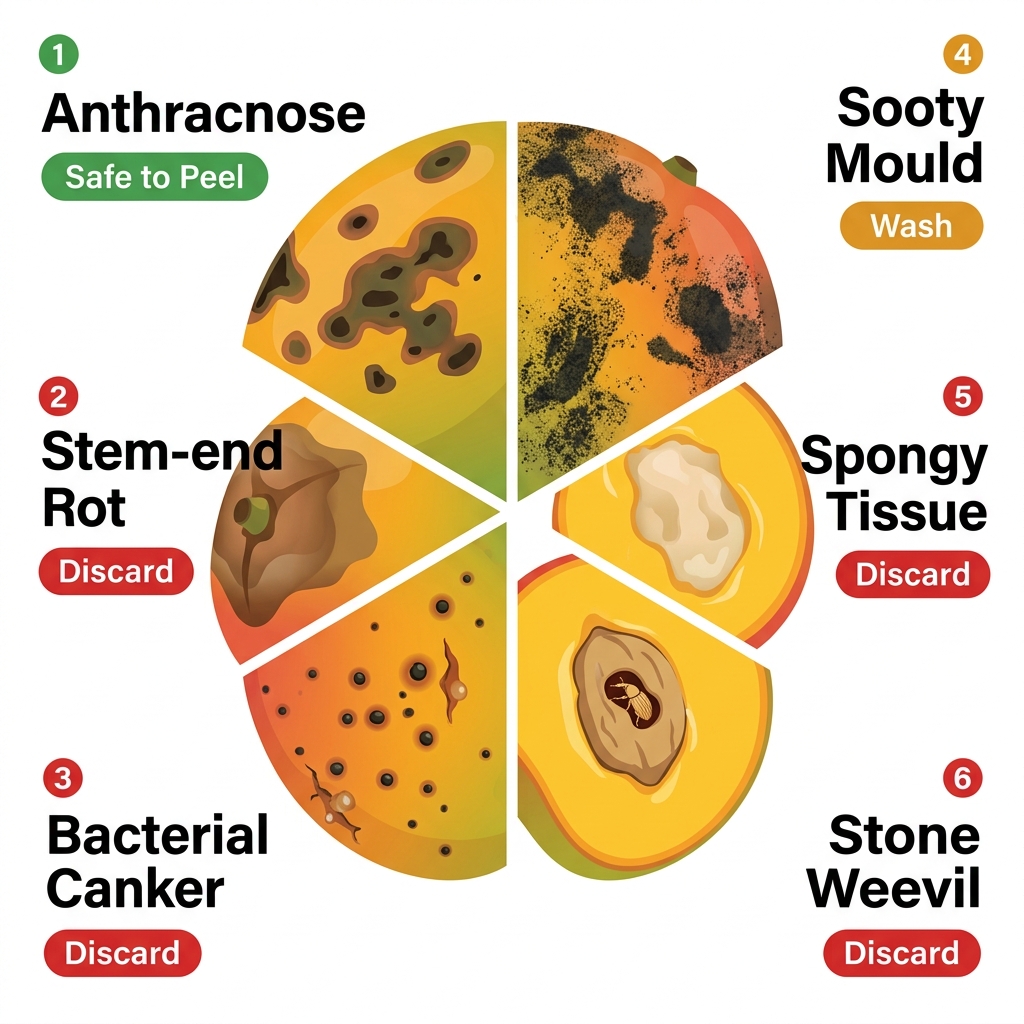
Pro Tip: Surface spots like Anthracnose are often harmless to the fruit inside, while Bacterial Canker or Stem-end Rot usually require discarding the fruit.
Ensure your Kent mango is naturally ripened. Use Food Guard to detect Calcium Carbide and other chemical ripeners.