
📚 Regional Mango Names Guide
Did you know that Alphonso is called Badami in Karnataka and Hapus in Maharashtra? Explore our complete state-by-state guide mapping 30+ regional names across India.
Also known as: Raja Mavinakayi , Ambra Rajapuri, Golden Mango, Rajapuree,
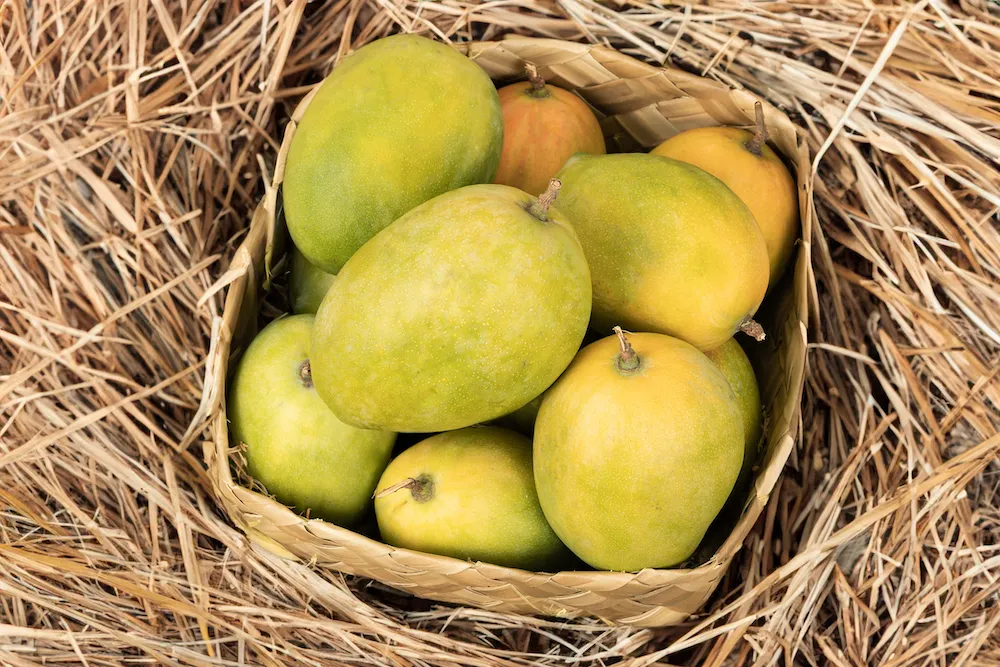
Typical diseases and disorders affecting this variety:
Detect these early using our Plant Guard AI.
Read our detailed Mango Diseases & Safety Guide.
Rajapuri is a massive, highly versatile mango variety native to the state of Gujarat and also popular in Maharashtra and Karnataka. True to its name ('King's Town'), it is known for its regal size and its status as a multi-purpose workhorse in the Indian mango industry.
Physically, Rajapuri is one of the largest mangoes in India, frequently weighing between 500 grams and 1 kilogram. It has a distinctive round to round-oval shape. The skin is smooth, medium-thick, and ripens to a bright, uniform golden-yellow, sometimes with a very light greenish tinge.
The flavor profile is mild, pleasant, and sweet with a balanced acidity. The pulp is a light yellow, incredibly firm, and meaty. While it has a minimal amount of fiber, it is generally considered smooth and very easy to slice. It carries a mild, sweet fruity aroma.
The Rajapuri season is mid-season, typically starting in May and lasting through June. It is cultivated extensively across Gujarat and Maharashtra. Its high yield and resistance to common pests make it a very attractive variety for large-scale commercial farming.
When comparing it to Kesar, Alphonso, Totapuri, and Pairi, Rajapuri is prized for its size and volume. While Kesar and Alphonso are premium dessert mangoes, Rajapuri is the king of utility—perfect for pickles when raw and bulk pulp when ripe. Discover more multi-purpose varieties at our Mango Identifier hub.
Post-harvest, Rajapuri has a good shelf life of 6-8 days. Its large size and firm flesh make it highly resistant to bruising and transit damage. Its thick skin also provides good protection against the mango fruit fly, making it a reliable variety for transport to distant markets.
Sweet with slight tartness
Moderate, fruity
Moderately fibrous, juicy
Moderate
How to tell if it's a genuine Rajapuri:
Did you know that Alphonso is called Badami in Karnataka and Hapus in Maharashtra? Explore our complete state-by-state guide mapping 30+ regional names across India.
A traditional Gujarati variety that has been a staple in the region's culinary culture for generations.
The absolute favorite variety for making traditional 'Katki' and 'Chunda' (sweet Gujarati mango pickles) due to its firm, meaty raw flesh.
Highly valued by the processing industry for its high pulp-to-stone ratio and consistent flavor.
Quick reference for identifying common healthy vs. problematic conditions:
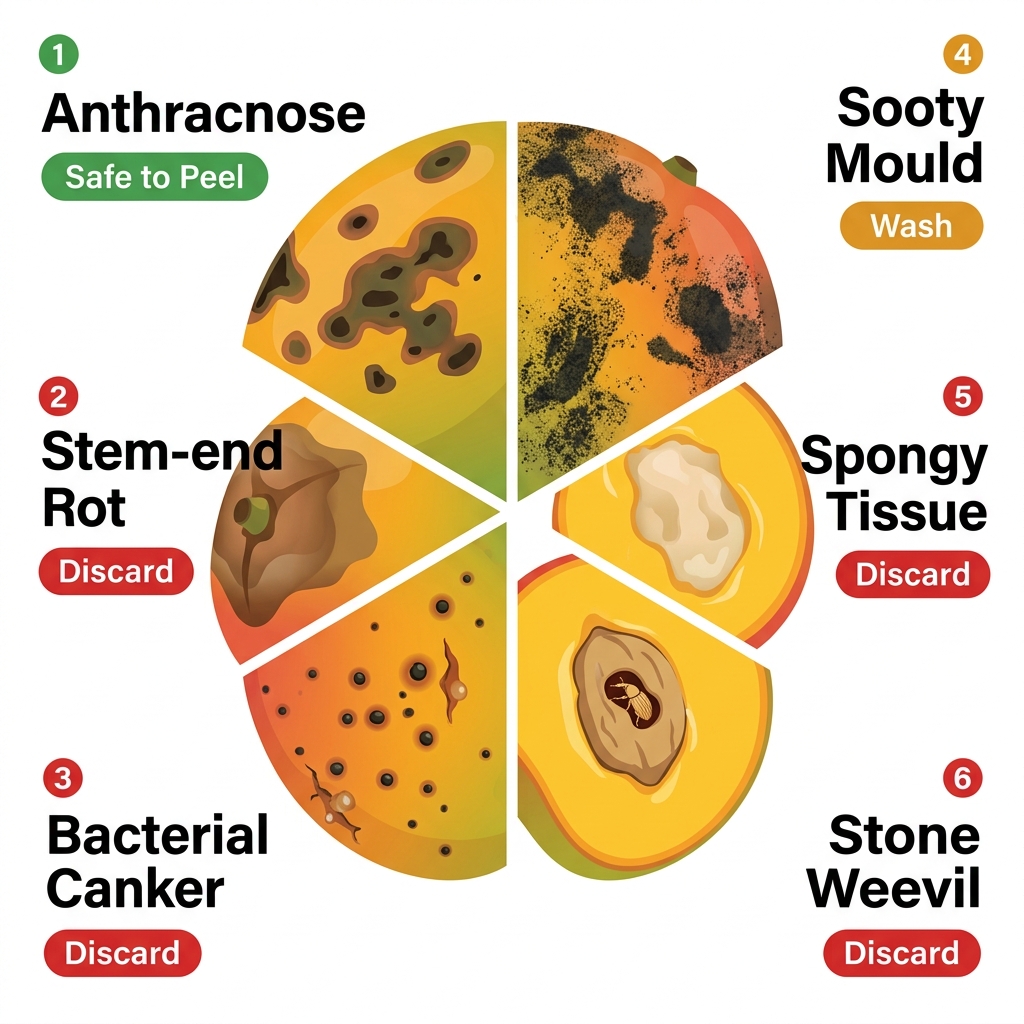
Pro Tip: Surface spots like Anthracnose are often harmless to the fruit inside, while Bacterial Canker or Stem-end Rot usually require discarding the fruit.
Ensure your Rajapuri mango is naturally ripened. Use Food Guard to detect Calcium Carbide and other chemical ripeners.