How to Test Mango for Adulteration (Calcium Carbide, Ethephon, Arsenic/Phosphorus)
⚡ Quick 60-Second Mango Purity & Ripening Verdict
Industrial Calcium Carbide ('Masala') & Dye Risk: Cheap acetylene gas forces ripening in 24 hours but leaves toxic arsenic and phosphorus hydride residues. Injected or surface-dyed mangoes pose severe neurological and gastric risks.
Submerge the mango in water. Naturally tree-ripened mangoes are dense and sink to the bottom. Carbide-ripened mangoes contain internal gas pockets and float.
Natural mangoes show organic green-yellow-red gradients. Carbide mangoes display unnaturally uniform neon-yellow with isolated artificial green patches.
Cut and sniff. Pure mango yields copious sweet fragrant nectar. Artificially ripened fruit is dry, flavorless, with a faint chemical sulfur odor.
To learn more about food safety tests and home adulteration detection, read our guides on Banana and Peaches.
Drop Mango photo here to test purity
or click to browse • Supports JPG, PNG, WEBP • Paste with Ctrl+V
Inspection Guide
Click to enlarge
Mango Purity & Ripening Audit
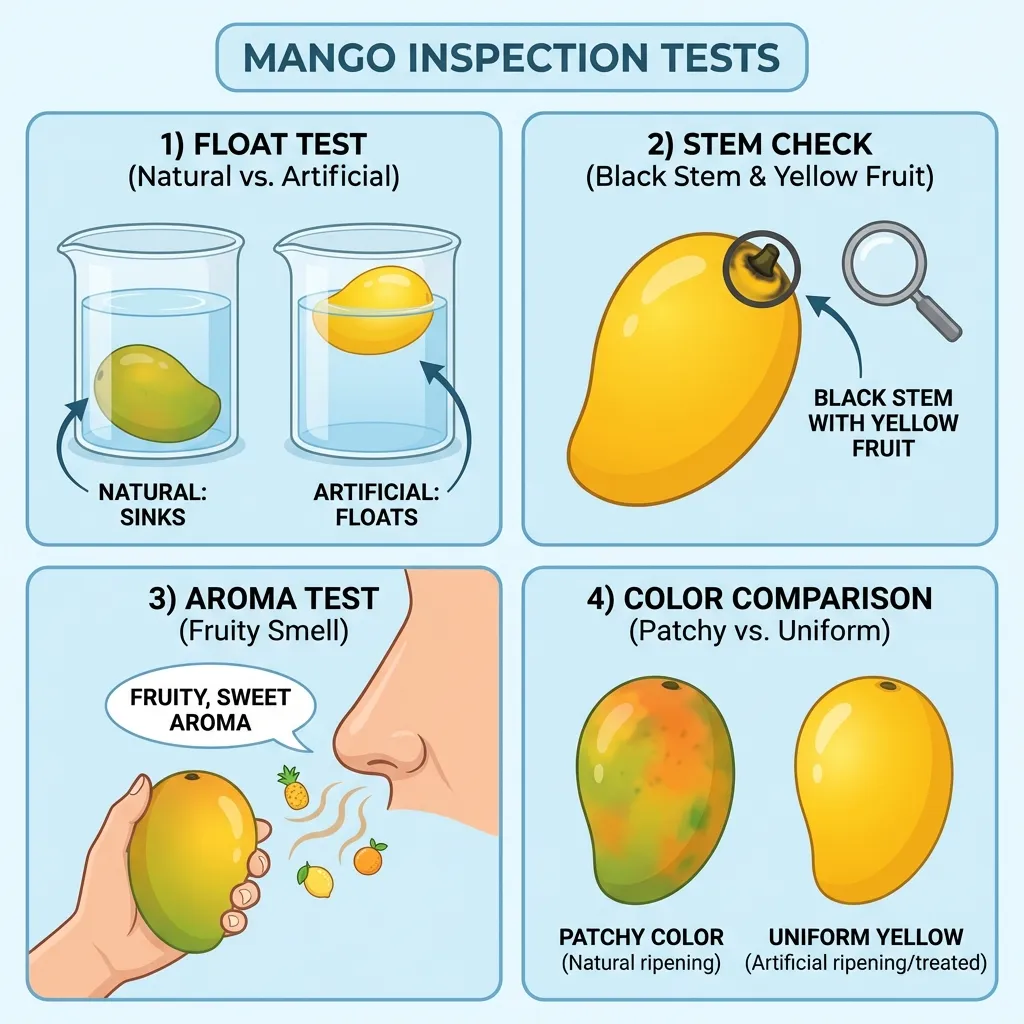
Mangoes are the most common victims of Calcium Carbide (Masala) ripening, which releases acetylene gas to ripen the fruit in 24 hours but leaves toxic arsenic and phosphorus residues.
1. The Sink or Float Test:
Place the mango in a bucket of water. Naturally ripened mangoes are dense and will sink to the bottom. Mangoes ripened artificially with carbide contain gas pockets and often float on the surface.
2. The Color Uniformity Check:
Look at the color distribution. Naturally ripened mangoes have a mix of green, yellow, and red patches with a gradient. Artificially ripened mangoes have an unnaturally uniform, bright yellow color, often with small, green patches that look out of place.
3. The Juice and Aroma Test:
Naturally ripened mangoes release a lot of juice when cut and have a strong, sweet, intoxicating aroma. Carbide-ripened mangoes have very little juice, a "dry" interior, and a faint or slightly "chemical" smell.
4. The Taste Sensation:
Eat a small piece. If you feel a "burning" or "tingling" sensation on your tongue or throat, it indicates the presence of chemical residues from artificial ripening.
5. Shared Ripening Hazards:
Artificial ripening using Calcium Carbide is also highly prevalent in other tropical fruits. Read our home test guides for Banana and Papaya.
Click to enlarge
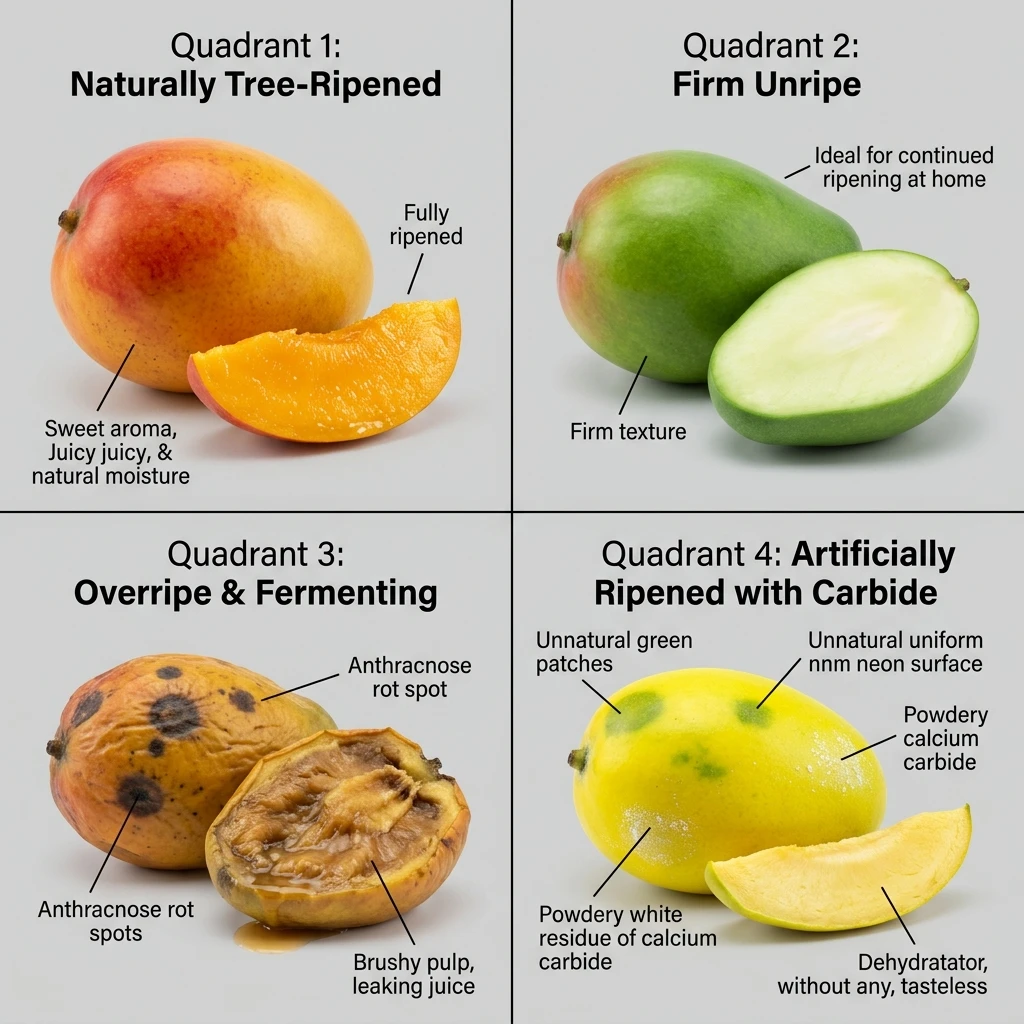
Mango Freshness & Ripeness Guide
Mangoes are climacteric fruits that continue to ripen after harvest at ambient temperatures. Use this guide to assess freshness and safety:
| Ripeness Stage / Quality | Visual & Skin Firmness | Aroma & Pulp Texture | Culinary & Safety Verdict |
|---|---|---|---|
| 1. Tree-Ripened Sweet | Warm vibrant golden-yellow/red blush, yields slightly to gentle thumb pressure, swollen stem shoulder | Intoxicating sweet tropical aroma at stem, tender, dripping nectar | ✅ Prime Eating — Maximum vitamins & luscious sweetness |
| 2. Firm Unripe / Green | Uniform dark emerald-green, rock-hard firmness, tightly closed lenticels | Neutral or faint tart green scent, crisp, crunchy, acidic pulp | ⏳ Ripen at Room Temp (3–5 days, never refrigerate); ideal for green mango slaw, ceviche & aam panna |
| 3. Overripe / Fermenting | Heavily wrinkled skin, large sunken brown spots, mushy or hollow spots | Pungent alcoholic, cidery, or sour fermented odor; dark runny pulp | ⚠️ Do not consume fresh — Mold & microbial spoilage risk; discard if internal mold visible |
| 4. Carbide-Forced Ripening | Unnaturally uniform neon-yellow with persistent rigid green patches | Completely odorless or faint kerosene/sulfur smell; dry, acidic pulp near stone | ❌ Discard Immediately — Toxic hazard from heavy metal residues (arsenic & phosphine) |
Critical Spoilage & Hazard Signs:
- Anthracnose (Depressed Black Spots): Fungal infection (Colletotrichum gloeosporioides) forming teardrop-shaped sunken black lesions. If superficial, cut away generously; discard if deep rot enters the pulp.
- Kerosene or Sulfur Odor: Unmistakable sign of impure industrial calcium carbide treatment. Never consume or juice.
Optimal Storage Rules:
- Never refrigerate raw or semi-ripe mangoes: cold temperatures below 10°C cause 'chilling injury', halting sugar development and leaving pulp grayish and woody.
- Store at ambient room temperature (20–25°C) in an open, well-ventilated bowl or fruit basket.
- Once fully ripe, refrigerate for up to 4–5 days to slow down fermentation.
Quick Safety Tips
- Perform the bucket water test - floating mangoes are suspicious
- Avoid mangoes that look "too perfectly" yellow with zero aroma
- Wash thoroughly with salt and warm water before peeling
- Select mangoes that are slightly firm but have a natural sweet scent
Primary Chemical Concerns
Health Risks & Impacts
Multilingual Local Names
Common Storage Pests
Mango Stone Weevil (Sternochetus mangiferae)
high riskSmall beetles that lay eggs in young fruit; the larvae tunnel through and feed on the stone interior.
Detection
- Small entry scar on the skin
- Black rot and larvae inside the seed cavity when cut
Prevention
- Inspect for skin punctures and resin exudates
- Store in a cool, ventilated area
Corrective Action: What to do?
Cut away the affected pulp; discard if the rot has spread into the edible flesh.
Oriental Fruit Fly (Bactrocera dorsalis)
high riskPest that punctures mango skin to oviposit eggs; emerging maggots feed on and liquefy the pulp.
Detection
- Depressed soft circular patches on the skin
- Active white maggots inside the pulp
Prevention
- Choose firm, undamaged mangoes
- Keep fruit covered with protective mesh covers
Corrective Action: What to do?
Immediately discard infested fruit into outdoor disposal to prevent contaminating other fruits.
Anthracnose & Stem-End Rot (Colletotrichum gloeosporioides)
medium riskPrevalent post-harvest fungal infection that proliferates in warm, humid storage conditions.
Detection
- Sunken circular dark brown or black lesions
- Pink velvety spore masses in high humidity
Prevention
- Store in dry, well-ventilated areas
- Avoid keeping mangoes trapped inside sealed plastic bags
Corrective Action: What to do?
Trim away small superficial spots with a clean knife; discard if rot has penetrated deeply into the flesh.
Regulatory Corner: FSSAI (Food Safety and Standards Authority of India) / Codex Alimentarius (CXS 184-1993)
Regulation: Food Safety and Standards (Prohibition and Restrictions on Sales) Regulations 2011, Regulation 2.3.5: Prohibition on Calcium Carbide & Section 44(g)
Legal Limit:Calcium Carbide (acetylene gas ripening): 0.0% (Strictly prohibited under Section 44); Ethephon residue: Max 2.0 ppm; Arsenic impurity: Max 0.1 ppm; Phosphorus residue: Max 1.0 ppm
Report Adulteration to FSSAI (Food Safety and Standards Authority of India) / Codex Alimentarius (CXS 184-1993)