
📚 Regional Mango Names Guide
Did you know that Alphonso is called Badami in Karnataka and Hapus in Maharashtra? Explore our complete state-by-state guide mapping 30+ regional names across India.
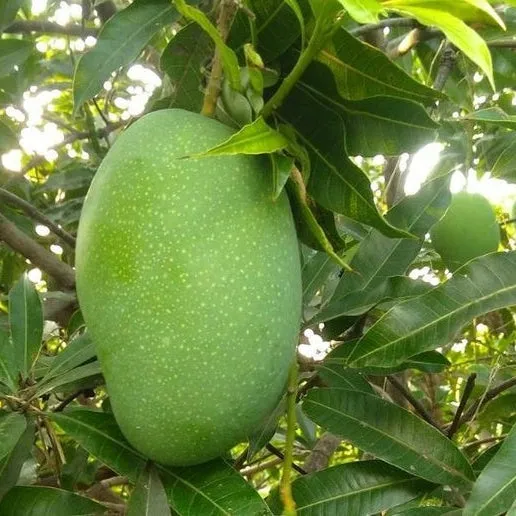
Typical diseases and disorders affecting this variety:
Detect these early using our Plant Guard AI.
Read our detailed Mango Diseases & Safety Guide.
Safdar Pasand is an exotic regional specialty mango variety hailing from the historic district of Murshidabad in West Bengal. It is highly prized by connoisseurs of eastern Indian mangoes for its extreme sweetness and rich historical heritage dating back to the era of the Nawabs of Bengal.
Physically, Safdar Pasand is a medium-sized mango, generally weighing between 200 and 300 grams, with an elegant oval-oblique shape and a slightly curved tip. The skin is thin, delicate, and turns a light yellow-green color when fully ripe, with small whitish lenticels scattered across the surface.
The taste is intensely sweet, reminiscent of liquid honey with distinct floral and honeyed notes. The deep saffron-colored pulp is smooth, melting, and completely free of any stringy fiber. It carries a strong, sweet floral aroma that fills the room upon ripening, typical of premium Murshidabad varieties.
The Safdar Pasand season is relatively brief, starting in mid-May, peaking in early June, and concluding by late June. It is exclusively grown in the fertile alluvial soils along the Bhagirathi river in Murshidabad and Malda districts of West Bengal, with small orchards in neighboring Bihar.
Compared to Himsagar, Langra, and Chausa, Safdar Pasand is slightly smaller but boasts a more delicate, floral sweetness. While Himsagar is rich and heavy, Safdar Pasand offers a more aromatic, perfume-like experience, though its thin skin makes it much more delicate to handle. Discover more varieties at the Mango Identifier hub.
Due to its extremely thin skin and juicy, soft pulp, Safdar Pasand has a short post-harvest shelf life of just 3 to 5 days. It is a highly delicate variety that does not tolerate long-distance shipping well, making it a prized local delicacy that is best consumed fresh within the growing region.
For comparisons with other regional and specialized cultivars, explore our profiles on Fernandina and Nekkare.
Sweet, aromatic
Moderate, sweet
Smooth, minimal fiber
Minimal
How to tell if it's a genuine Safdar Pasand:
Did you know that Alphonso is called Badami in Karnataka and Hapus in Maharashtra? Explore our complete state-by-state guide mapping 30+ regional names across India.
Safdar Pasand was developed and named in honor of Safdar Jung, a prominent historical figure, and was actively cultivated in the private royal orchards of the Nawabs of Murshidabad.
It represents the golden age of Bengal horticultural selection, where hundreds of unique mango cultivars were carefully bred for the royal courts.
The variety is considered a rare heritage mango today, preserved in old orchards along the Bhagirathi river basin.
Quick reference for identifying common healthy vs. problematic conditions:
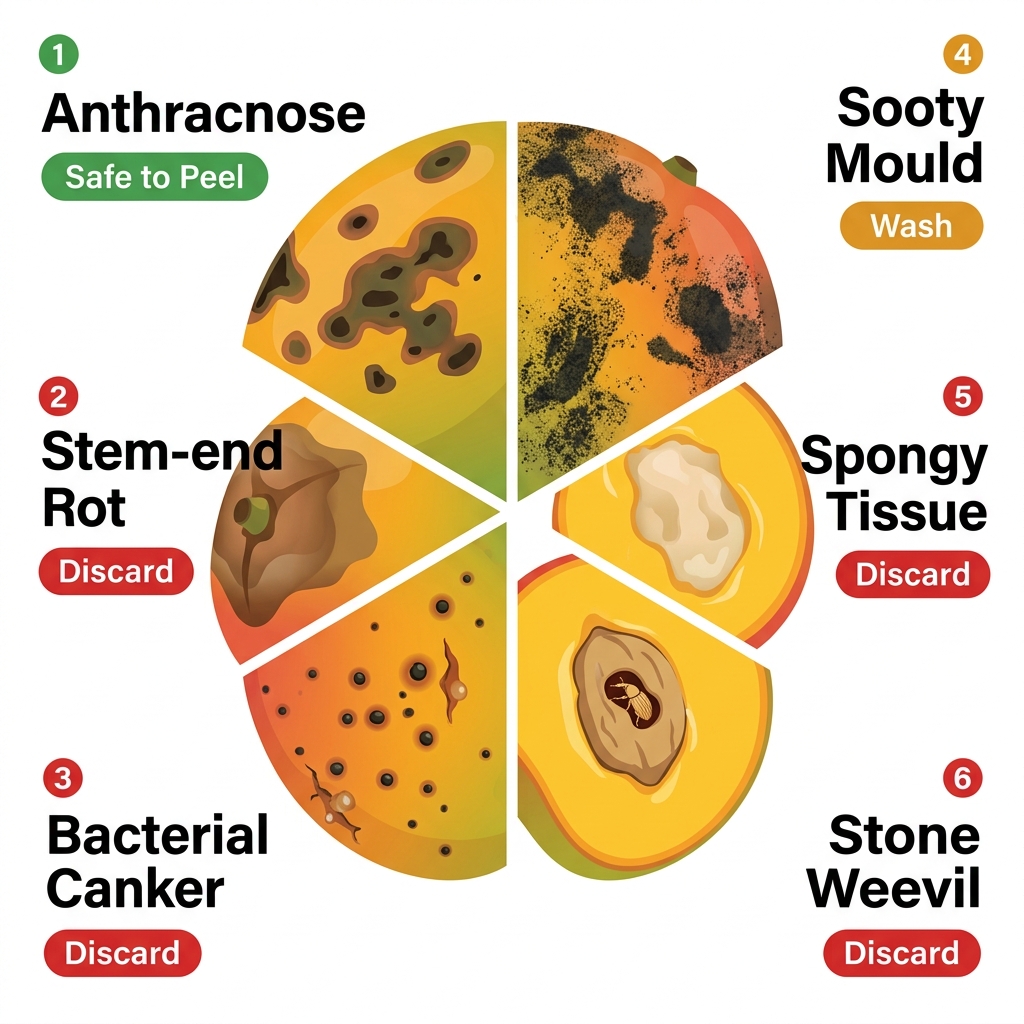
Pro Tip: Surface spots like Anthracnose are often harmless to the fruit inside, while Bacterial Canker or Stem-end Rot usually require discarding the fruit.
Ensure your Safdar Pasand mango is naturally ripened. Use Food Guard to detect Calcium Carbide and other chemical ripeners.