
📚 Regional Mango Names Guide
Did you know that Alphonso is called Badami in Karnataka and Hapus in Maharashtra? Explore our complete state-by-state guide mapping 30+ regional names across India.
Typical diseases and disorders affecting this variety:
Detect these early using our Plant Guard AI.
Read our detailed Mango Diseases & Safety Guide.
Haden is a legendary and historically significant mango variety that serves as the parent to most modern Florida cultivars. It was the first commercial mango variety to be developed in Florida in the early 20th century, and it revolutionized the mango industry by combining attractive color with good eating quality.
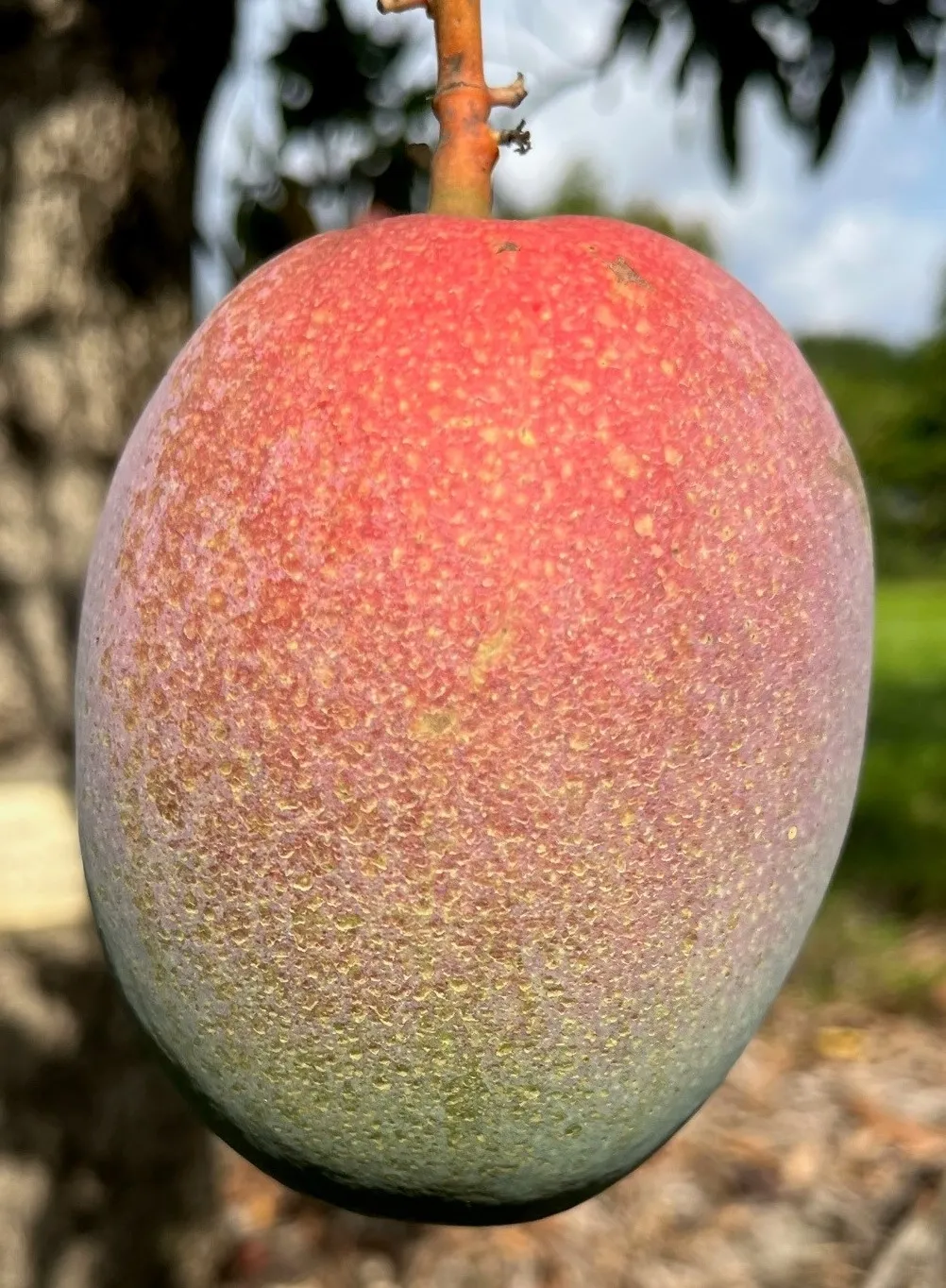
Physically, Haden is a medium to large mango, typically weighing between 450 and 650 grams. It has an attractive, symmetric oval shape. The skin is smooth and ripens to a brilliant, uniform golden-yellow background almost entirely covered with a espectacular bright red or crimson-red blush.
The flavor profile is rich, sweet, and highly satisfying with a distinct, spicy tropical aroma. The pulp is a vibrant orange-yellow, firm, and contains a minimal to moderate amount of fine fiber. While it has more fiber than Kent, its flavor is considered superior to its descendant Tommy Atkins.
The Haden season is mid-season, typically peaking in May and June in Florida and Mexico. It is cultivated across the Americas and remains a favorite in home gardens and specialty markets due to its beautiful appearance and classic 'mango' taste.
When comparing it to Tommy Atkins or Kent, Haden is the 'original' red mango. While Tommy Atkins is more durable and Kent is fiberless, Haden offers the best balance of visual appeal and traditional rich flavor. Discover more Florida heritage varieties at our Mango Identifier hub.
Post-harvest, Haden has a good shelf life of 6-8 days. Its firm flesh and sturdy skin provide decent resistance to handling, although it is more susceptible to anthracnose (skin spotting) than some modern hybrids. It is a top choice for fresh table consumption, premium desserts, and artisanal mango preserves.
Sweet, aromatic, rich
Strong, fruity
Moderately fibrous
Moderate
How to tell if it's a genuine Haden:
Did you know that Alphonso is called Badami in Karnataka and Hapus in Maharashtra? Explore our complete state-by-state guide mapping 30+ regional names across India.
Originated as a seedling of the Indian variety 'Mulgoba' (Malgova) in the grove of Captain John Haden in Coconut Grove, Florida, in 1902.
It is the direct ancestor of nearly all modern red-blushed mangoes, including Tommy Atkins, Kent, and Keitt.
Played a critical role in establishing the mango as a commercial crop in the United States and the Caribbean.
Quick reference for identifying common healthy vs. problematic conditions:
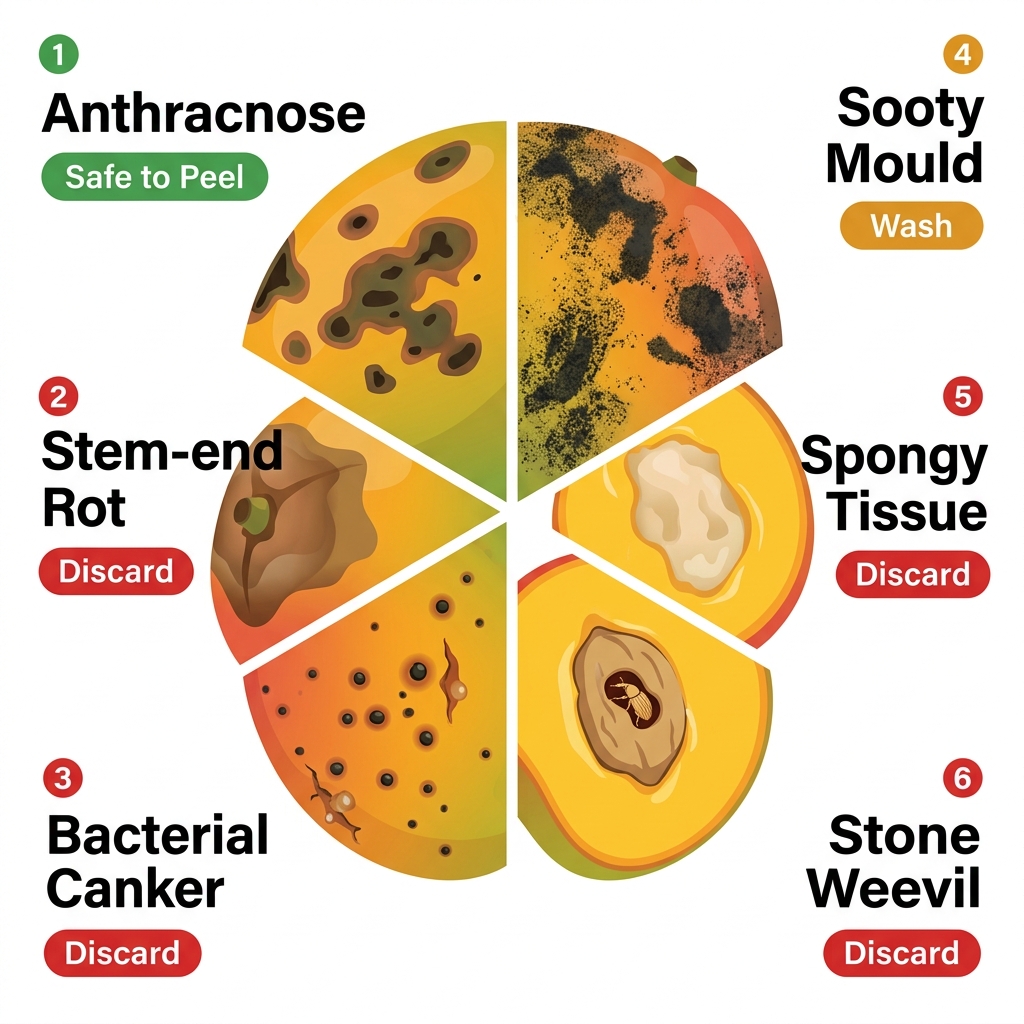
Pro Tip: Surface spots like Anthracnose are often harmless to the fruit inside, while Bacterial Canker or Stem-end Rot usually require discarding the fruit.
Ensure your Haden mango is naturally ripened. Use Food Guard to detect Calcium Carbide and other chemical ripeners.