
📚 Regional Mango Names Guide
Did you know that Alphonso is called Badami in Karnataka and Hapus in Maharashtra? Explore our complete state-by-state guide mapping 30+ regional names across India.
Also known as: Mancurad, Goa Mankur, Malcorado, Corado
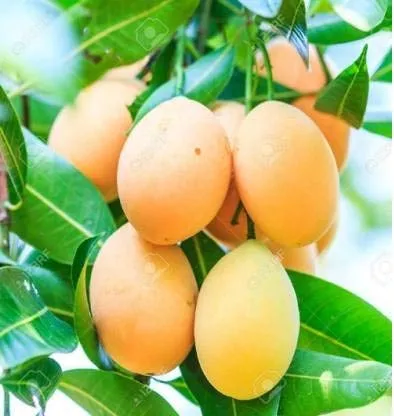
Typical diseases and disorders affecting this variety:
Detect these early using our Plant Guard AI.
Read our detailed Mango Diseases & Safety Guide.
The Mankurad mango is legally protected under India's Geographical Indications of Goods Act. Genuine Mankurad mangoes must originate from the certified soils of its designated region (e.g., Konkan coast for Alphonso, Saurashtra for Kesar) to carry this designation.
Mankurad (also known as Malcorada, Goa Mankur, or Mankurad) is the undisputed king of Goan mangoes. It is a legendary, ultra-premium heritage variety that is often considered by many in the region to be superior even to the world-famous Alphonso.
Physically, Mankurad is a medium-sized mango, typically weighing between 250 and 350 grams. It has a neat, symmetric round-oval shape with a smooth, thin skin that ripens to a brilliant, uniform golden-yellow. Unlike many other premium varieties, it rarely has a blush.
The flavor and aroma of Mankurad are extraordinary. It is exceptionally sweet with a complex, rich, and honey-like flavor that lacks any acidity. The pulp is a deep saffron color, incredibly juicy, and 100% fiberless (none). Its aroma is powerful, sweet, and uniquely distinct from the Alphonso.
The Mankurad season is early and very short, typically arriving in late March and finishing by May. it is grown almost exclusively in the coastal state of Goa, where the unique sea-breeze and humid coastal air contribute to its exceptional sugar content and flavor.
When comparing it to Alphonso, Malgova, Himsagar, and Kishen Bhog, Mankurad is prized for its pure, unadulterated sweetness. While Alphonso has a buttery richness, Mankurad is more juicy and honey-sweet. Discover more coastal treasures at our Mango Identifier hub.
Post-harvest, Mankurad is an extremely delicate and perishable fruit. It has a short shelf life of only 3-5 days once ripe. Its thin skin and soft, juicy pulp make it highly susceptible to bruising, which is why it is rarely seen outside of Goa and neighboring regions.
Exceptionally sweet, intense flavor
Sweet, pleasant
Smooth, minimal fiber
Minimal
How to tell if it's a genuine Mankurad:
Did you know that Alphonso is called Badami in Karnataka and Hapus in Maharashtra? Explore our complete state-by-state guide mapping 30+ regional names across India.
Its name is a corruption of the Portuguese 'Malcorada', which means 'badly colored', referring to its lack of a blush compared to the Portuguese 'Bemcorada' (well colored).
Granted a Geographical Indication (GI) tag in 2023, protecting its status as a unique product of Goa.
Historically the most expensive mango in the local Goan markets, often sold in individual units rather than by weight during the early season.
Quick reference for identifying common healthy vs. problematic conditions:
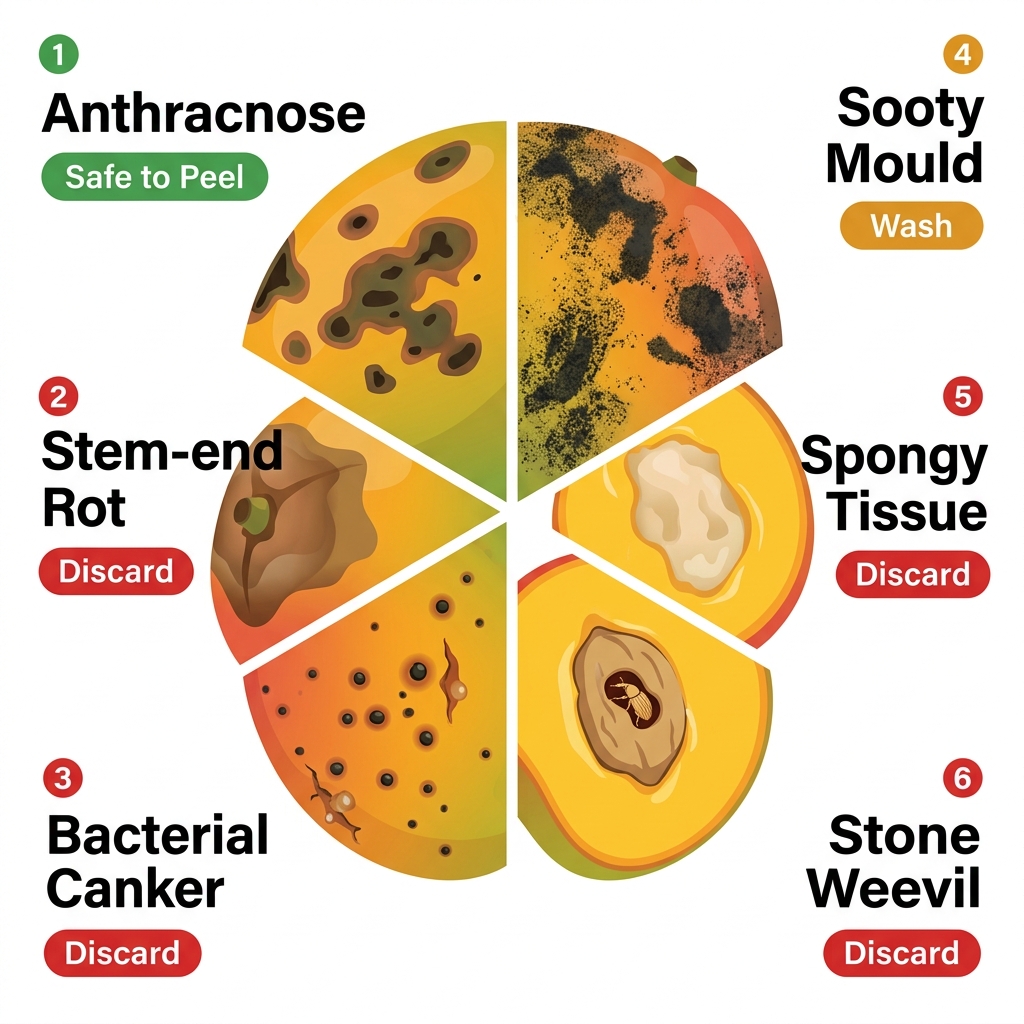
Pro Tip: Surface spots like Anthracnose are often harmless to the fruit inside, while Bacterial Canker or Stem-end Rot usually require discarding the fruit.
Ensure your Mankurad mango is naturally ripened. Use Food Guard to detect Calcium Carbide and other chemical ripeners.