
📚 Regional Mango Names Guide
Did you know that Alphonso is called Badami in Karnataka and Hapus in Maharashtra? Explore our complete state-by-state guide mapping 30+ regional names across India.
Also known as: Rumani x Neelum Hybrid
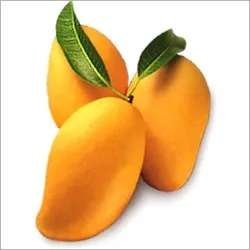
Typical diseases and disorders affecting this variety:
Detect these early using our Plant Guard AI.
Read our detailed Mango Diseases & Safety Guide.
Manjeera is a highly successful and high-yielding hybrid mango variety developed at the Fruit Research Station, Sangareddy, Telangana. It is a controlled cross between Rumani and Neelum, bred specifically to combine the attractive round shape of Rumani with the exceptional shelf life and regular bearing habit of Neelum.
Physically, Manjeera is a medium-sized mango, typically weighing between 250 and 350 grams. It has a beautiful, symmetric round shape inherited from its Rumani parent, with a smooth skin that ripens to a bright, uniform golden-yellow. Its clean, round appearance makes it a popular novelty in southern markets.
The flavor profile is pleasantly sweet with a balanced acidity and a mild, tropical aroma. The pulp is a deep yellow, firm, and juicy, with a minimal amount of fine fiber. It offers a very satisfying eating experience that is more flavorful than the standard Rumani while maintaining a dense, meaty bite.
The Manjeera season is mid-to-late, typically starting in May and peaking in June and early July. It is cultivated primarily in Telangana and Andhra Pradesh, where it has gained popularity as a reliable commercial variety that bridges the gap between mid-season and late-season harvests.
When comparing it to its parents Rumani and Neelum, Manjeera is essentially a more robust and flavorful version of Rumani. While Banganapalli dominates the region, Manjeera offers a unique round-fruit alternative with superior keeping quality. Discover more hybrid varieties at our Mango Identifier hub.
Post-harvest, Manjeera has an excellent shelf life of 8-10 days, inheriting the sturdy genetics of Neelum. Its firm flesh and round shape make it highly resistant to bruising and transit damage, allowing it to be shipped to distant urban markets without significant losses.
For comparisons with other regional and specialized cultivars, explore our profiles on Au Rumani and Fernandina.
Sweet, pleasant
Sweet, mild
Firm, smooth
Minimal
How to tell if it's a genuine Manjeera:
Did you know that Alphonso is called Badami in Karnataka and Hapus in Maharashtra? Explore our complete state-by-state guide mapping 30+ regional names across India.
Developed at the Sangareddy Fruit Research Station (Telangana Agricultural University) as part of a mission to create high-yielding South Indian hybrids.
A successful example of hybrid vigor, combining the best traits of two popular southern cultivars (Rumani x Neelum).
Gaining rapid acceptance among commercial growers in the Deccan Plateau for its consistent annual bearing habit.
Quick reference for identifying common healthy vs. problematic conditions:
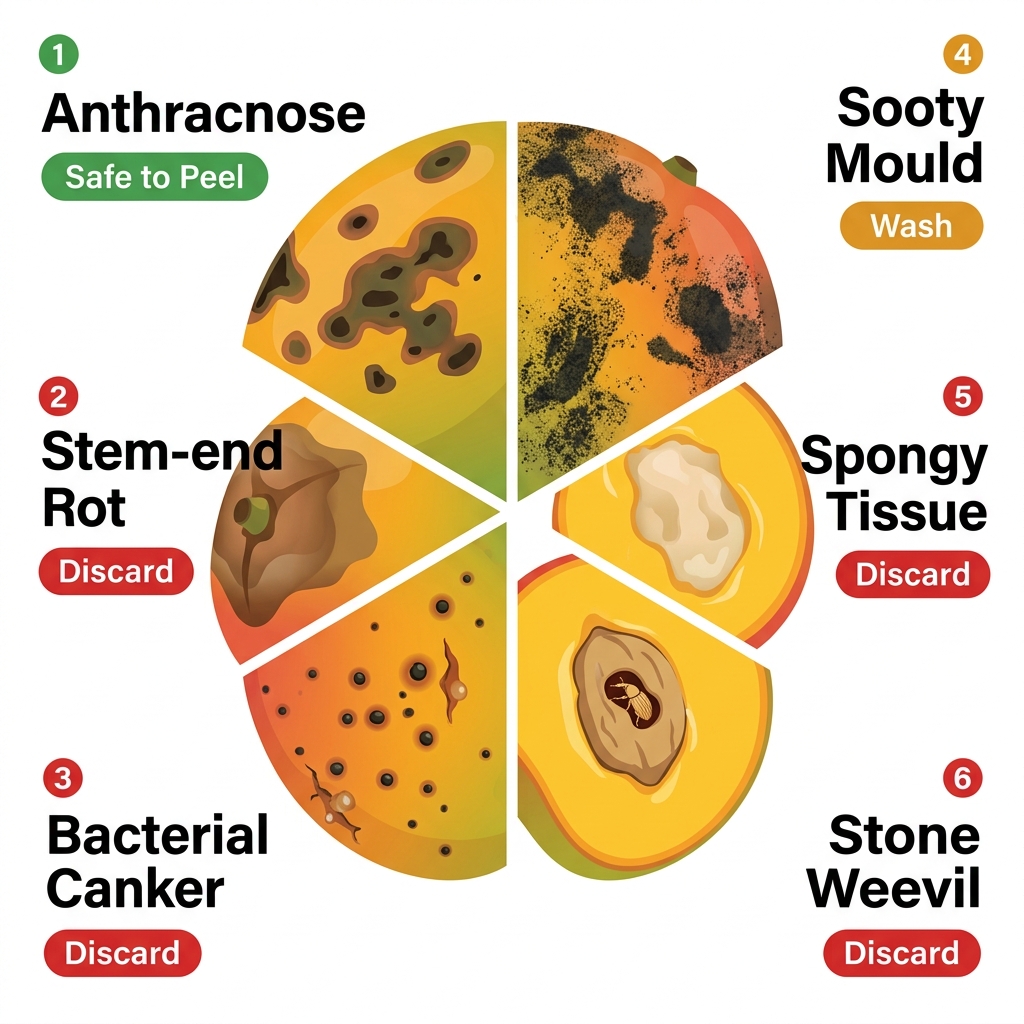
Pro Tip: Surface spots like Anthracnose are often harmless to the fruit inside, while Bacterial Canker or Stem-end Rot usually require discarding the fruit.
Ensure your Manjeera mango is naturally ripened. Use Food Guard to detect Calcium Carbide and other chemical ripeners.