
📚 Regional Mango Names Guide
Did you know that Alphonso is called Badami in Karnataka and Hapus in Maharashtra? Explore our complete state-by-state guide mapping 30+ regional names across India.
Also known as: Sindhoora, Sendura, Senthoora, Sindhura, Lalbagh Mango, Lal Bag, Sindhooram, Honey Mango, Red Blush Mango
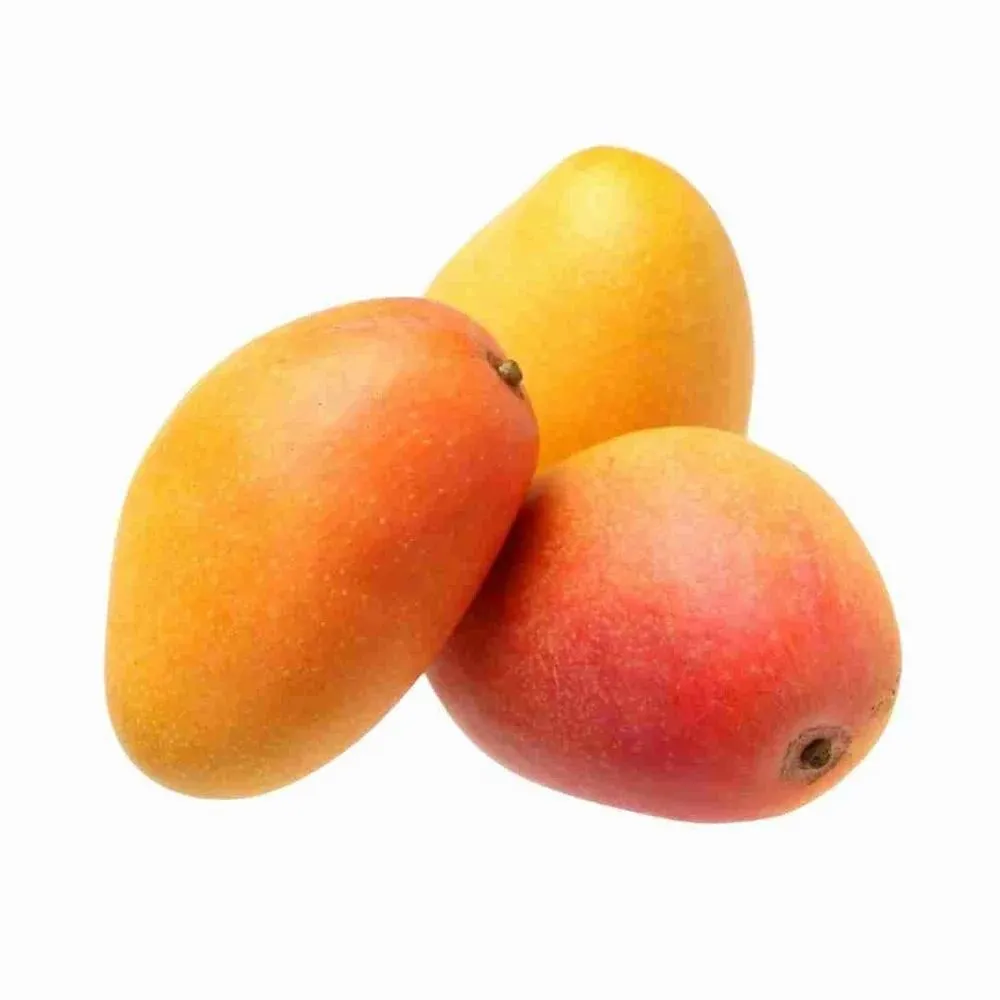
Typical diseases and disorders affecting this variety:
Detect these early using our Plant Guard AI.
Read our detailed Mango Diseases & Safety Guide.
Sindoori (widely celebrated in South India as Senthoora, Sendura, or Sindhooram) is one of India's most visually stunning mango varieties. It is named after 'Sindoor' (vermilion) because of its signature bright crimson-pink blush that blankets the shoulders and upper half of the fruit as it ripens under the summer sun.
Cultivated predominantly across Tamil Nadu (Salem, Krishnagiri, and Dharmapuri), Karnataka (Kolar, Chikkaballapur), Andhra Pradesh (Chittoor), and Kerala, Sindoori is one of the earliest high-yielding varieties to herald the Indian summer, arriving in markets from mid-April and peaking throughout May and June.
Physically, Sindoori is a medium-to-large fruit weighing between 250 and 450 grams. Its skin transitions from green to a glowing golden-yellow with a vibrant red-orange blush. Inside, the pulp is deep saffron-yellow, silky-smooth, and loaded with nectar. Its Total Soluble Solids (TSS) consistently register between 17° and 19° Brix, offering a honeyed sweetness accented by a pleasant, thirst-quenching tang.
Because of its high juice content and melting texture, Sindoori is beloved both as a table slicing mango and as a direct 'sucking mango'. It is also a staple for roadside fresh mango juice stalls, mango milkshakes, and home preserves across Southern India.
Post-harvest, Sindoori offers an excellent shelf life of 7 to 9 days at room temperature. Its sturdy skin makes it resilient during interstate transport, enabling fresh orchard crates from Salem and Kolar to reach major wholesale mandis across Northern and Western India at attractive, budget-friendly prices.
Richly sweet with balanced mild citrus tang and honeyed undertones (17°-19° Brix)
Intense sweet honey-floral fragrance with light tropical undertones
Smooth, melting, exceptionally juicy with minimal fine fiber
Minimal
How to tell if it's a genuine Sindoori:
Did you know that Alphonso is called Badami in Karnataka and Hapus in Maharashtra? Explore our complete state-by-state guide mapping 30+ regional names across India.
Named 'Sindoori' because its vibrant red blush mirrors the auspicious vermilion powder used in Indian traditions.
Known as Senthoora in Salem (Tamil Nadu) where mango melas celebrate it as a quintessential heritage fruit of the Cauvery delta.
In Kerala, known as Sindooram and frequently planted as an auspicious, high-yielding fruit tree in village homesteads.
Historically traded along the old Deccan trade routes, connecting Southern orchards with Central and Northern Indian markets.
Quick reference for identifying common healthy vs. problematic conditions:
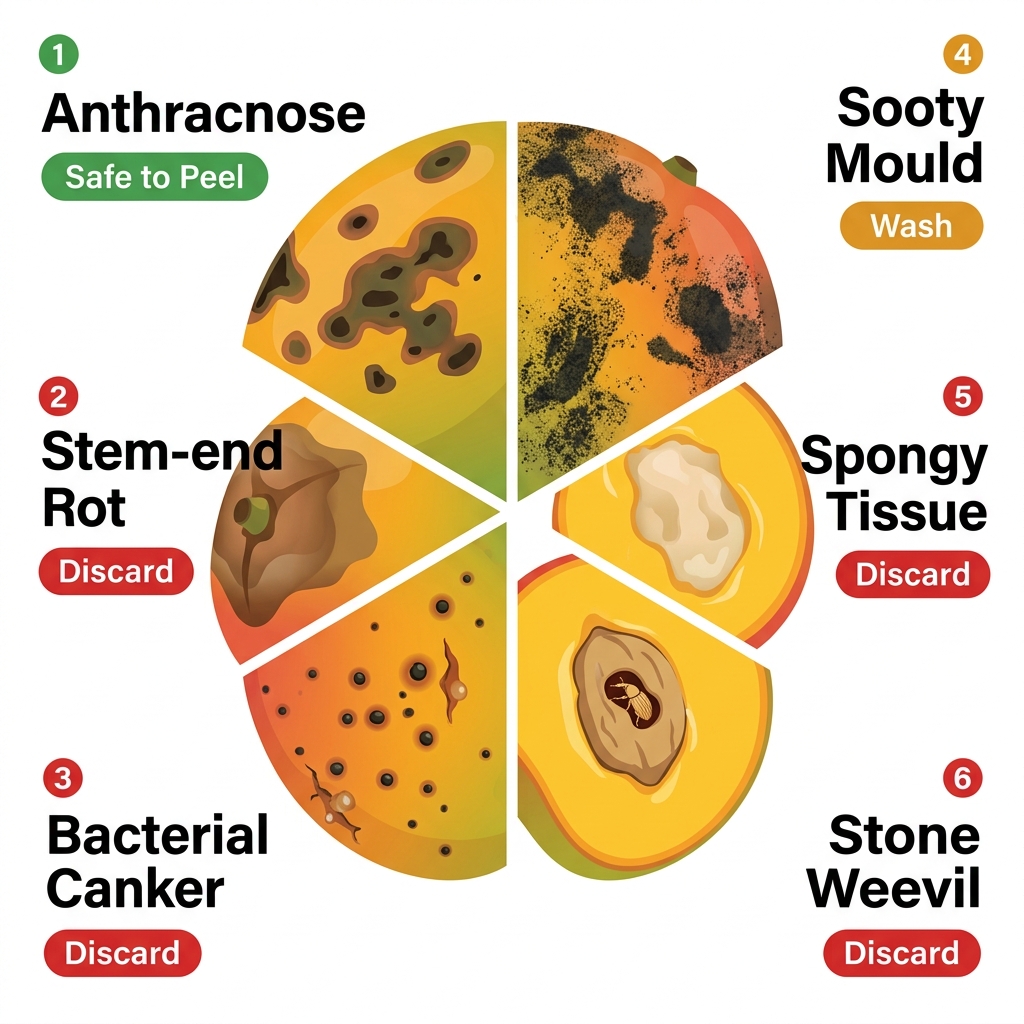
Pro Tip: Surface spots like Anthracnose are often harmless to the fruit inside, while Bacterial Canker or Stem-end Rot usually require discarding the fruit.
Ensure your Sindoori mango is naturally ripened. Use Food Guard to detect Calcium Carbide and other chemical ripeners.