
📚 Regional Mango Names Guide
Did you know that Alphonso is called Badami in Karnataka and Hapus in Maharashtra? Explore our complete state-by-state guide mapping 30+ regional names across India.
Also known as: Moovandan, Three-tied Mango, Kerala Native Mango
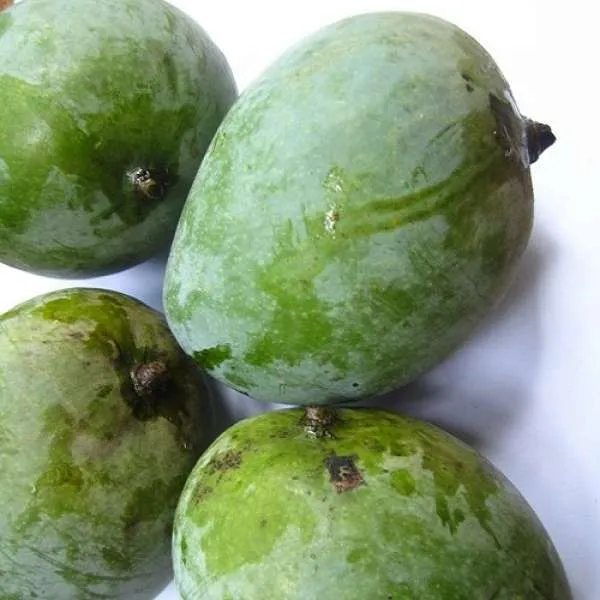
Typical diseases and disorders affecting this variety:
Detect these early using our Plant Guard AI.
Read our detailed Mango Diseases & Safety Guide.
Muvandan (also known as Moovandan) is a highly popular and traditional mango variety native to the state of Kerala, India. It is a staple of the Kerala summer, cherished for its reliability, pleasant taste, and its status as a robust variety that thrives in the tropical, high-rainfall climate of the Western Ghats.
Physically, Muvandan is a medium-sized mango, typically weighing between 250 and 350 grams. It has an attractive, symmetric oval shape with a smooth, medium-thick skin. The skin ripens to a beautiful, uniform golden-yellow, often with very fine, light-colored lenticels.
The flavor profile is sweet and mild with a refreshing, slightly watery juiciness that is typical of many coastal varieties. The pulp is a vibrant yellow-orange, firm, and contains a minimal amount of fine fiber. It carries a pleasant, mild fruity aroma that is sweet but not overpowering.
The Muvandan season is early, typically starting in March and peaking in April and May, coinciding with the Vishu festival in Kerala. It is cultivated extensively across the state, particularly in the Thrissur, Palakkad, and Ernakulam districts. Its hardiness makes it a very common sight in home gardens and local markets.
When comparing it to Neelum or Banganapalli, Muvandan is prized for its early arrival. While Malgova is larger and more premium, Muvandan is the reliable 'everyday' mango of Kerala. Discover more regional southern varieties at our Mango Identifier hub.
Post-harvest, Muvandan has a respectable shelf life of 5-7 days. Its firm flesh and medium-thick skin provide good protection during local transit. It is a preferred variety for fresh table consumption, making traditional Kerala mango curries (Mampazha Pulissery), and for fresh juices and milkshakes.
Sweet, pleasant
Sweet, aromatic
Smooth, minimal fiber
Minimal
How to tell if it's a genuine Muvandan:
Did you know that Alphonso is called Badami in Karnataka and Hapus in Maharashtra? Explore our complete state-by-state guide mapping 30+ regional names across India.
A traditional heritage variety of Kerala, known for its consistent performance in the humid, tropical climate of the region.
Named 'Muvandan' likely referring to its three-year (Moonnu - three, Aandu - year) bearing cycle or maturity in local lore.
Integral to the culinary traditions of Kerala, especially during the summer and harvest festivals.
Quick reference for identifying common healthy vs. problematic conditions:
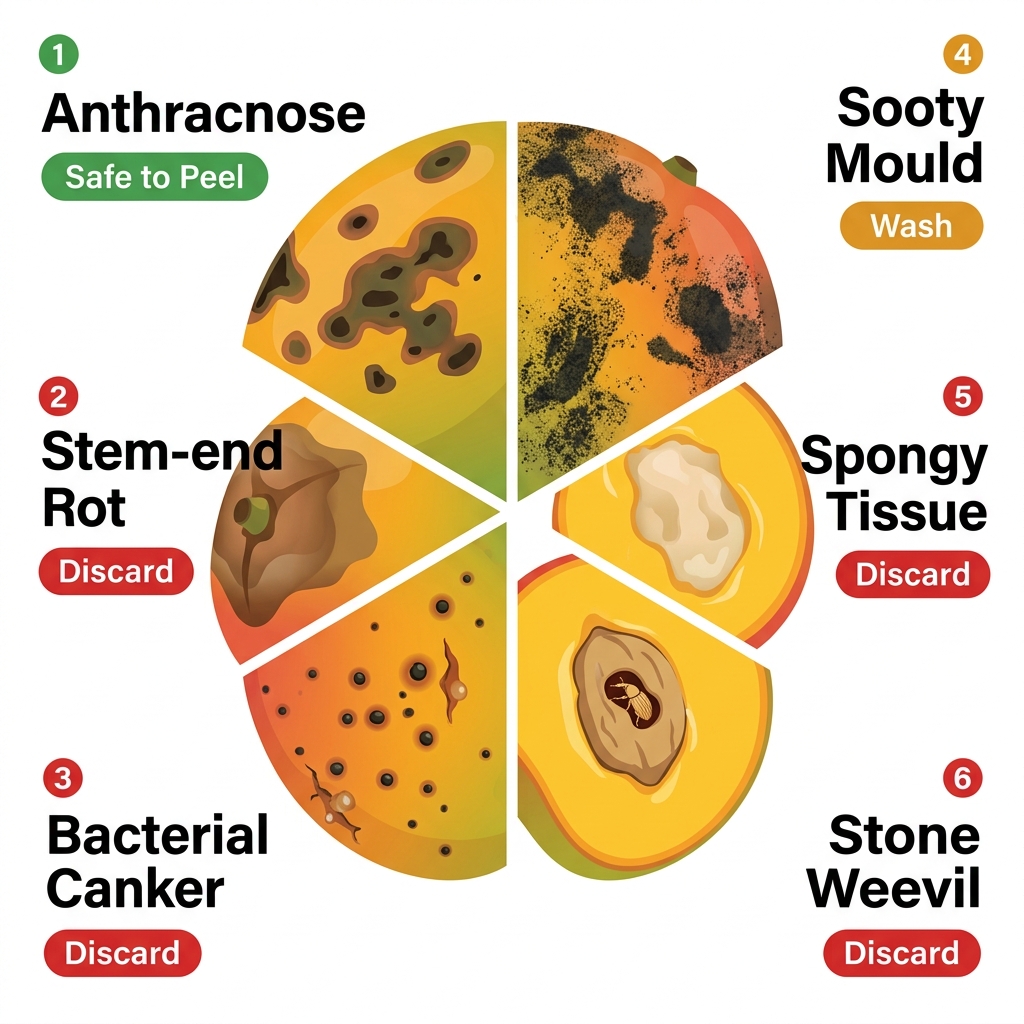
Pro Tip: Surface spots like Anthracnose are often harmless to the fruit inside, while Bacterial Canker or Stem-end Rot usually require discarding the fruit.
Ensure your Muvandan mango is naturally ripened. Use Food Guard to detect Calcium Carbide and other chemical ripeners.