
📚 Regional Mango Names Guide
Did you know that Alphonso is called Badami in Karnataka and Hapus in Maharashtra? Explore our complete state-by-state guide mapping 30+ regional names across India.
Typical diseases and disorders affecting this variety:
Detect these early using our Plant Guard AI.
Read our detailed Mango Diseases & Safety Guide.
Jamadar is a highly esteemed regional commercial mango variety native to the Saurashtra region, particularly around the foothills of Gir in Gujarat. Cultivated alongside the famous Kesar, Jamadar is a localized favorite known for its distinct visual features and excellent dessert qualities.
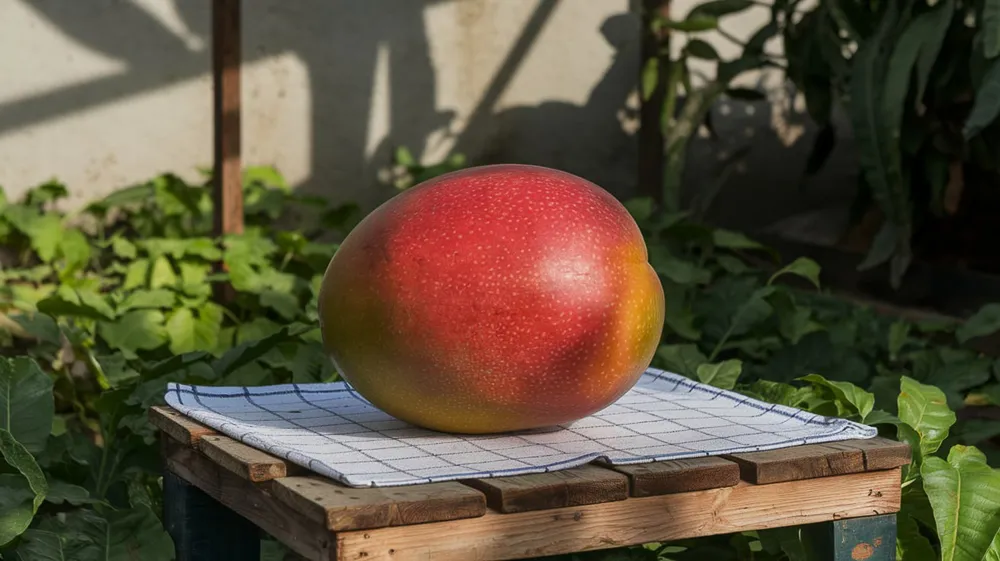
Physically, Jamadar is a medium-sized fruit, weighing between 250 and 300 grams, with a neat round-oval shape and a prominent, rounded crown at the stem end. The skin is smooth, thin, and ripens to a beautiful yellow-green color with bright golden-yellow shoulders and fine green lenticels.
The flavor is rich, sweet, and mild with a pleasing citrusy undertone. The pulp is a deep saffron-yellow, exceptionally firm, melting, and has zero fiber (none). It carries a gentle, sweet aroma that is less pungent than Kesar but highly refined and pleasant.
The Jamadar season starts in early May, peaks during the mid-to-late weeks of May, and finishes by mid-June. It is cultivated in the Junagadh, Amreli, and Gir Somnath districts of Gujarat, benefiting from the region's warm, dry climate and volcanic soils.
In comparison to Kesar and Alphonso, Jamadar is rounder and firmer. While Kesar has an elongated shape and intense saffron aroma, Jamadar is more compact with a milder, more refreshing citrus-sweetness and a slightly firmer flesh that holds its shape beautifully when sliced.
Jamadar exhibits moderate post-harvest shelf life, lasting about 5 to 7 days at room temperature. It holds up well to local transportation within Gujarat and neighboring Maharashtra, though its thin skin requires careful packing to prevent compression bruises.
Sweet with mild tang, complex
Fragrant and sweet
Smooth, fiberless
None
How to tell if it's a genuine Jamadar:
Did you know that Alphonso is called Badami in Karnataka and Hapus in Maharashtra? Explore our complete state-by-state guide mapping 30+ regional names across India.
Jamadar is a heritage variety of Gujarat, selected and propagated by local orchardists who prized its regular bearing habit and firm, sliceable flesh.
It has been grown for generations in the Gir forest periphery, sharing the unique terroir that makes Kathiawar mangoes famous across India.
It remains highly popular in traditional Gujarati households for making high-quality fresh mango slices and desserts.
Quick reference for identifying common healthy vs. problematic conditions:
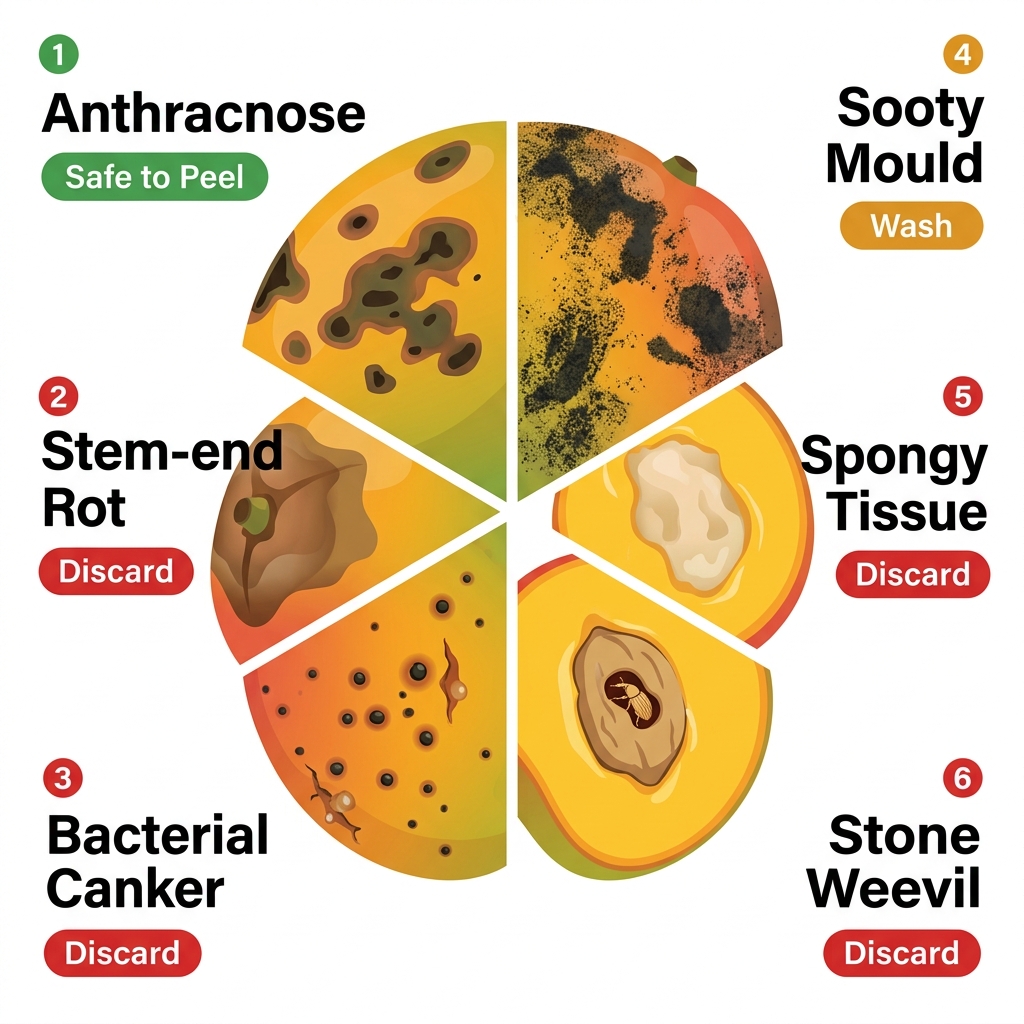
Pro Tip: Surface spots like Anthracnose are often harmless to the fruit inside, while Bacterial Canker or Stem-end Rot usually require discarding the fruit.
Ensure your Jamadar mango is naturally ripened. Use Food Guard to detect Calcium Carbide and other chemical ripeners.