
📚 Regional Mango Names Guide
Did you know that Alphonso is called Badami in Karnataka and Hapus in Maharashtra? Explore our complete state-by-state guide mapping 30+ regional names across India.
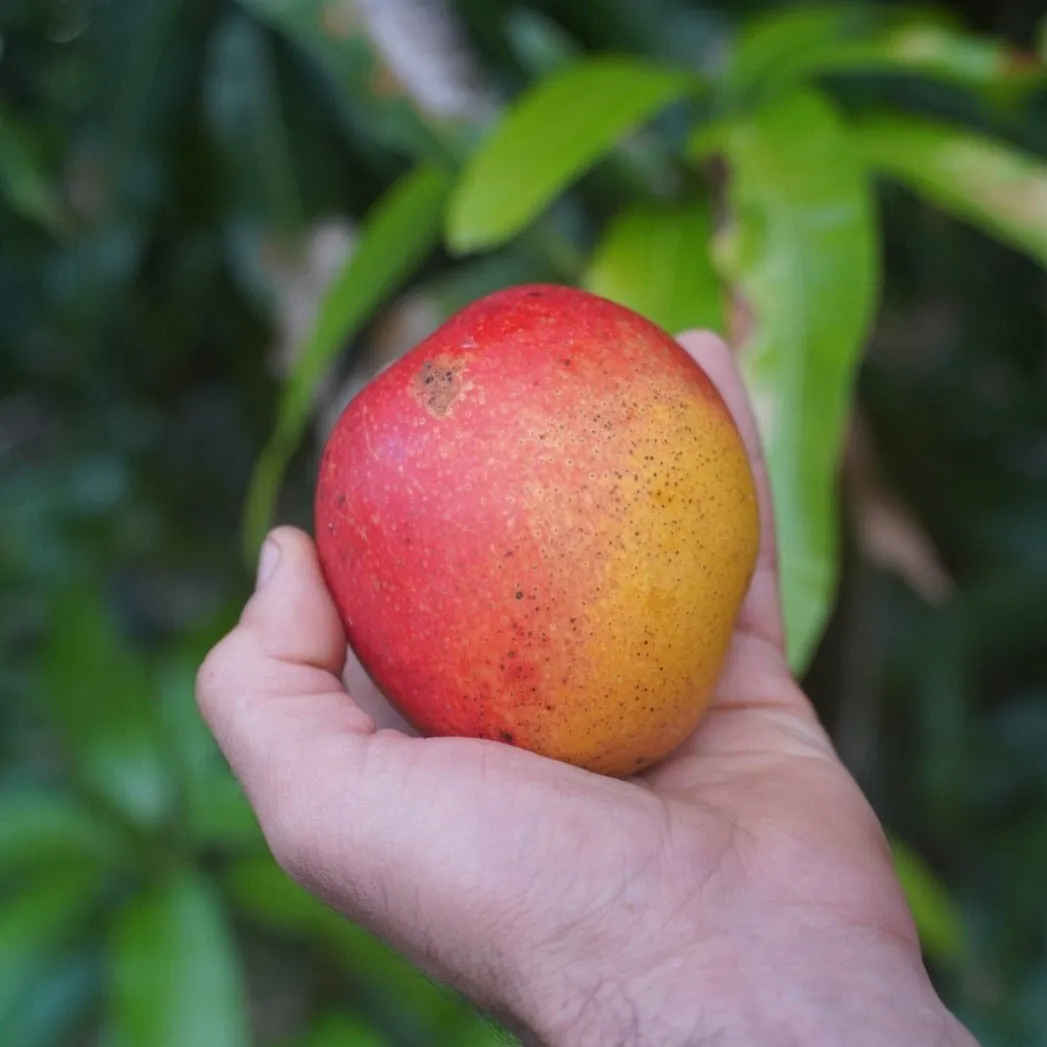
Typical diseases and disorders affecting this variety:
Detect these early using our Plant Guard AI.
Read our detailed Mango Diseases & Safety Guide.
Tommy Atkins is the world's most commercially significant mango variety in terms of global export. Originally a seedling of the Haden variety, it was selected in Florida in the 1920s specifically for its extraordinary shelf life and resistance to handling and transit damage.
Physically, Tommy Atkins is a medium to large mango, typically weighing between 450 and 700 grams. It has an attractive oval to oblong shape. Its most striking feature is its color: a thick, tough skin that is almost entirely covered in a dark, vibrant red or purple-red blush, often with a yellow-green background.
The flavor profile is mild and pleasant, but generally considered less complex than premium dessert varieties. The pulp is a bright lemon-yellow, very firm, and contains a moderate to high amount of fiber. While not a top-tier choice for connoisseurs, its consistency and attractive appearance make it a global supermarket staple.
The Tommy Atkins season is mid-season, typically peaking in May, June, and July depending on the growing region (Florida, Mexico, or Brazil). It is cultivated extensively in the Americas and is the dominant variety in the US and European import markets.
When comparing it to Haden, Kent, or Keitt, Tommy Atkins is prized solely for its durability. While Kent and Keitt are much sweeter and less fibrous, Tommy Atkins can withstand weeks of international shipping without losing its visual appeal. Discover more export varieties at our Mango Identifier hub.
Post-harvest, Tommy Atkins is the undisputed champion of shelf life, often lasting 2-3 weeks under refrigeration. Its exceptionally thick, leathery skin makes it highly resistant to bruising, mechanical injury, and decay. This resilience is the primary reason it remains the world's most exported mango.
Mildly sweet, bland compared to Indian varieties
Mild
Fibrous, firm
High
How to tell if it's a genuine Tommy Atkins:
Did you know that Alphonso is called Badami in Karnataka and Hapus in Maharashtra? Explore our complete state-by-state guide mapping 30+ regional names across India.
Originated as a chance seedling of Haden in the grove of Thomas H. Atkins in Broward County, Florida, in the early 1920s.
Initially rejected by researchers for its fiber content, it was saved by commercial growers who recognized its incredible transportability.
Today, it represents over 80% of the mangoes sold in the United States.
Quick reference for identifying common healthy vs. problematic conditions:
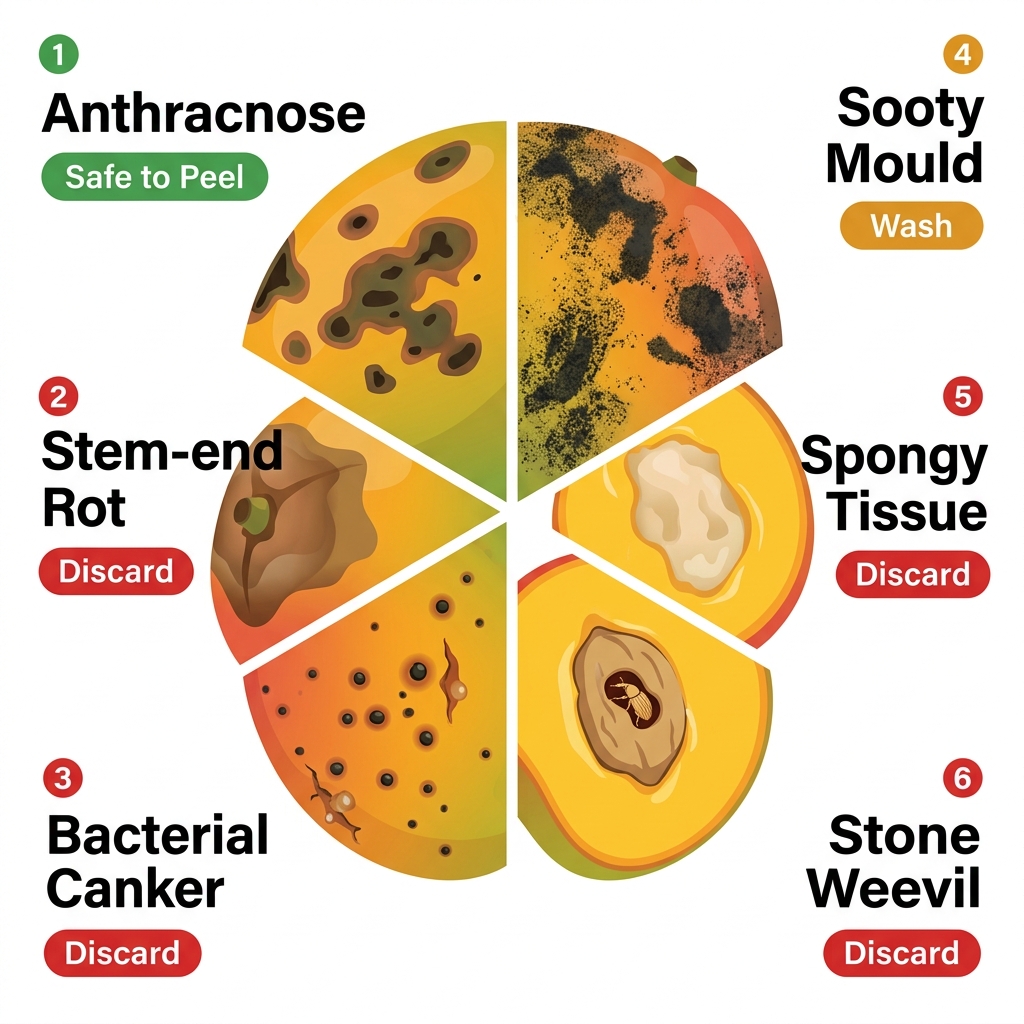
Pro Tip: Surface spots like Anthracnose are often harmless to the fruit inside, while Bacterial Canker or Stem-end Rot usually require discarding the fruit.
Ensure your Tommy Atkins mango is naturally ripened. Use Food Guard to detect Calcium Carbide and other chemical ripeners.