
📚 Regional Mango Names Guide
Did you know that Alphonso is called Badami in Karnataka and Hapus in Maharashtra? Explore our complete state-by-state guide mapping 30+ regional names across India.
Also known as: Phajri, Fazli, Fazri Aaam, Gadha, Donkey Mango
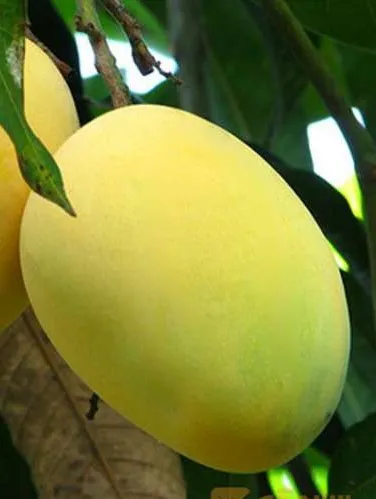
Typical diseases and disorders affecting this variety:
Detect these early using our Plant Guard AI.
Read our detailed Mango Diseases & Safety Guide.
Fajri (also known as Fazli in some North Indian dialects, though distinct from the massive Fazli) is a premium, late-season mango variety highly favored in the Indo-Gangetic plains, particularly in Uttar Pradesh and parts of Bihar. It is prized for its substantial size, high pulp content, and its ability to extend the mango season well into the monsoon months.
Physically, Fajri is a large mango, typically weighing between 400 and 600 grams. It has an attractive, symmetric oval-oblong shape with a smooth, medium-thick skin. The skin ripens to a pleasant greenish-yellow color, often retaining a light green base even when fully mature, which is characteristic of many late-season northern varieties.
The flavor profile is delightfully sweet with a mild, refreshing tang and a rich, satisfying fruity aroma. The pulp is a vibrant yellow-orange, firm, and meaty, making it excellent for slicing. It contains a minimal amount of soft fiber, which is mostly localized near the stone, ensuring a smooth and enjoyable eating experience.
The Fajri season is late, typically starting in July and reaching its peak in August. It is primarily cultivated in the Saharanpur and Lucknow districts of Uttar Pradesh. Its late maturity allows it to command a premium price in the market after the early and mid-season heavyweights have finished.
When comparing it to Fazli, Langra, and Chausa, Fajri is known for its more refined sweetness compared to the sheer size of Fazli. While Chausa is intensely aromatic, Fajri offers a more balanced and substantial bite. Discover more late-season varieties at our Mango Identifier hub.
Post-harvest, Fajri exhibits excellent durability and a good shelf life of 7-9 days. Its firm flesh and sturdy skin make it highly resistant to the heavy rains of the monsoon season and transit damage, allowing it to be shipped across North and West India where it is a popular choice for late-summer family feasts.
Sweet, mildly tangy
Moderate, pleasant
Juicy, slightly fibrous
Moderate
How to tell if it's a genuine Fajri:
Did you know that Alphonso is called Badami in Karnataka and Hapus in Maharashtra? Explore our complete state-by-state guide mapping 30+ regional names across India.
A traditional favorite in the orchards of Western Uttar Pradesh, often associated with the 'monsoon mango' tradition.
Valued for its high pulp-to-stone ratio, making it an economical choice for large households during the late season.
Often used in the preparation of late-season mango preserves and traditional sun-dried mango leather (Aam Papad).
Quick reference for identifying common healthy vs. problematic conditions:
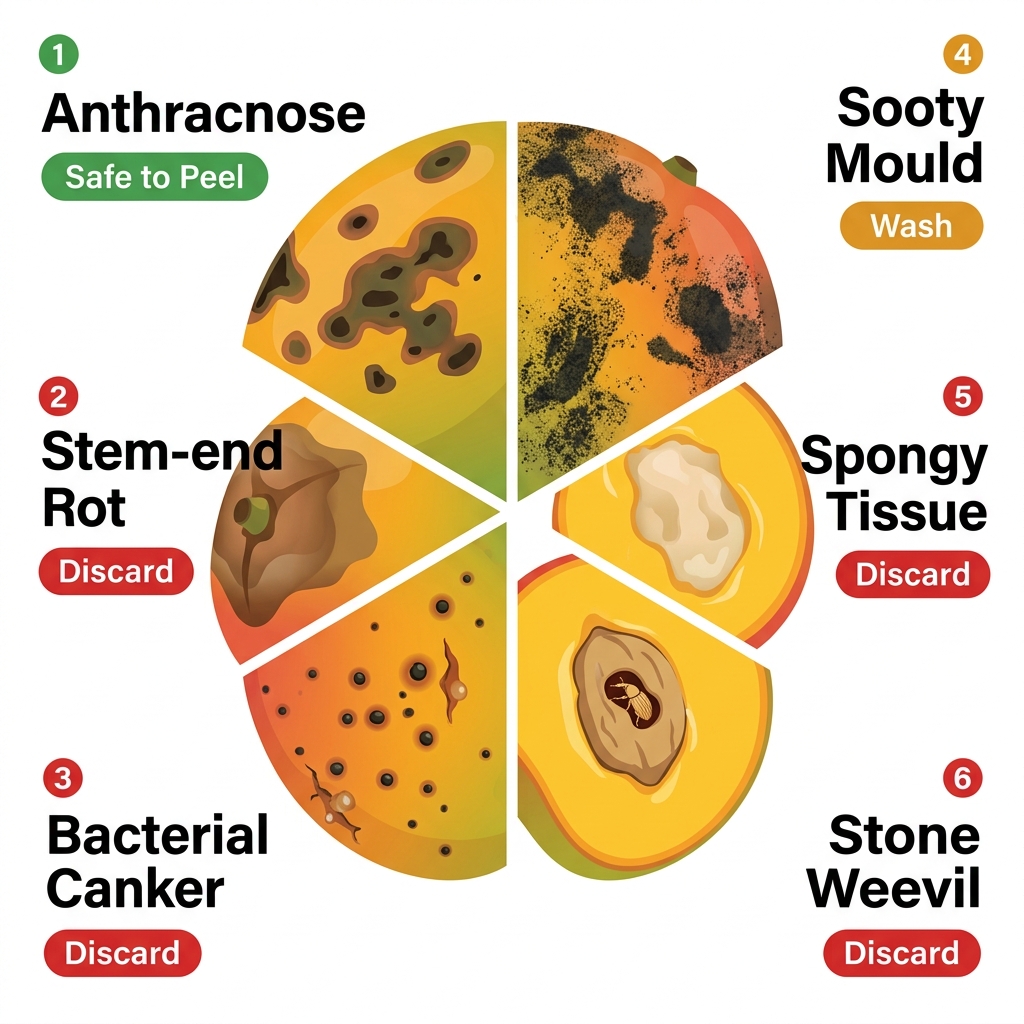
Pro Tip: Surface spots like Anthracnose are often harmless to the fruit inside, while Bacterial Canker or Stem-end Rot usually require discarding the fruit.
Ensure your Fajri mango is naturally ripened. Use Food Guard to detect Calcium Carbide and other chemical ripeners.