
📚 Regional Mango Names Guide
Did you know that Alphonso is called Badami in Karnataka and Hapus in Maharashtra? Explore our complete state-by-state guide mapping 30+ regional names across India.
Also known as: Mulgoa, Mulgova, Malgoba, Malgoa
Typical diseases and disorders affecting this variety:
Detect these early using our Plant Guard AI.
Read our detailed Mango Diseases & Safety Guide.
Malgova (also known as Malgoba or Mulgoba) is a legendary, ultra-premium mango variety native to South India, particularly the Salem and Dharmapuri districts of Tamil Nadu. It is often referred to as the 'Alphonso of the South' due to its superlative eating quality, massive size, and rich historical significance.
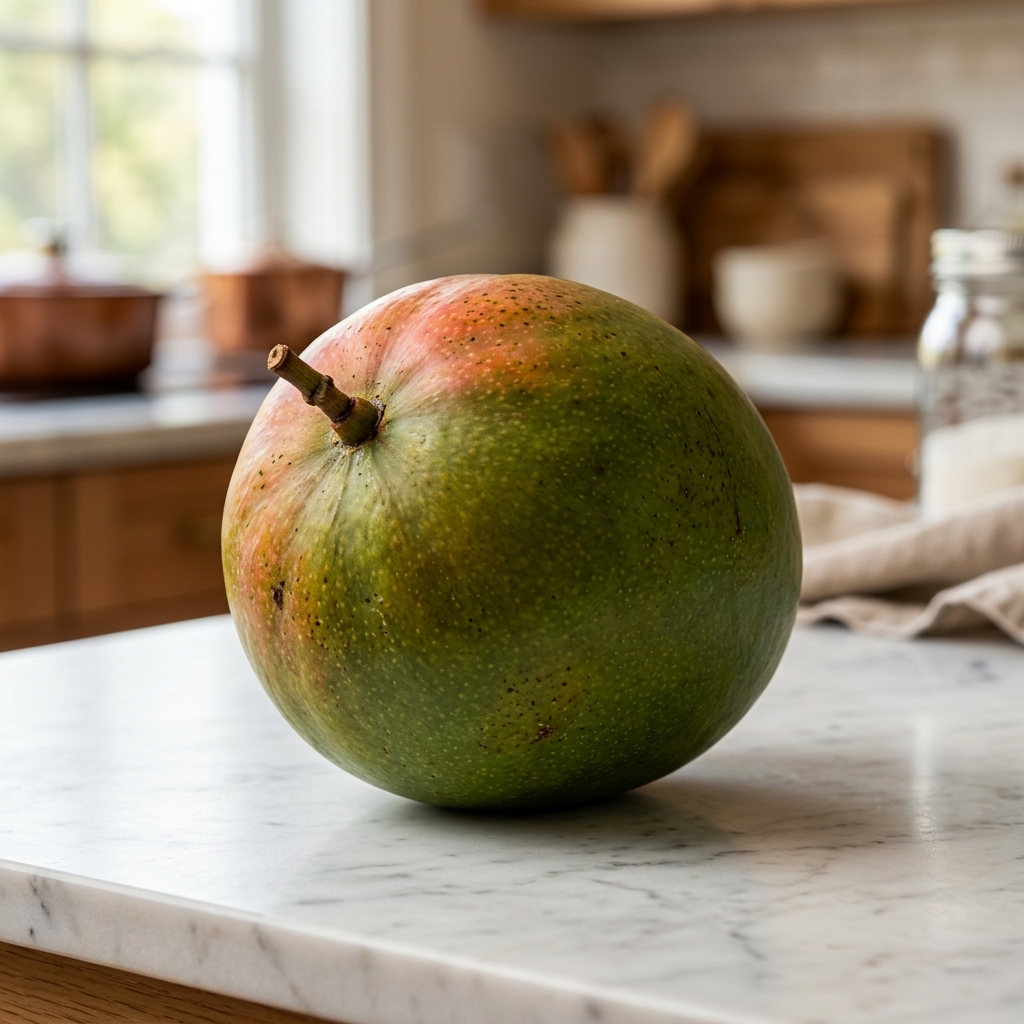
Physically, Malgova is one of the largest mango varieties, often weighing between 400 and 800 grams, with some fruits reaching over 1 kilogram. It has a distinctive round to round-oval shape with a thick, sturdy skin that remains mostly green with a yellow-green tinge and small white lenticels when ripe.
The flavor and aroma of Malgova are extraordinarily rich. It offers a dense, meaty, and buttery texture that is completely fiberless (none). The taste is a complex blend of intense sweetness with a subtle, refreshing acidity and a highly pleasant, deep floral aroma. The pulp is a beautiful pale yellow.
The Malgova season is mid-to-late, typically starting in mid-May and peaking in June and July. It is primarily cultivated in Tamil Nadu, Karnataka, and parts of Andhra Pradesh. Its slow-ripening nature allows it to develop a deep, complex flavor profile that is highly prized by connoisseurs.
When comparing it to Alphonso, Banganapalli, and Neelum, Malgova is judged against its massive size and meaty texture. While Alphonso is aromatic and saffron-colored, Malgova is massive, green-yellow, and offers a more substantial, meaty bite. Discover more premium varieties at our Mango Identifier hub.
Post-harvest, Malgova has a respectable shelf life of 6-8 days. Its thick skin provides excellent protection against bruising, although its sheer weight requires careful handling during harvest to avoid ground impact. It is a preferred variety for making high-quality preserves and premium fresh slices.
Very sweet, rich
Sweet, fruity
Juicy, smooth
Minimal
How to tell if it's a genuine Malgova:
Did you know that Alphonso is called Badami in Karnataka and Hapus in Maharashtra? Explore our complete state-by-state guide mapping 30+ regional names across India.
Malgova is believed to be the ancestor of the famous Florida 'Haden' mango, having been sent to the US in the late 19th century.
Historically patronized by royalty in South India, it has been a staple in temple offerings and royal feasts for centuries.
Known for its 'Koyya' (guava) like firm texture in certain regional sub-types, making it a unique sensory experience.
Quick reference for identifying common healthy vs. problematic conditions:
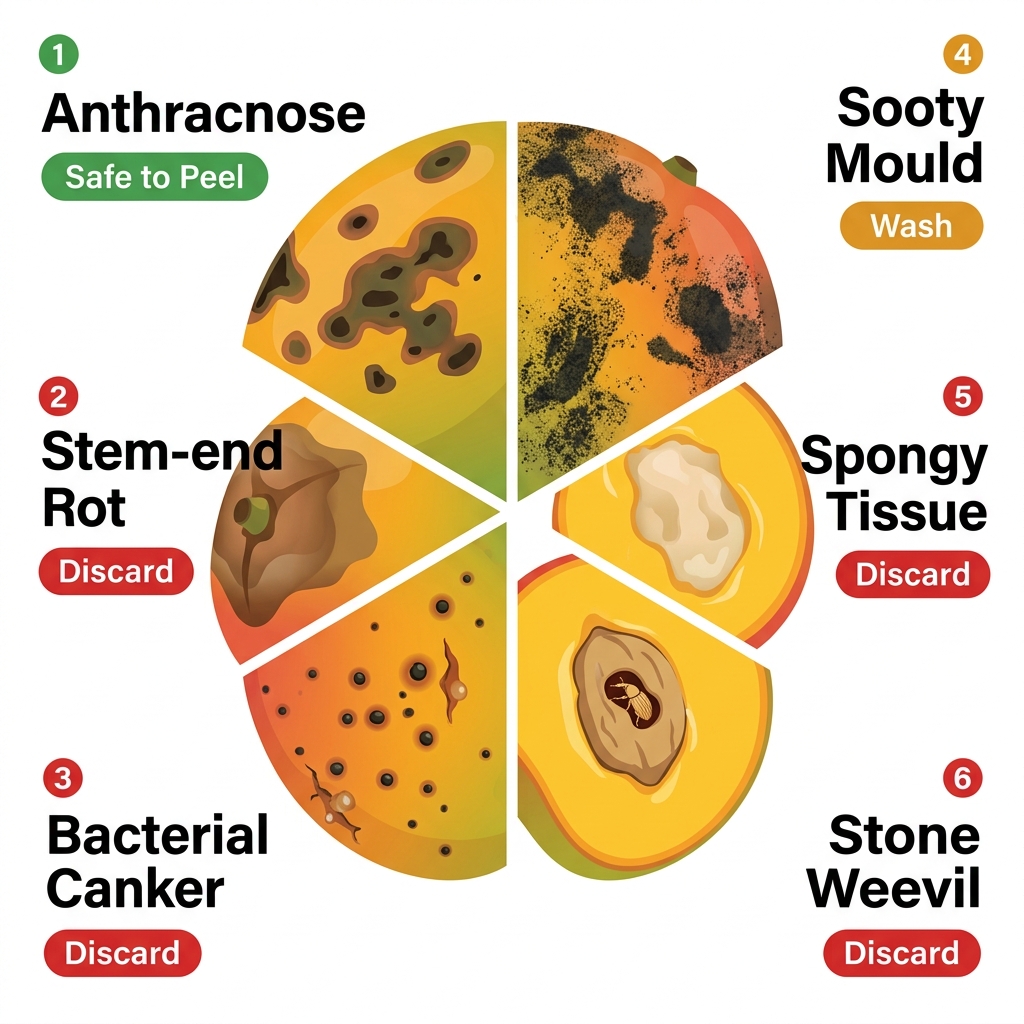
Pro Tip: Surface spots like Anthracnose are often harmless to the fruit inside, while Bacterial Canker or Stem-end Rot usually require discarding the fruit.
Ensure your Malgova mango is naturally ripened. Use Food Guard to detect Calcium Carbide and other chemical ripeners.