
📚 Regional Mango Names Guide
Did you know that Alphonso is called Badami in Karnataka and Hapus in Maharashtra? Explore our complete state-by-state guide mapping 30+ regional names across India.
Also known as: Safeda, Lucknow Safeda, Baneshan, Banganapalle, Badam Aam, Bernisha, Banganapally, Chappatai, Chapta
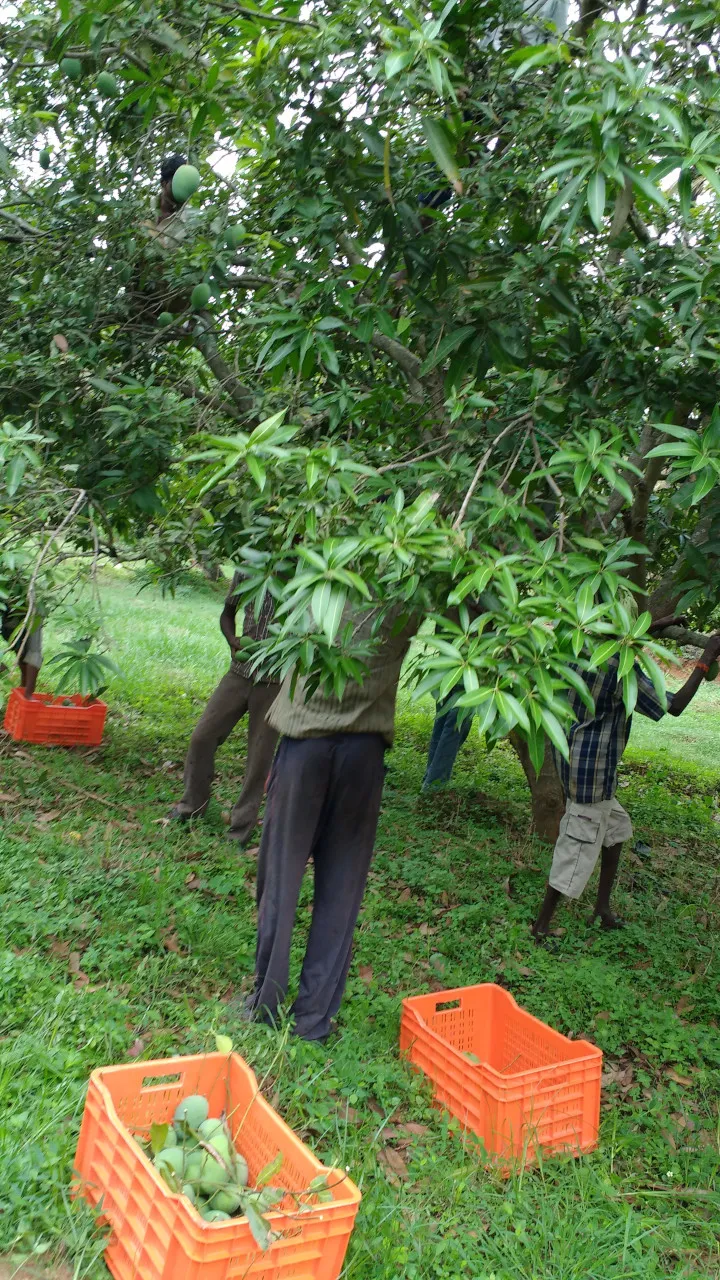
Typical diseases and disorders affecting this variety:
Detect these early using our Plant Guard AI.
Read our detailed Mango Diseases & Safety Guide.
The Banganapalli mango is legally protected under India's Geographical Indications of Goods Act. Genuine Banganapalli mangoes must originate from the certified soils of its designated region (e.g., Konkan coast for Alphonso, Saurashtra for Kesar) to carry this designation.
Banganapalli (also known as Benishan or Safeda) is a premier commercial mango variety originating from the royal town of Banganapalle in Kurnool district, Andhra Pradesh. This variety has been cultivated for over a century and holds an official Geographical Indication (GI) tag, cementing its status as one of India's most beloved and commercially significant mangoes.
Physically, Banganapalli is easily distinguished by its large, elongated-oblique form, thin yet tough skin of a uniform golden-yellow hue, and virtually fiberless, firm, light-yellow flesh. The average fruit weight is substantial, ranging between 350 and 450 grams. The skin is smooth and carries small, light lenticels, which turn slightly golden upon complete ripening.
The flavor profile is delightfully sweet with a pleasant, mildly floral aroma and a clean, non-cloying finish. It possesses a moderate total soluble solids (TSS) content averaging 16-18° Brix, balanced by a subtle acidity that prevents it from being overwhelmingly sweet. The fiber content is completely absent (none), giving it a rich, buttery mouthfeel.
The Banganapalli season starts in mid-April, reaches its absolute peak during May, and wraps up by late June. It is primarily cultivated across the Kurnool, Chittoor, and Kadapa districts of Andhra Pradesh, as well as several dry-zone districts of Telangana and northern Tamil Nadu.
To compare, Banganapalli stands out against Alphonso, Sindoori, Malgova, Neelum, and the premium Imam Pasand by its massive size, lack of an intense aromatic punch, and lack of skin blush. While Alphonso is rich and heavy, Banganapalli offers a lighter, more refreshing tropical sweetness with a much higher pulp recovery rate of 75-80 percent, making it highly preferred for wholesale juice processing.
Post-harvest characteristics of Banganapalli are highly favorable for commercial shippers. It has a durable shelf life of 6 to 8 days under room temperature conditions and up to 14 days when refrigerated. This resilience makes it suitable for long-distance transport to northern Indian markets and international exports.
Sweet, mild, balanced
Mild, pleasant
Smooth, buttery
Minimal
How to tell if it's a genuine Banganapalli:
Did you know that Alphonso is called Badami in Karnataka and Hapus in Maharashtra? Explore our complete state-by-state guide mapping 30+ regional names across India.
Banganapalli mangoes were patronized by the royal family of the Nawabs of Banganapalle, who actively selected and propagated the finest cultivars in their royal orchards, leading to the selection of the famous 'Benishan' (meaning without a mark/signature of defect).
The variety was awarded the Geographical Indication (GI) tag in 2017, recognizing its unique connection to the soils and climate of the Rayalaseema region in Andhra Pradesh.
Today, it is the backbone of the commercial mango industry in southern India, representing over 70 percent of the total cultivable area in Andhra Pradesh.
Quick reference for identifying common healthy vs. problematic conditions:
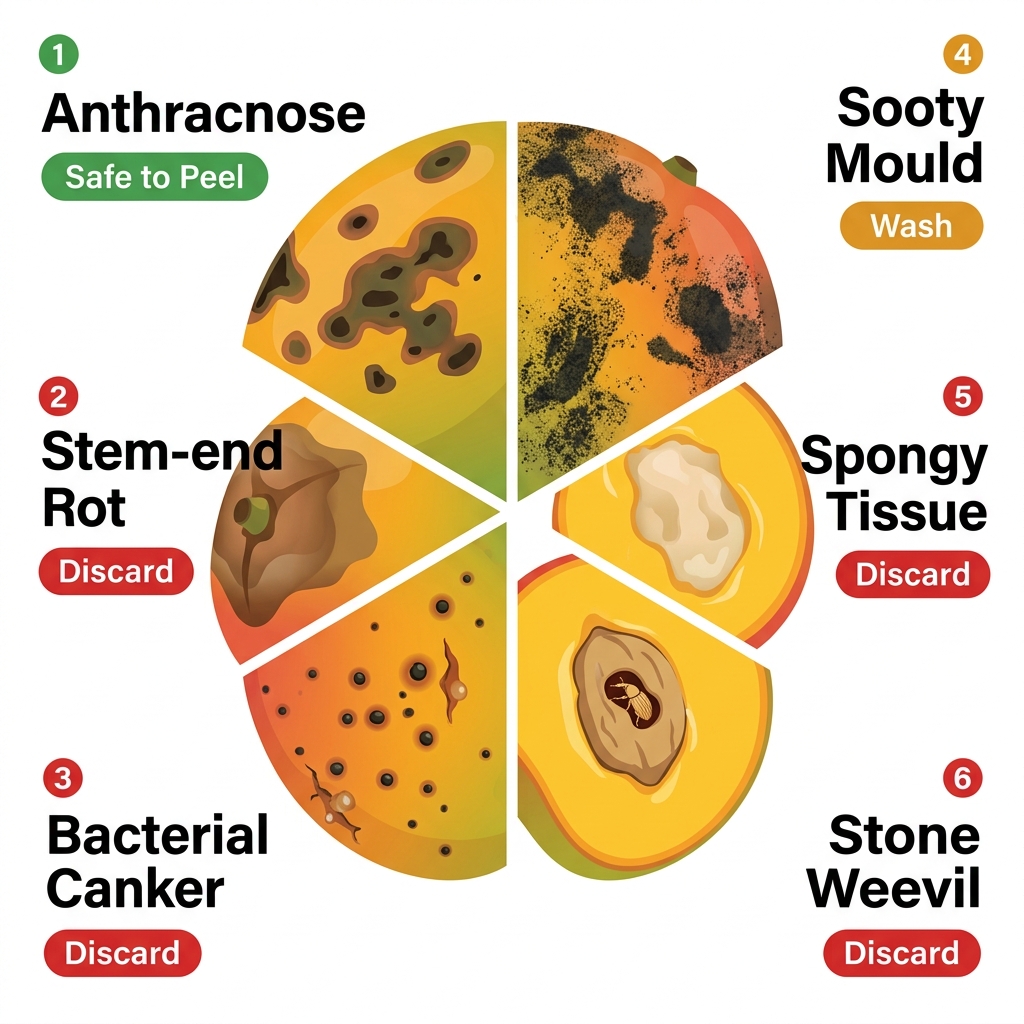
Pro Tip: Surface spots like Anthracnose are often harmless to the fruit inside, while Bacterial Canker or Stem-end Rot usually require discarding the fruit.
Ensure your Banganapalli mango is naturally ripened. Use Food Guard to detect Calcium Carbide and other chemical ripeners.