
📚 Regional Mango Names Guide
Did you know that Alphonso is called Badami in Karnataka and Hapus in Maharashtra? Explore our complete state-by-state guide mapping 30+ regional names across India.
Also known as: Jehangir, Jahar, Jihenar, Apple Mango
Typical diseases and disorders affecting this variety:
Detect these early using our Plant Guard AI.
Read our detailed Mango Diseases & Safety Guide.
Jahangir (also known as Jehangir) is a legendary and ultra-premium heritage mango variety native to Andhra Pradesh and Tamil Nadu. Often grouped with the elite Imam Pasand, it is considered one of the finest dessert mangoes in the world, historically favored by the royal courts of the Deccan for its extraordinary size and refined flavor.
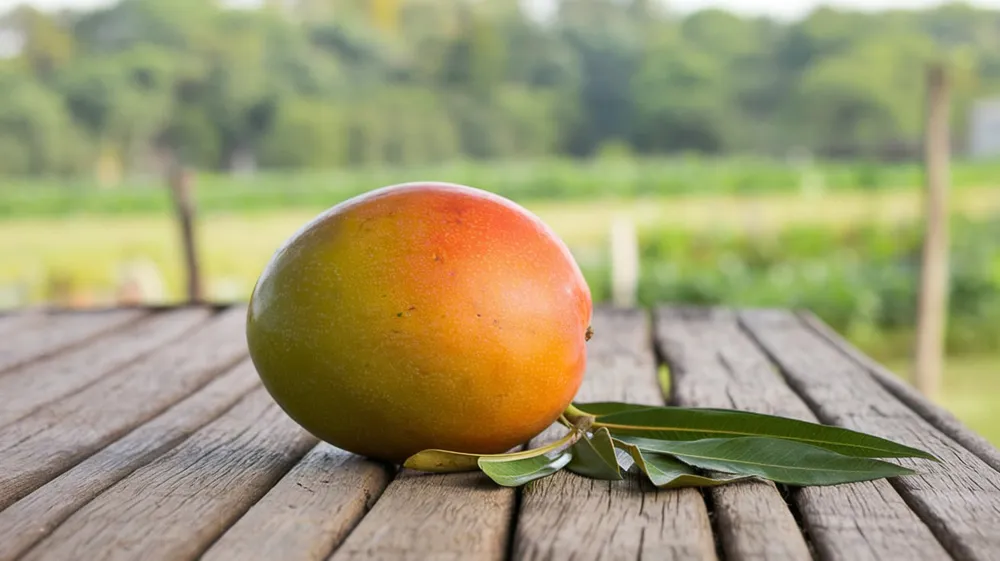
Physically, Jahangir is a large to massive mango, typically weighing between 500 and 1000 grams (1kg). It has an attractive, symmetric round-oval shape with a smooth, medium-thick skin. The skin remains primarily greenish-yellow or pale yellow even when fully ripe, which is a hallmark of many premium royal varieties.
The flavor profile is exceptionally complex and sophisticated. It is intensely sweet with a unique, creamy and slightly floral undertone. The pulp is a vibrant yellow, extremely firm, and buttery. It is 100% fiberless (none), offering a smooth and melting texture that rivals the finest premium varieties in India.
The Jahangir season is mid-to-late, typically starting in May and peaking in June and July. It is cultivated primarily in the Kurnool and Cuddapah districts of Andhra Pradesh and parts of Tamil Nadu. Its rarity and the low yield of the trees make it a highly expensive and sought-after delicacy for mango connoisseurs.
When comparing it to Imam Pasand or Malgova, Jahangir is prized for its sheer scale and the purity of its sweetness. While Malgova is more aromatic, Jahangir offers a more refined, buttery bite. Discover more royal heritage varieties at our Mango Identifier hub.
Post-harvest, Jahangir has a respectable shelf life of 7-9 days. Its firm flesh and medium-thick skin provide good protection during transit, although its weight requires careful handling to avoid pressure bruising. It is the absolute gold standard for fresh table consumption and is often given as a high-value gift during the summer.
Sweet with tropical fruit and citrus notes
Pleasant, aromatic, spice-noted
Smooth, creamy, non-fibrous
None
How to tell if it's a genuine Jahangir:
Did you know that Alphonso is called Badami in Karnataka and Hapus in Maharashtra? Explore our complete state-by-state guide mapping 30+ regional names across India.
Named after the Mughal Emperor Jahangir, highlighting its royal status and historical significance in the gardens of the Deccan.
Known for its exceptionally high pulp-to-stone ratio, providing a massive amount of premium fiberless fruit.
Historically reserved for the tables of royalty and the landed gentry due to its rarity and exquisite taste.
Quick reference for identifying common healthy vs. problematic conditions:
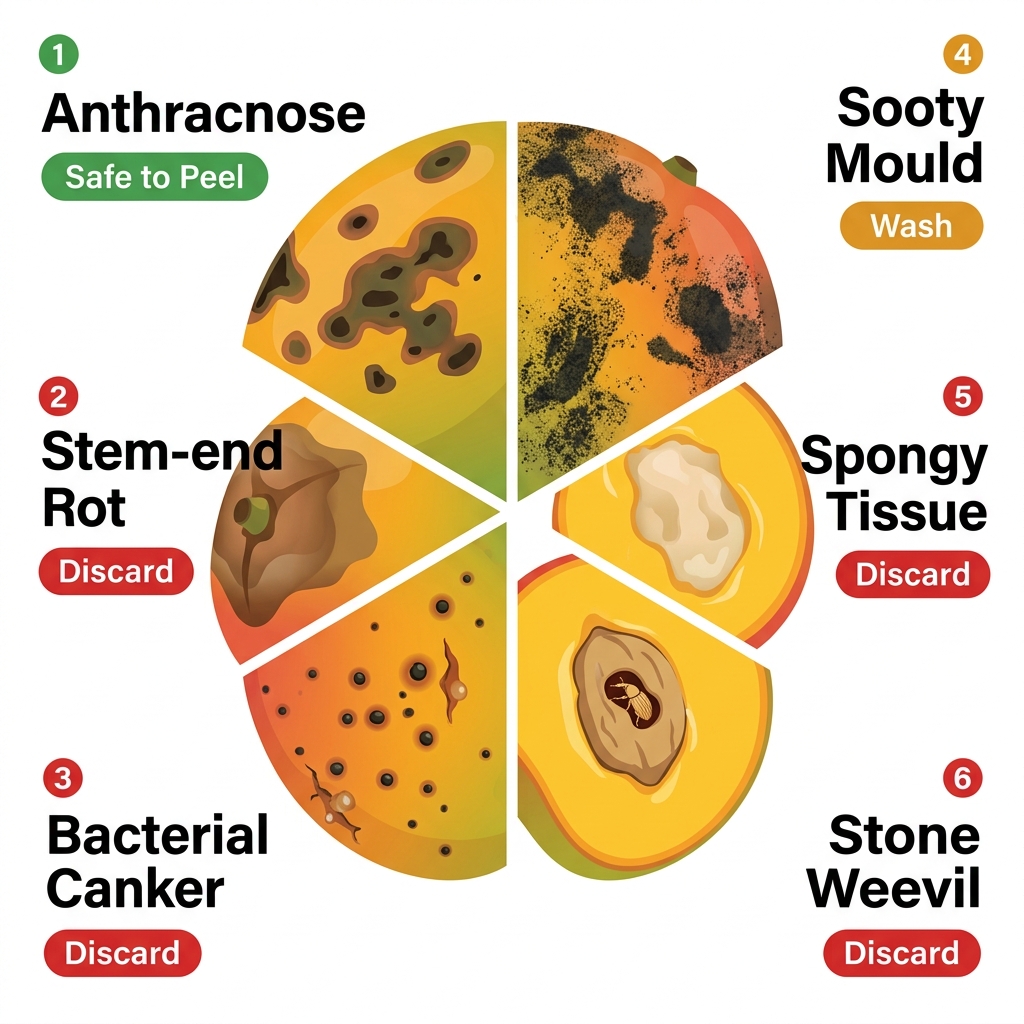
Pro Tip: Surface spots like Anthracnose are often harmless to the fruit inside, while Bacterial Canker or Stem-end Rot usually require discarding the fruit.
Ensure your Jahangir mango is naturally ripened. Use Food Guard to detect Calcium Carbide and other chemical ripeners.