
📚 Regional Mango Names Guide
Did you know that Alphonso is called Badami in Karnataka and Hapus in Maharashtra? Explore our complete state-by-state guide mapping 30+ regional names across India.
Also known as: Ruman, Apple Rumani, Apple Mango, Ice Cream Mango
Typical diseases and disorders affecting this variety:
Detect these early using our Plant Guard AI.
Read our detailed Mango Diseases & Safety Guide.
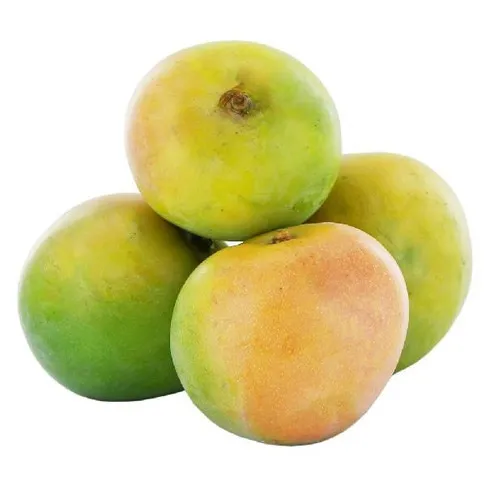
Rumani is one of the most distinctive and beloved mango varieties in South India. Widely celebrated as the **'Apple Mango'** (or *Apple Rumani*), it breaks away from the conventional oblong mango shape with its near-perfect, symmetrical round form resembling a large golden apple or plum. It is especially cherished across Tamil Nadu, Andhra Pradesh, and Telangana for its refreshing juiciness and delightful sweetness.
Physically, Rumani is easily identified by its spherical silhouette and flattened base, which allows the fruit to stand upright on a table. Fruits typically weigh between **200 and 320 grams**. The skin is remarkably thin, smooth, and ripens from pale green to a warm greenish-yellow, frequently crowned with an eye-catching **sun-kissed pinkish-red blush** on the shoulder exposed to sunlight.
The flavor profile of Rumani is light, delightfully sweet, and exceptionally refreshing. Unlike dense, fiber-heavy varieties, Rumani features a tender, yellow-orange pulp with high moisture content and minimal fiber (TSS between **16° and 18° Brix**). Because of its mild, smooth sweetness and pleasant fruity aroma, it is often nicknamed the *'Ice Cream Mango'* and is a perennial favorite for children and juice lovers.
The Rumani harvest is a mid-season event, commencing in **May and peaking throughout June**. It is cultivated extensively in the coastal plains and orchards surrounding Chennai (Tiruvallur, Kanchipuram), the Rayalaseema belt (Chittoor, Kadapa, Tirupati) of Andhra Pradesh, and parts of southern Telangana.
When compared to commercial giants like Banganapalli or Neelum, Rumani occupies a unique culinary niche: while Banganapalli is large, firm, and ideal for thick slices, Rumani is small, round, and prized for fresh juicing, milkshakes, and eating out of hand. For a larger hybrid that blends Rumani's shape with Mulgoa's giant size, explore the Au Rumani variety or browse our Mango Identifier Hub.
**Where to Buy & Price Guide:** Fresh Rumani mangoes are available during May–June across major South Indian wholesale mandis including **Koyambedu Wholesale Market (Chennai)**, **Batasingaram Fruit Market (Hyderabad)**, and local fruit bazaars in Tirupati, Chittoor, and Bangalore. Wholesale mandi prices typically range from **₹50 to ₹90 per kg**, while graded retail and direct-from-farm organic boxes (available on portals like SalemMango and quick-commerce apps) range from **₹100 to ₹160 per kg**.
Refreshing, mild honey-sweet with high moisture and low acidity (16°–18° Brix)
Mild, sweet, and delicately floral
Extremely juicy, tender, melting pulp with minimal fine fiber
Minimal
How to tell if it's a genuine Rumani:
Did you know that Alphonso is called Badami in Karnataka and Hapus in Maharashtra? Explore our complete state-by-state guide mapping 30+ regional names across India.
A traditional heritage cultivar of Tamil Nadu and Andhra Pradesh, cultivated for over a century in family orchards and temple gardens.
Popularly traded as 'Apple Mango' in Chennai's historic George Town and Koyambedu markets, where generations have looked forward to its June peak.
High juice-to-pulp recovery makes it historically famous among South Indian street vendors for natural summer coolers.
Served as the maternal parent in breeding the celebrated hybrid 'Au Rumani' (Rumani × Mulgoa) developed at Fruit Research Station, Sangareddy/Kodur.
Quick reference for identifying common healthy vs. problematic conditions:
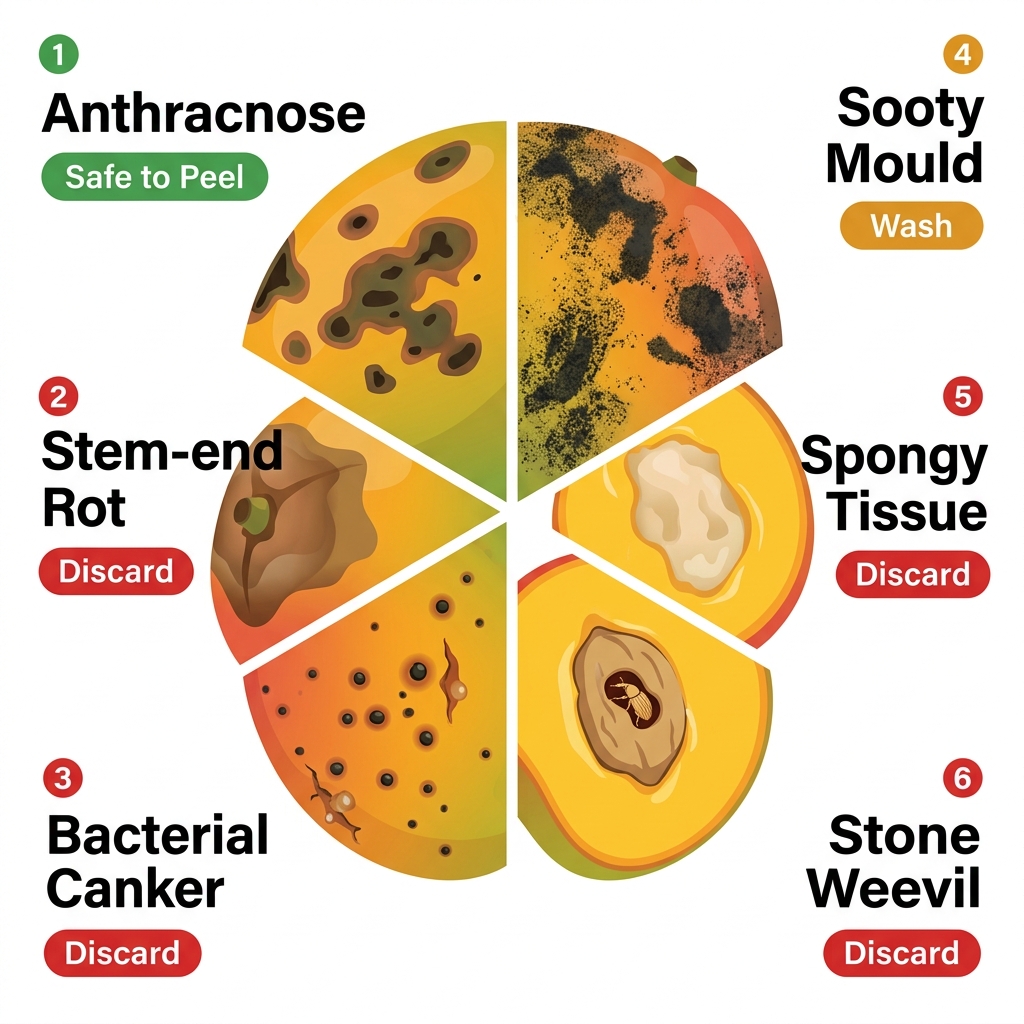
Pro Tip: Surface spots like Anthracnose are often harmless to the fruit inside, while Bacterial Canker or Stem-end Rot usually require discarding the fruit.
Ensure your Rumani mango is naturally ripened. Use Food Guard to detect Calcium Carbide and other chemical ripeners.