
Langra vs Dasheri
Compare Langra and Dasheri mangoes. Learn about their unique shapes, greenish vs yellow skins, aromatic sweetness, and Northern Indian availability.
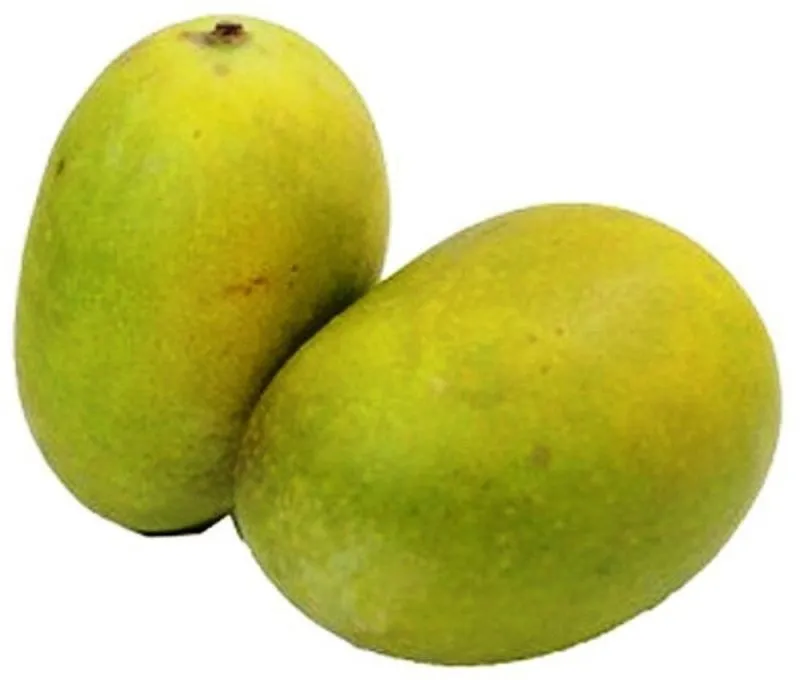
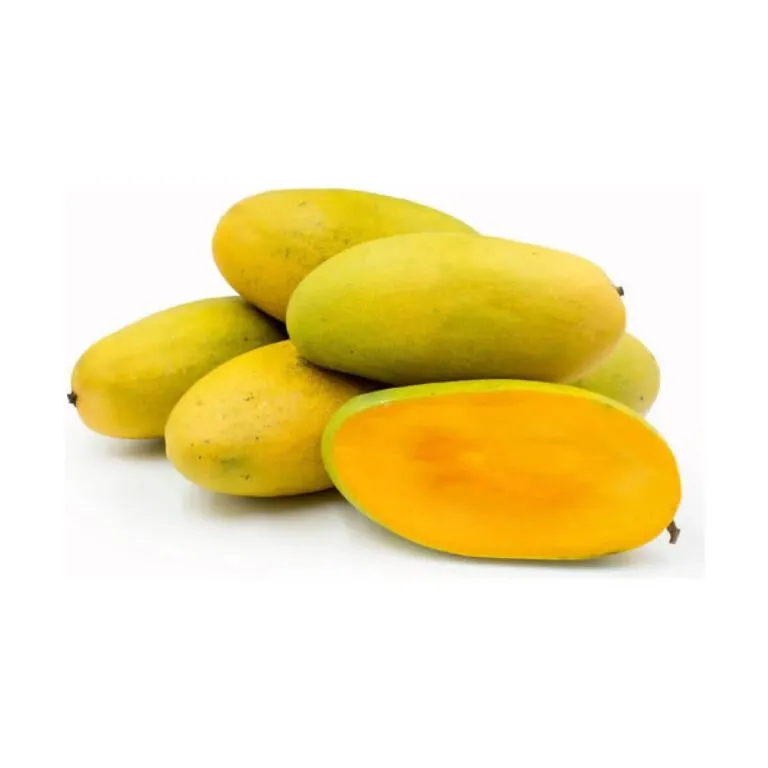
Key Differences: Langra vs Dasheri
Langra and Dasheri are the two titans of Northern Indian mangoes. Langra (originating from Varanasi, Uttar Pradesh) is known for retaining its bright green skin even when fully ripe, packing an intensely sweet, slightly acidic punch with a strong turpentine-sweet aroma. Dasheri (hailing from Malihabad, UP) is long-oblong, turns a beautiful light yellow, and has an extremely sweet, smooth, and fiberless flesh that is historically prized for direct eating.
Botanical & Cultivar Comparison Table
| Feature | Langra | Dasheri |
|---|---|---|
| Shape | Roundish-oval | Long, slender oblong |
| Ripe Color | Greenish-yellow (green dominant) | Light golden-yellow |
| Taste Profile | Intensely sweet, tangy-acidic kick | Mild, honey-like sweet |
| Texture | Soft, extremely juicy, tender | Firm, smooth, completely fiberless |
| Size Category | Large | Medium |
| Weight (Single Fruit) | 300g - 400g | 200g - 300g |
| Harvest Season | Mid-Late (June to July) J F M A M J J A S O N D | Mid (Late May to June) J F M A M J J A S O N D |
| Average Price | Affordable (Rs 150 - 300 per kg) | Affordable (Rs 120 - 250 per kg) |
| State of Origin | Varanasi, Uttar Pradesh | Malihabad, Uttar Pradesh |
| GI Tag Protected | Yes (Banarasi Langra) | Yes (Malihabadi Dussehri) |
| Best Use Case | Eating fresh, juices, regional desserts | Slicing, table serving, export |
| Adulteration Risk | Medium (Chemical ripening for early-season green batches) | High (Mass market volume ripening with Carbide) |
| Vulnerable Pests/Diseases | Vulnerable to Bacterial Canker and fruit fly | Vulnerable to Anthracnose and Mealybugs |
🛡️ Chemical Ripening & Adulteration Guide
Artificial ripening using Calcium Carbide and Ethylene is common in commercial mango trades. Use our Food Guard tool to check for chemical traces, verify natural ripening signs, and protect your family's health.
Which is Better For...?
Both are excellent regional gifts. Dasheri is preferred for traditional family gifting in North India due to its neat shape.
Langra makes a highly aromatic pulp, though its green skin must be peeled carefully to avoid bitterness.
Dasheri is perfect for slicing, while Langra is legendary for sucking directly due to its soft, juicy pulp.
Dasheri has a stronger export presence in the Gulf countries due to its firm flesh and uniform coloring.
How to Spot the Differences (Visual Spotting Guide)
Examine these visual markers and close-up identification features to tell them apart:
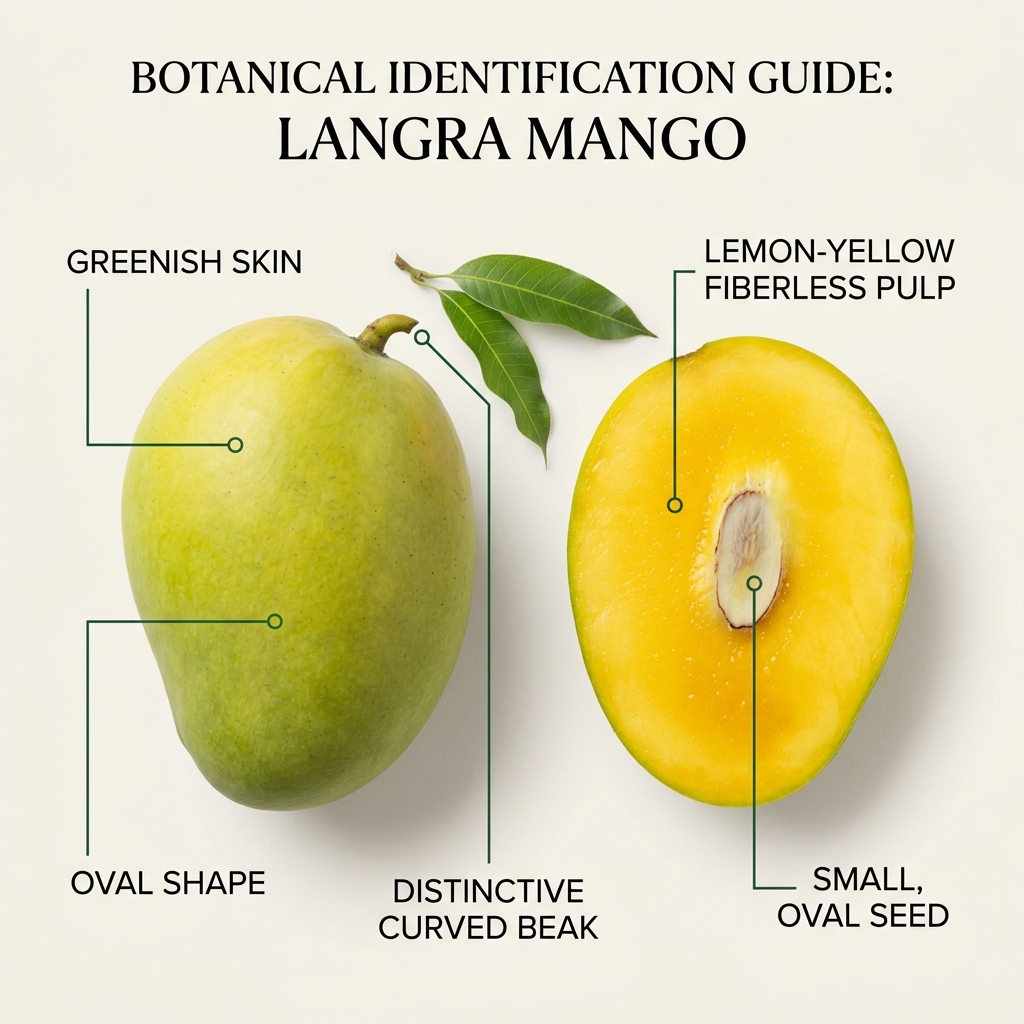 Langra Guide
- Greenish-yellow ripe skin: Remains green or yellowish-green even when completely soft and sweet.
- Roundish-oval shape: Plump, roundish profile, medium-sized.
- Tiny flat seed: Extremely small stone relative to the flesh yield.
- Intense scent: Pungent, sweet, and highly tropical scent with acidic notes.
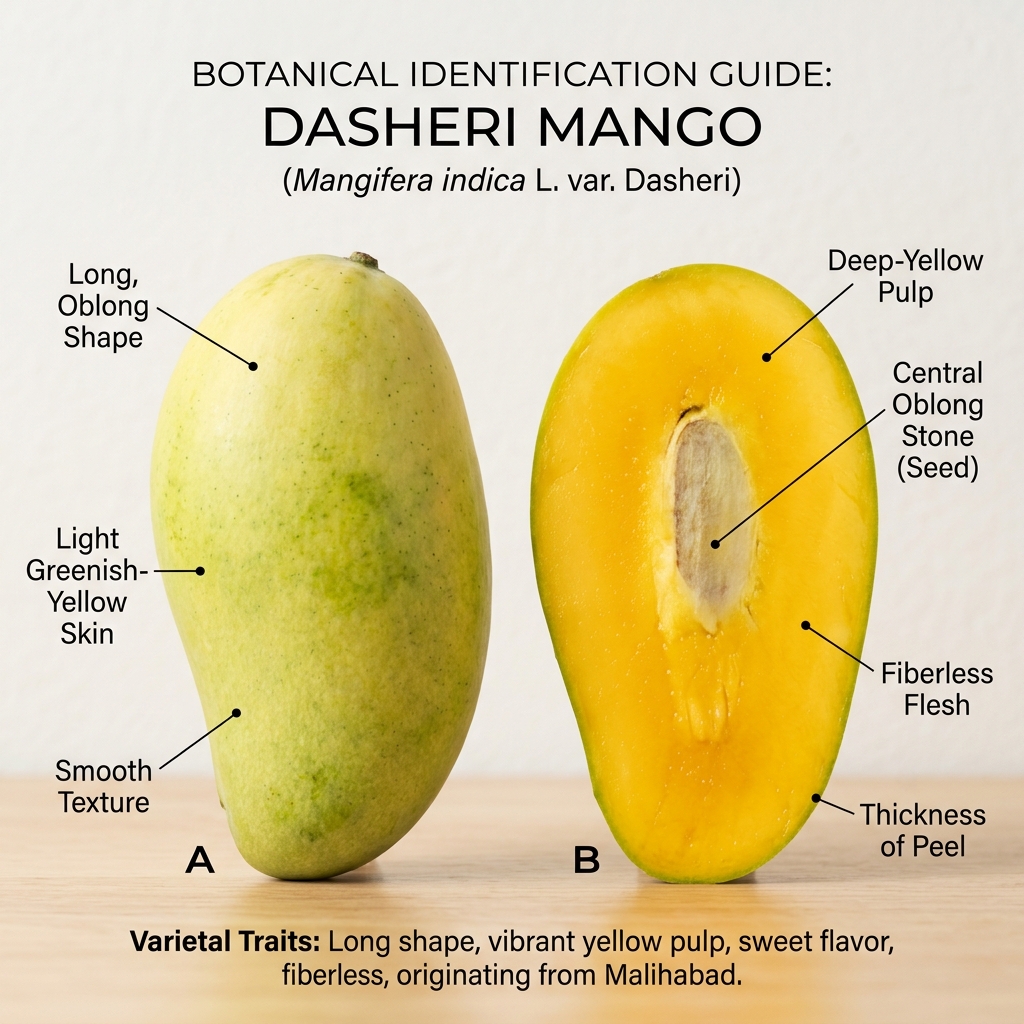 Dasheri Guide
- Long, straight oblong shape: Distinctive cylindrical, finger-like profile.
- Light golden-yellow skin: Ripe fruit turns a beautiful, clean light yellow color.
- Rounded ends: Ends are smooth and blunt with no beak.
- Firm, dry-smooth pulp: Extremely smooth, holds its shape well when sliced.
Detailed Attribute Breakdown
👅 Flavor Comparison
Langra is a flavor explosion; it combines high sugar content with a citrusy tang that leaves a lasting impression. Dasheri is pure, smooth sweetness with zero tartness, making it a crowd-pleaser for children.
👃 Aroma Profile
Langra has an incredibly strong, pungent sweet aroma. Dasheri has a milder, classic honeyed mango scent.
📦 Shelf Life & Storage
Dasheri's firm skin gives it a superior shelf life of 5-7 days. Langra is thin-skinned and highly perishable, needing consumption within 2-3 days of ripening.
🛒 Market Availability
Dasheri peaks in June. Langra is a late-summer treat, hitting its stride in late June and lasting into mid-July.
Which Should You Choose?
- Choose Langra if you love intensely flavorful, juicy mangoes with a tangy twist, appreciate high pulp yield from a tiny seed, and don't mind a green skin appearance.
- Choose Dasheri if you prefer firm, easily sliceable mangoes with smooth, honey-like sweetness and no sourness.