
Kesar vs Banganapalli
Compare Kesar and Banganapalli mangoes. Saffron sweet Gujarat queen vs large golden Andhra giant. Learn about taste and size differences.
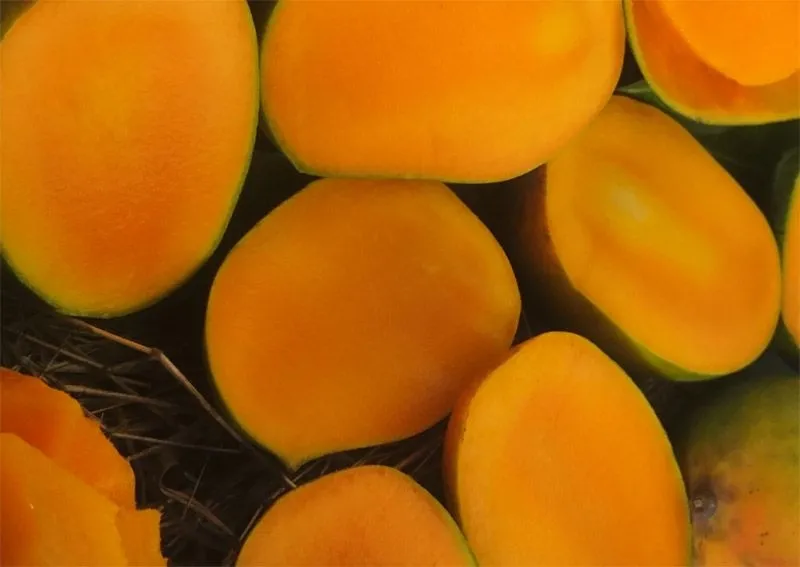
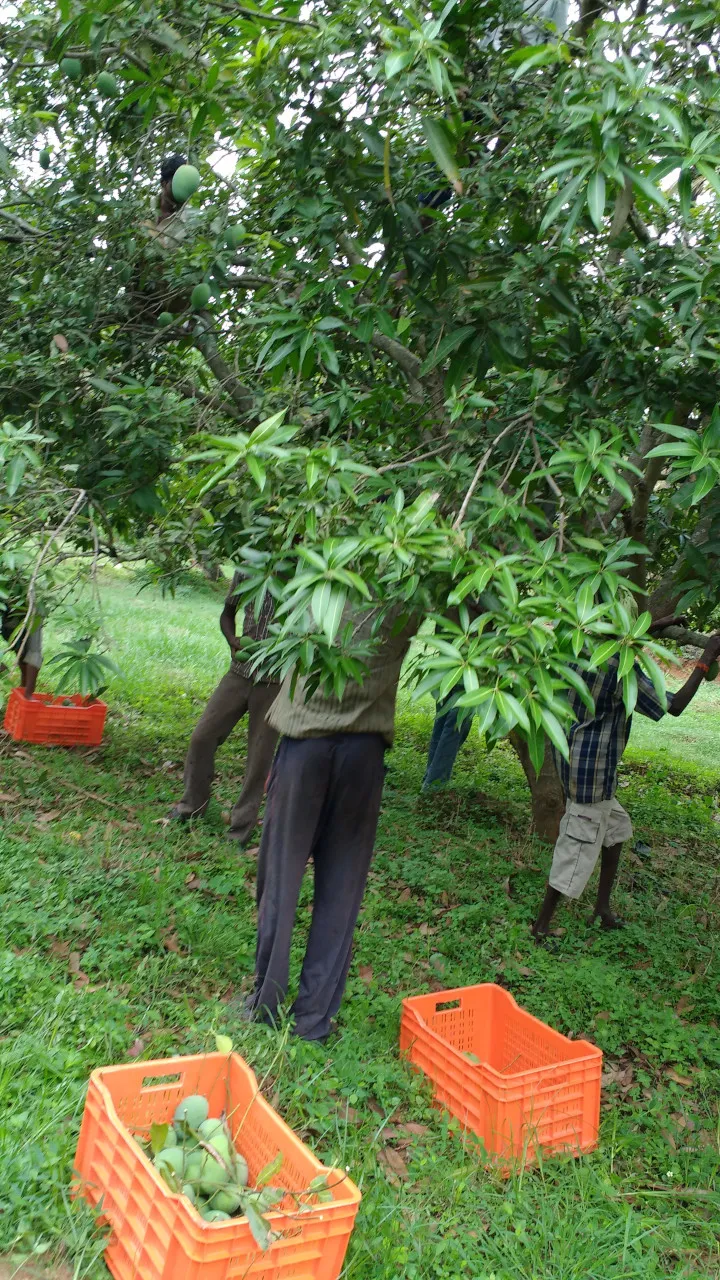
Key Differences: Kesar vs Banganapalli
Kesar and Banganapalli are the regional superstars of Western and Southern India. Kesar (from Gujarat) is small-to-medium-sized, has a greenish-yellow skin, and features an intensely sweet, fiberless saffron-yellow pulp with a rich saffron-like aroma. Banganapalli (from Andhra Pradesh, also known as Benishan) is very large, oblique-oblong, turns a smooth bright golden-yellow, and offers a pleasant, mild sweetness with firm, easily sliceable flesh.
Botanical & Cultivar Comparison Table
| Feature | Kesar | Banganapalli |
|---|---|---|
| Shape | Oblong, slightly curved | Large oblique-oblong |
| Ripe Color | Greenish-yellow | Smooth bright yellow |
| Taste Profile | Intensely sweet, saffron-honey flavor | Pleasantly sweet, mild flavor |
| Texture | Firm, dense, fiberless | Firm, meaty, fiberless |
| Size Category | Medium | Large |
| Weight (Single Fruit) | 250g - 300g | 350g - 500g |
| Harvest Season | Mid (May to June) J F M A M J J A S O N D | Early-Mid (April to June) J F M A M J J A S O N D |
| Average Price | Mid-Premium (Rs 400 - 800 per dozen) | Mid-Range (Rs 150 - 300 per kg) |
| State of Origin | Gir, Gujarat | Banganapalle, Andhra Pradesh |
| GI Tag Protected | Yes (Gir Kesar) | Yes (Banganapalli) |
| Best Use Case | Aamras, milkshakes, fresh pulp eating | Slicing, fruit salads, daily table fruit |
| Adulteration Risk | High (Ethylene/Carbide ripening for early demand) | Medium-High (Highly commercialized, Carbide ripening common) |
| Vulnerable Pests/Diseases | Vulnerable to Anthracnose and Thrips | Vulnerable to Anthracnose and Bacterial Canker |
🛡️ Chemical Ripening & Adulteration Guide
Artificial ripening using Calcium Carbide and Ethylene is common in commercial mango trades. Use our Food Guard tool to check for chemical traces, verify natural ripening signs, and protect your family's health.
Which is Better For...?
Both are excellent gifts. Banganapalli is impressive due to its massive size, while Kesar is prized for its premium flavor.
Kesar is superior for milkshakes and Aamras due to its deeper color and higher sugar content.
Banganapalli is the ultimate slicing mango for family breakfast tables. Kesar is excellent for eating spoonfuls of rich pulp.
Both are highly exported, with Banganapalli leading in the US/UK Asian diaspora markets and Kesar in Europe.
How to Spot the Differences (Visual Spotting Guide)
Examine these visual markers and close-up identification features to tell them apart:
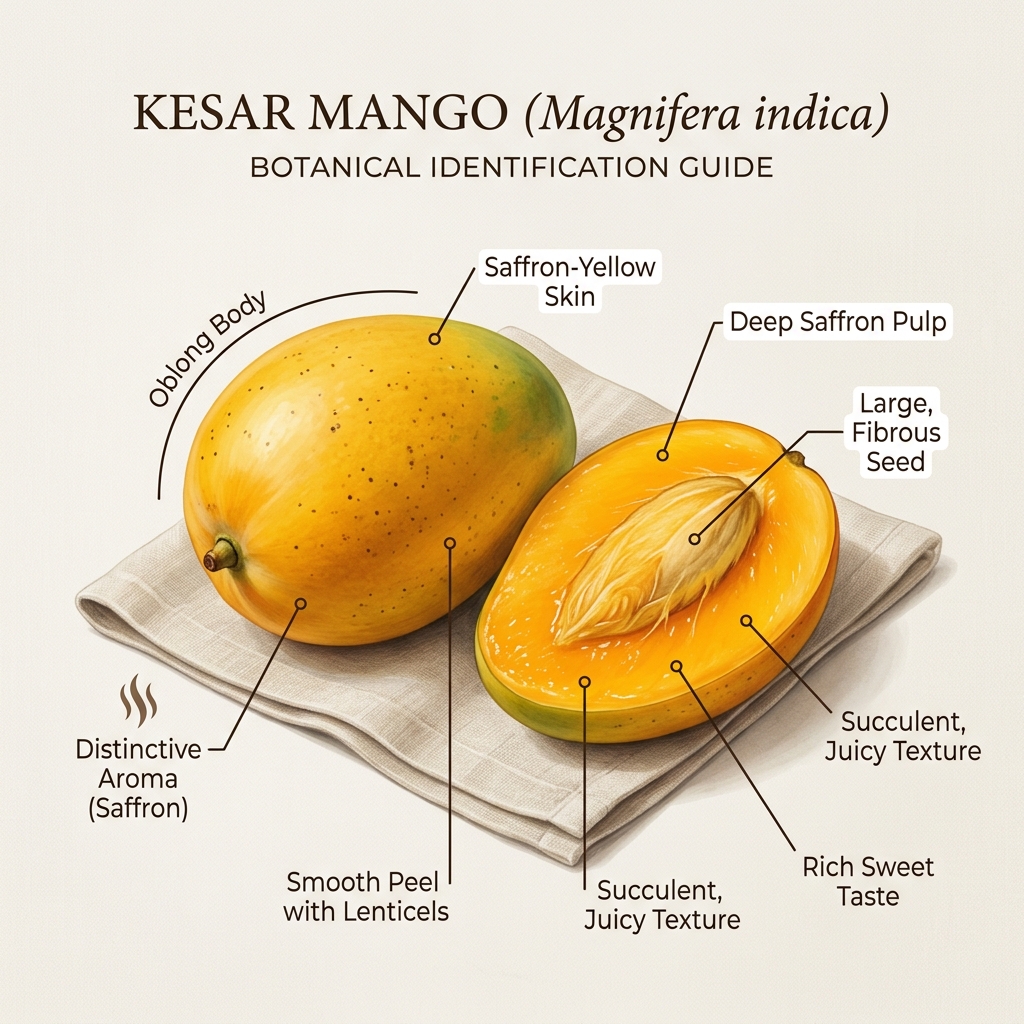 Kesar Guide
- Greenish-yellow skin: Ripe skin often retains a dull yellow hue with green patches.
- Slightly curved, oblong shape: Distinctive curved shoulder at the top.
- Saffron-yellow flesh: Bright saffron-yellow pulp, dense and fiberless.
- Gujarat origin: Cultivated in the Gir foothills of Junagadh.
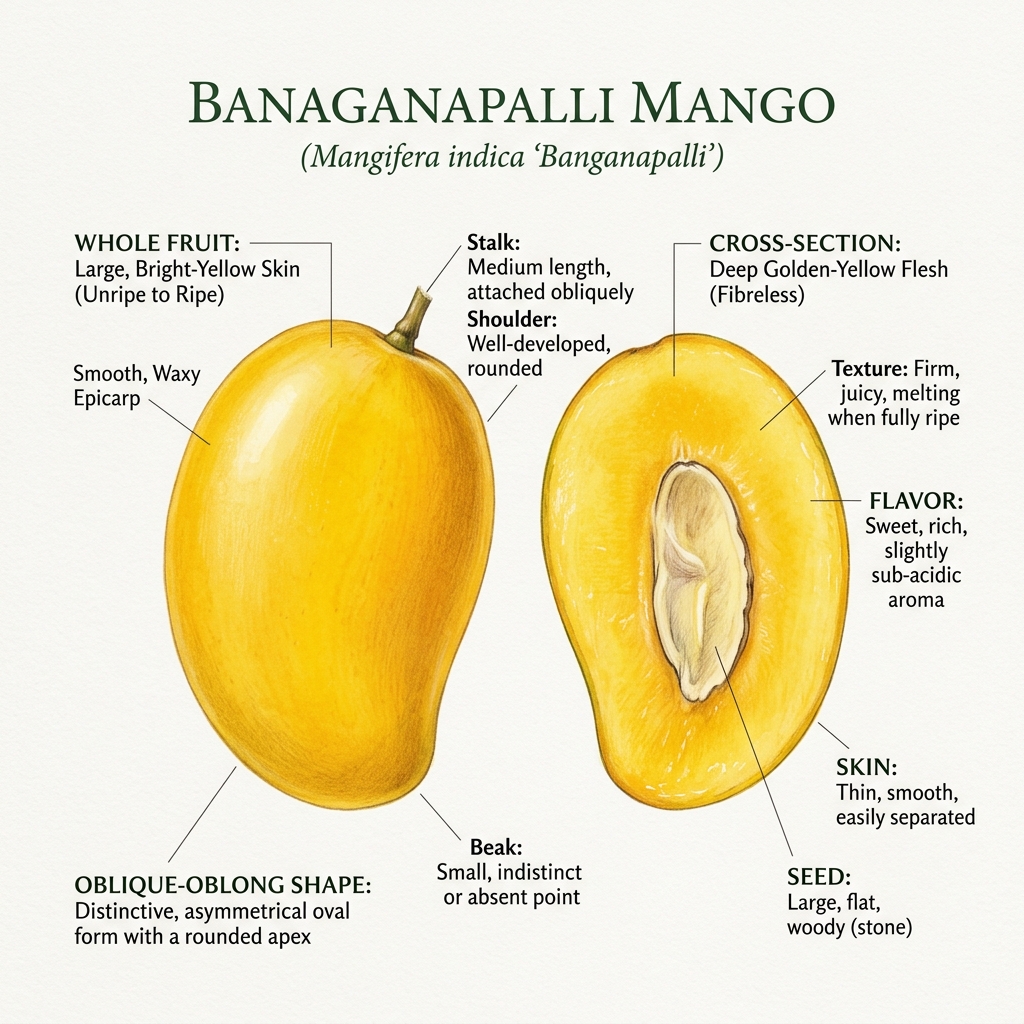 Banganapalli Guide
- Oblique-oblong shape: Large, clean oblong profile with smooth skin.
- Bright golden-yellow skin: Skin turns a clean, uniform bright yellow color.
- Large, flat stone: Yields large, firm slices that are easy to cut.
- Andhra Pradesh origin: Sourced from Kurnool and Banganapalle orchards.
Detailed Attribute Breakdown
👅 Flavor Comparison
Kesar is highly sweet with a unique saffron-honey profile. Banganapalli has a lighter, milder sweet flavor that is refreshing and not overwhelming.
👃 Aroma Profile
Kesar has a strong, distinct saffron aroma. Banganapalli has a fresh, pleasant sweet fragrance.
📦 Shelf Life & Storage
Banganapalli has a good shelf life due to its firm flesh and thicker skin. Kesar also stores well, making both excellent for shipping.
🛒 Market Availability
Banganapalli starts early in April. Kesar starts in May and lasts through June.
Which Should You Choose?
- Choose Kesar if you want rich, saffron-scented, intensely sweet fiberless pulp for Aamras and milkshakes.
- Choose Banganapalli if you want large, easily sliceable, meaty mangoes with a clean, mild sweetness for snacking.