
📚 Regional Mango Names Guide
Did you know that Alphonso is called Badami in Karnataka and Hapus in Maharashtra? Explore our complete state-by-state guide mapping 30+ regional names across India.
Also known as: Sarauli, Shehroli
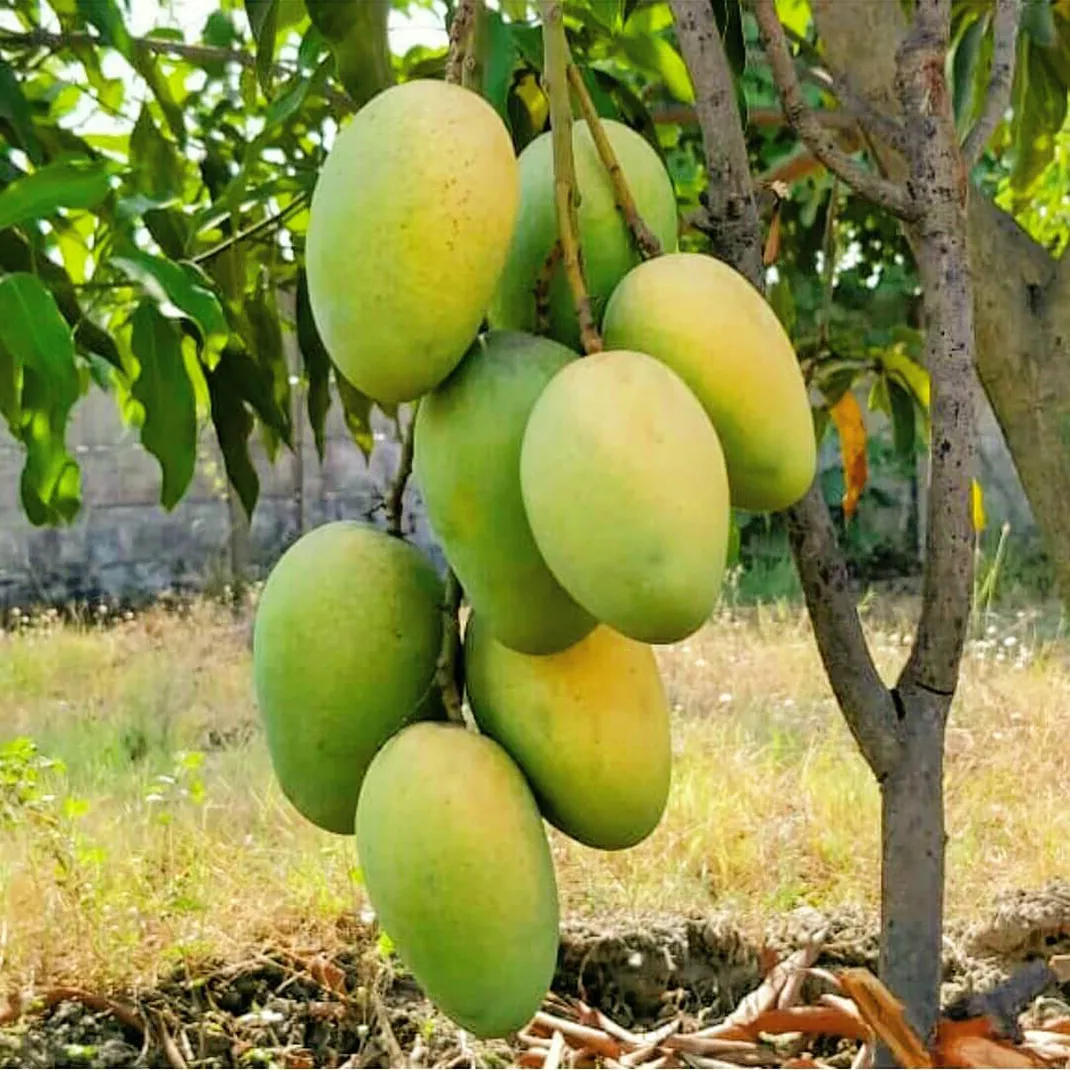
Typical diseases and disorders affecting this variety:
Detect these early using our Plant Guard AI.
Read our detailed Mango Diseases & Safety Guide.
Bombay Green (also known as Shehroli or Sarauli in North India) is one of the earliest and most popular commercial mango varieties in the North. Despite its name, it has little connection to the city of Mumbai; instead, it is a stalwart of the orchards in Uttar Pradesh, Haryana, and Punjab, known for kicking off the northern mango season.
Physically, Bombay Green is a medium-sized mango, typically weighing between 200 and 300 grams. It has a distinct round-oval shape. Its most defining characteristic is its skin, which remains a vibrant, deep leaf-green even when fully ripe, often with very small, light-colored lenticels scattered across the surface.
The flavor profile is intensely sweet and rich with a refreshing, slightly tangy undertone. The pulp is a beautiful deep orange-yellow, very juicy, and contains a minimal amount of fine fiber. Its aroma is strong, sweet, and highly characteristic of early-season northern mangoes.
The Bombay Green season is very early, arriving in May and often finishing by early June, long before the main harvests of Dasheri, Langra, and Chausa. It is cultivated extensively across Uttar Pradesh, Uttarakhand, and Punjab. Its early arrival makes it highly profitable for growers and a welcome sight for consumers.
When comparing it to other northern varieties, Bombay Green is the first to arrive. While it lacks the honey-sweetness of Dasheri, it offers a more robust and refreshing flavor that perfectly suits the early summer heat. Discover more early varieties at our Mango Identifier hub.
Post-harvest, Bombay Green has a respectable shelf life of 5-7 days. Its firm skin provides good protection during local transit, although like most early varieties, it is best consumed quickly to enjoy its peak fragrance and juiciness. It is a preferred variety for early-season table consumption and fresh juices.
Tangy-sweet, balanced
Mild, fresh
Firm, crisp, slightly fibrous
Moderate
How to tell if it's a genuine Bombay Green:
Did you know that Alphonso is called Badami in Karnataka and Hapus in Maharashtra? Explore our complete state-by-state guide mapping 30+ regional names across India.
A traditional favorite in North Indian households, known for signalling the official start of the mango eating season.
One of the oldest documented varieties in the North Indian plains, mentioned in colonial horticultural records as a high-value early cultivar.
Often used in the preparation of early-season 'Aam Panna' (raw mango drink) before it reaches full maturity.
Quick reference for identifying common healthy vs. problematic conditions:
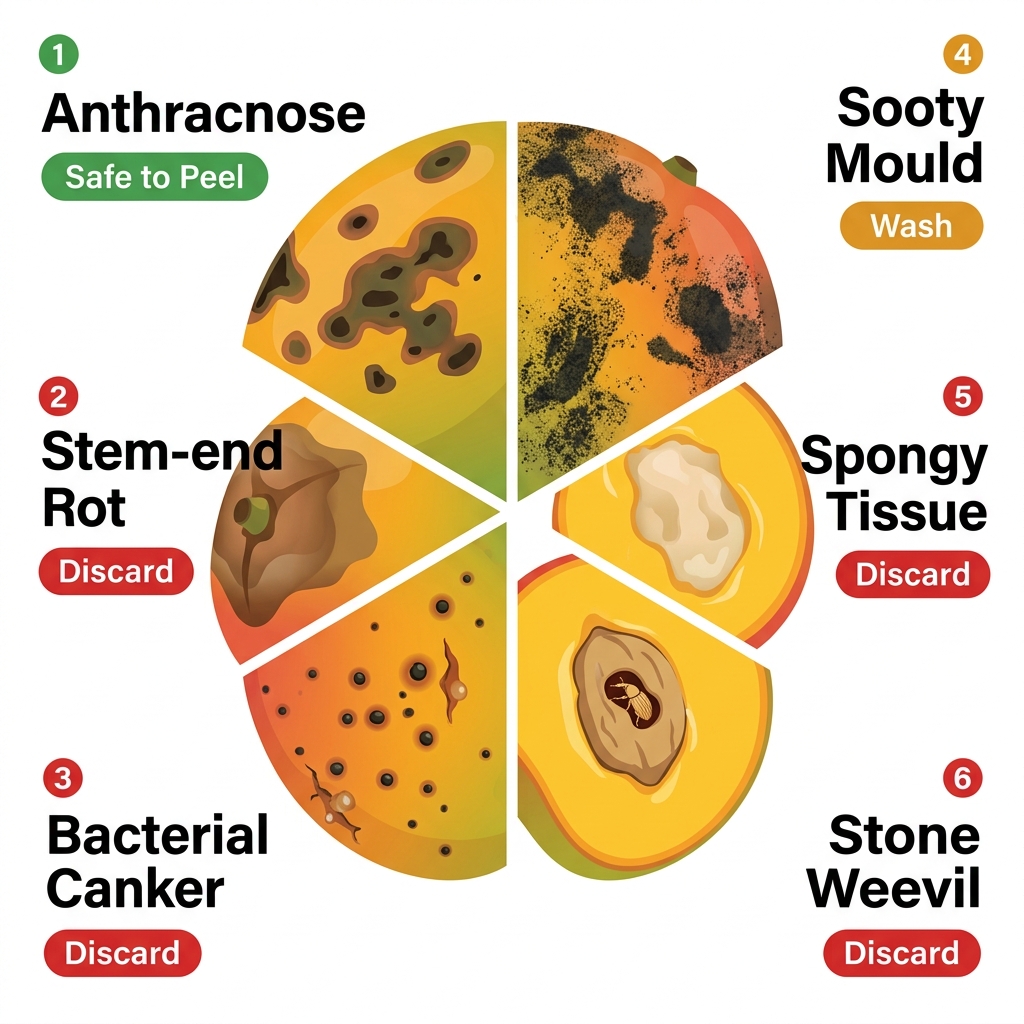
Pro Tip: Surface spots like Anthracnose are often harmless to the fruit inside, while Bacterial Canker or Stem-end Rot usually require discarding the fruit.
Ensure your Bombay Green mango is naturally ripened. Use Food Guard to detect Calcium Carbide and other chemical ripeners.