
📚 Regional Mango Names Guide
Did you know that Alphonso is called Badami in Karnataka and Hapus in Maharashtra? Explore our complete state-by-state guide mapping 30+ regional names across India.
Also known as: Carabao, Philippine Mango
Typical diseases and disorders affecting this variety:
Detect these early using our Plant Guard AI.
Read our detailed Mango Diseases & Safety Guide.
Manila Super (also known as Carabao Mango or simply Manila) is the national fruit of the Philippines and is globally renowned for being one of the world's sweetest and most flavorful mangoes. It is a premium export variety that has gained immense popularity in North America and Asia for its consistent quality and refined taste.
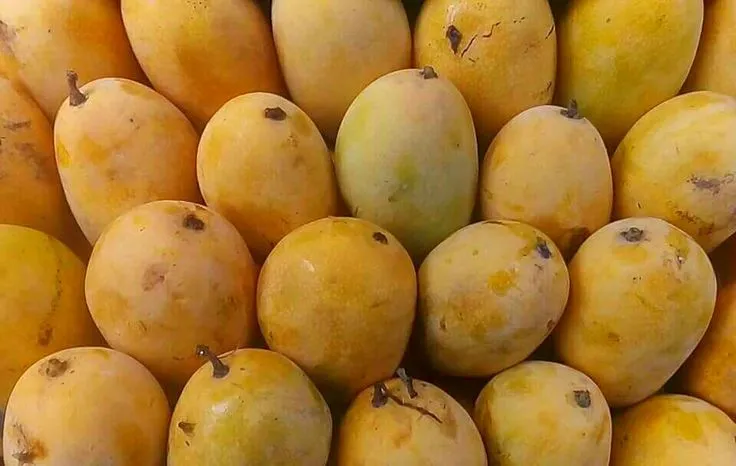
Physically, Manila Super is a medium-sized mango, typically weighing between 250 and 350 grams. It has a distinctive elongated-oblique shape with a smooth, thin skin. The skin ripens to a beautiful, uniform pale-yellow or bright yellow color without any blush, often exhibiting a slight greenish tinge at the base even when fully mature.
The flavor profile is exceptionally sweet and rich with a pleasant, mild aroma. The pulp is a vibrant yellow-orange, very juicy, and 100% fiberless (none). It has an incredibly small and thin pit, which results in one of the highest pulp-to-stone ratios among all commercial mango varieties.
The Manila Super season is mid-season, typically peaking from March to June. It is cultivated primarily in the Philippines (Guimaras and Zambales) and is also successfully grown in Mexico for the North American market. Its high sugar content and smooth texture have made it a favorite for both fresh eating and high-end processing.
When comparing it to Ataulfo or Nam Doc Mai, Manila Super is prized for its balanced sweetness and lack of acidity. While Nam Doc Mai is more elongated and floral, Manila Super offers a more traditional 'honey-sweet' profile. Discover more premium yellow varieties at our Mango Identifier hub.
Post-harvest, Manila Super is a delicate fruit with a respectable shelf life of 5-7 days. Its thin skin requires careful handling to avoid bruising, but its firm, meaty pulp remains stable if handled correctly. It is the absolute best variety for making premium mango shakes, dried mango slices, and traditional Filipino desserts.
Exceptionally sweet, tropical
Strong, tropical, sweet
Smooth, minimal fiber
Minimal
How to tell if it's a genuine Manila Super:
Did you know that Alphonso is called Badami in Karnataka and Hapus in Maharashtra? Explore our complete state-by-state guide mapping 30+ regional names across India.
The national fruit of the Philippines, representing the country's rich agricultural heritage.
Recognized by the Guinness World Records in 1995 as the world's sweetest mango variety.
Named 'Manila Super' in international trade to highlight its premium quality compared to other regional cultivars.
Quick reference for identifying common healthy vs. problematic conditions:
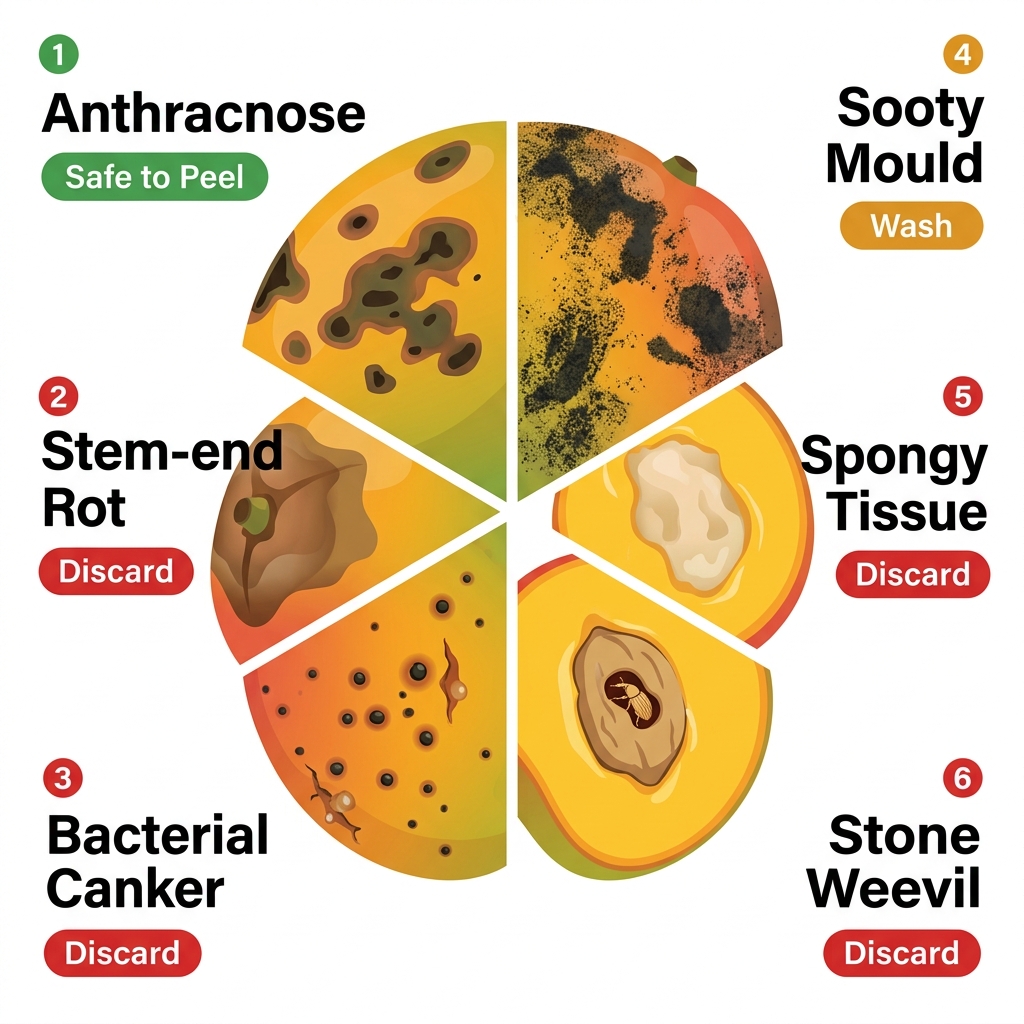
Pro Tip: Surface spots like Anthracnose are often harmless to the fruit inside, while Bacterial Canker or Stem-end Rot usually require discarding the fruit.
Ensure your Manila Super mango is naturally ripened. Use Food Guard to detect Calcium Carbide and other chemical ripeners.