
📚 Regional Mango Names Guide
Did you know that Alphonso is called Badami in Karnataka and Hapus in Maharashtra? Explore our complete state-by-state guide mapping 30+ regional names across India.
Also known as: Taiyo-no-Tamago, Egg of the Sun, Red Mango
Typical diseases and disorders affecting this variety:
Detect these early using our Plant Guard AI.
Read our detailed Mango Diseases & Safety Guide.
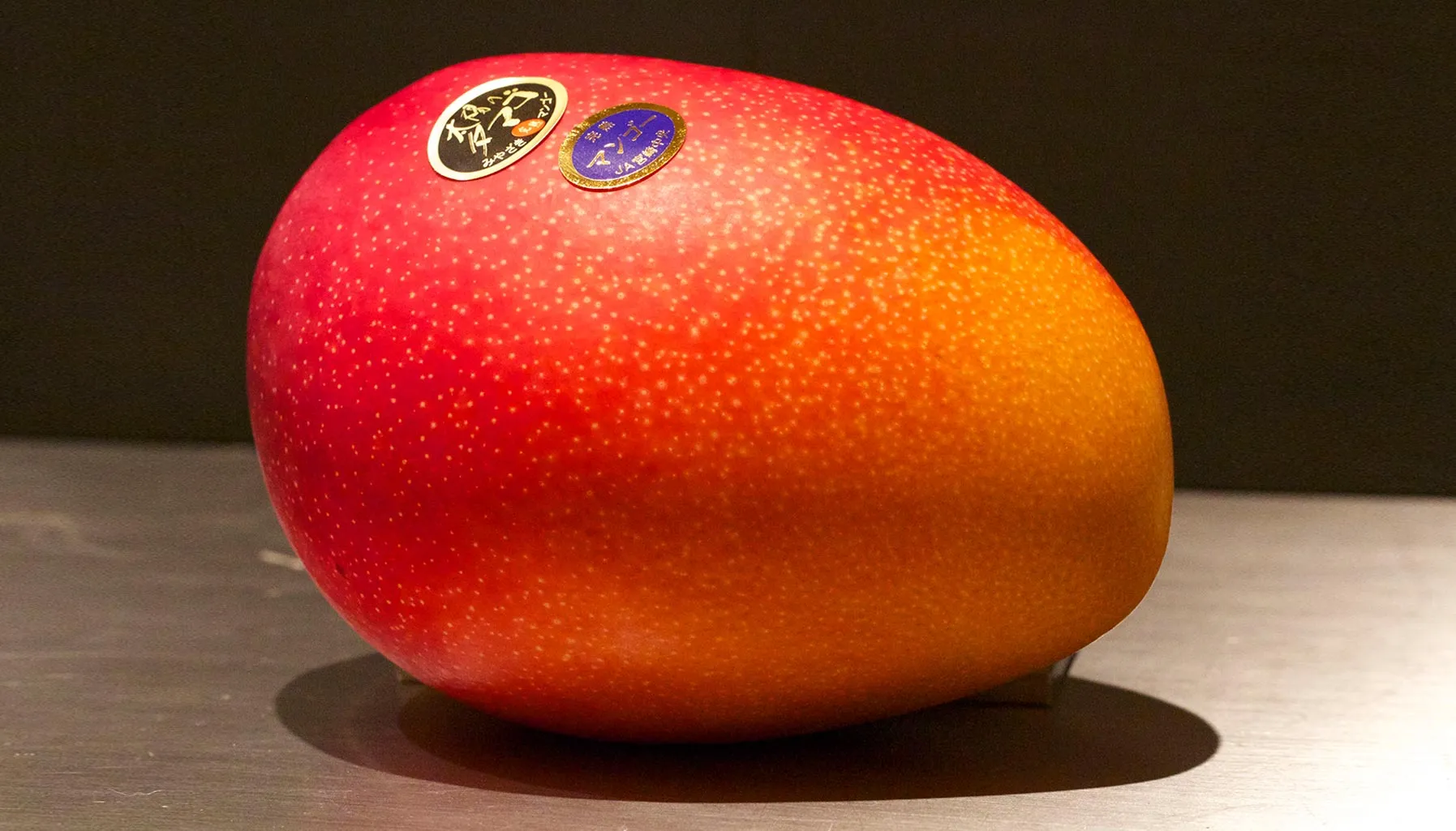
Miyazaki (also known as the 'Egg of the Sun' or Taiyo-no-Tamago) is currently the most expensive and highly-prized mango variety in the world. Originally from the Miyazaki Prefecture in Japan, it is a premium cultivar of the Irwin mango that is grown under extreme, high-tech conditions to achieve absolute perfection in color, sugar content, and appearance.
Physically, Miyazaki is a medium to large mango, typically weighing between 350 and 500 grams. It has an attractive oval shape. Its most legendary feature is its color: a brilliant, uniform deep ruby-red or purple-red skin that is achieved by using specialized nets to suspend the fruit and ensure 360-degree sunlight exposure.
The flavor profile is extraordinarily sweet, often recording Brix levels of 15% or higher. It offers a rich, melting, and buttery texture that is completely fiberless (none). It carries an intense, sweet tropical aroma that is highly intoxicating and refined, unlike any other commercial variety.
The Miyazaki season is highly controlled, with the finest 'Egg of the Sun' fruits appearing in late spring and early summer (April to June). While originally exclusive to Japan, it is now being cultivated in small, premium quantities in India (Madhya Pradesh and West Bengal) and Southeast Asia, where it commands record-breaking prices.
When comparing it to Alphonso or Kesar, Miyazaki is in a different league of luxury and visual perfection. While Alphonso is the 'King', Miyazaki is the 'Diamond'. Discover more ultra-premium world varieties at our Mango Identifier hub.
Post-harvest, Miyazaki is treated with extreme care. Each fruit is hand-inspected and graded for weight, color, and sugar content. It has a respectable shelf life of 6-8 days, but because of its astronomical value, it is always transported in specialized, cushioned packaging and is usually consumed as a high-end luxury gift.
For comparisons with other regional and international mango cultivars, explore our profiles on Francis and Edward.
Intensely sweet, rich, pineapple-like notes
Strong, sweet, floral
Melting, buttery, zero fiber
None
How to tell if it's a genuine Miyazaki:
Did you know that Alphonso is called Badami in Karnataka and Hapus in Maharashtra? Explore our complete state-by-state guide mapping 30+ regional names across India.
Originally developed in Miyazaki, Japan, using a specialized 'net-harvesting' technique where the fruit is allowed to fall naturally into a net when perfectly ripe.
Only mangoes that meet strict criteria—weighing at least 350g, having high sugar content, and perfect red color—are branded as 'Taiyo-no-Tamago' (Egg of the Sun).
Gained global fame when a pair of these mangoes sold at auction in Japan for a record-breaking price of over $4,000.
Quick reference for identifying common healthy vs. problematic conditions:
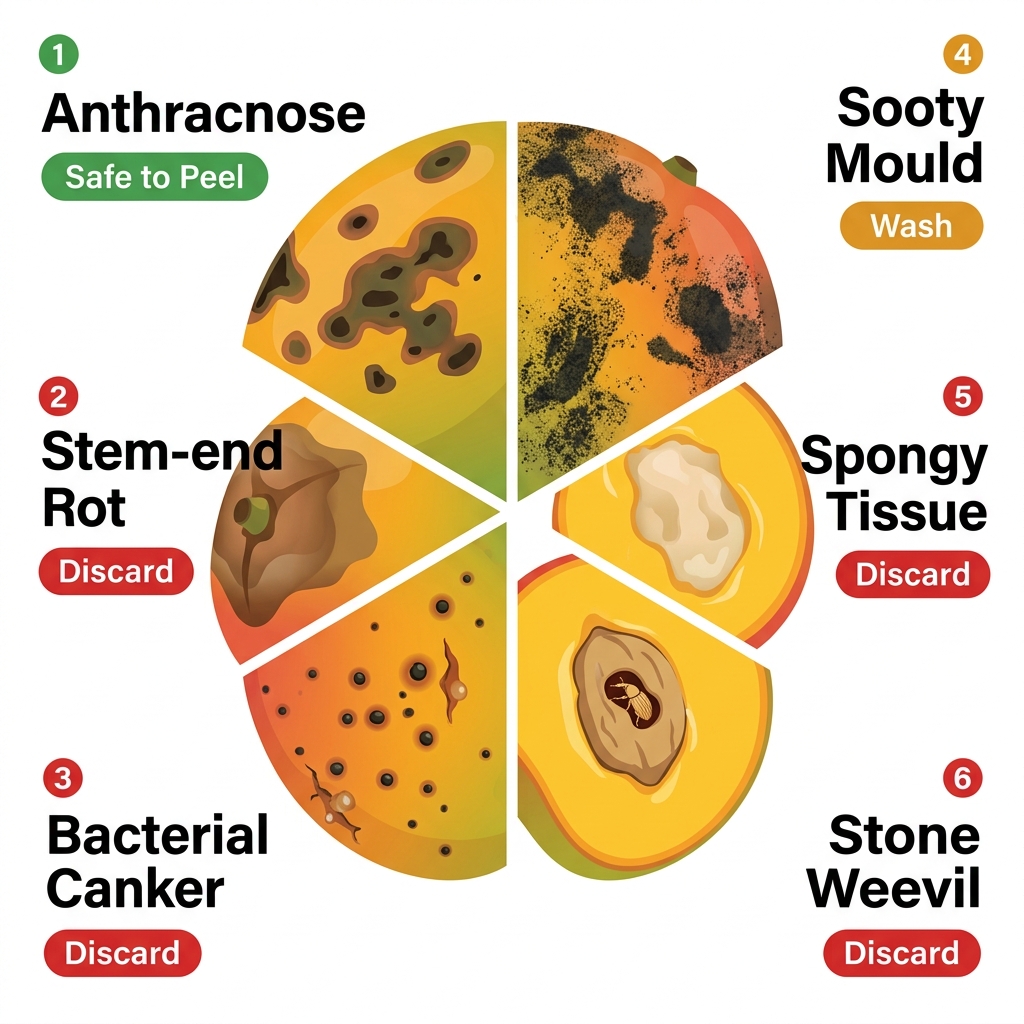
Pro Tip: Surface spots like Anthracnose are often harmless to the fruit inside, while Bacterial Canker or Stem-end Rot usually require discarding the fruit.
Ensure your Miyazaki mango is naturally ripened. Use Food Guard to detect Calcium Carbide and other chemical ripeners.