
Kent vs Keitt
Comparing Kent vs Keitt mangoes? Discover taste, Brix sweetness (19°Bx vs 14°Bx), green-skin ripeness guide, fiber texture, and late-season harvest calendars.
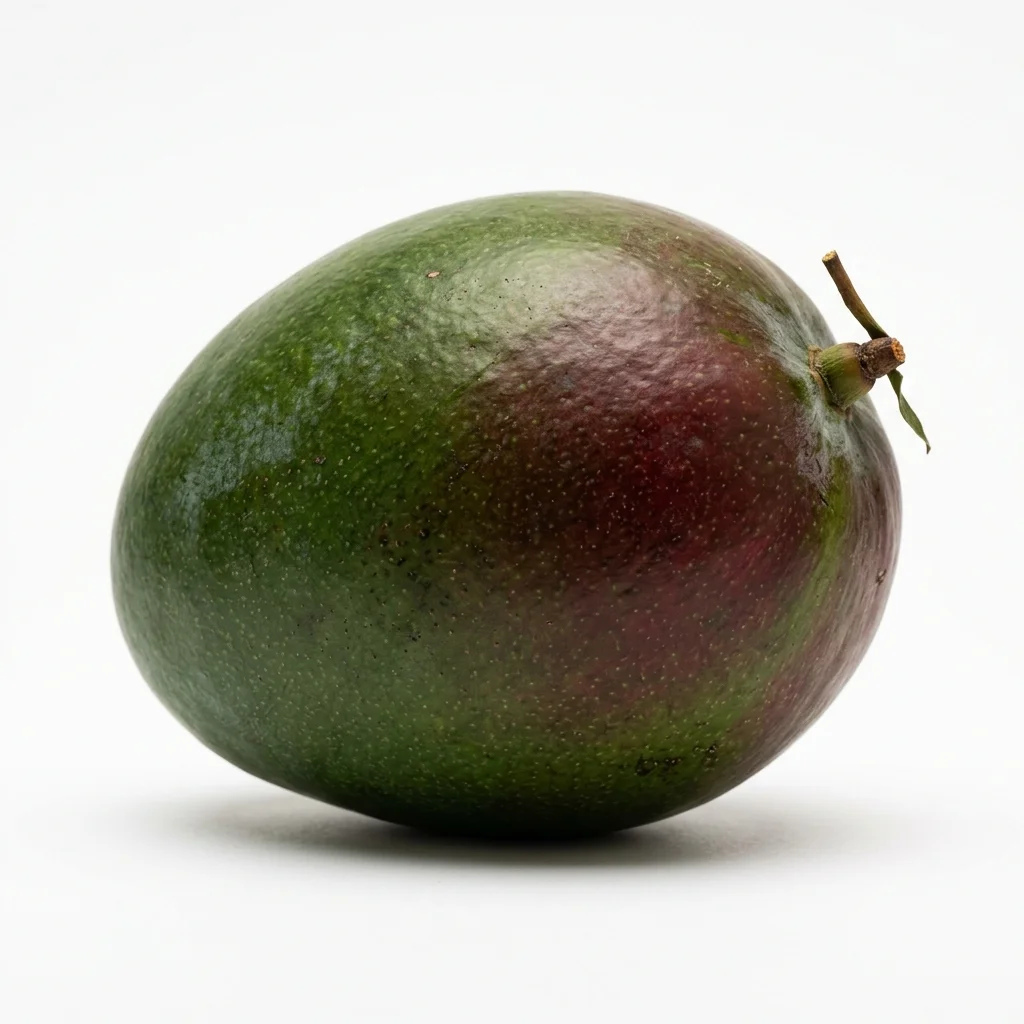
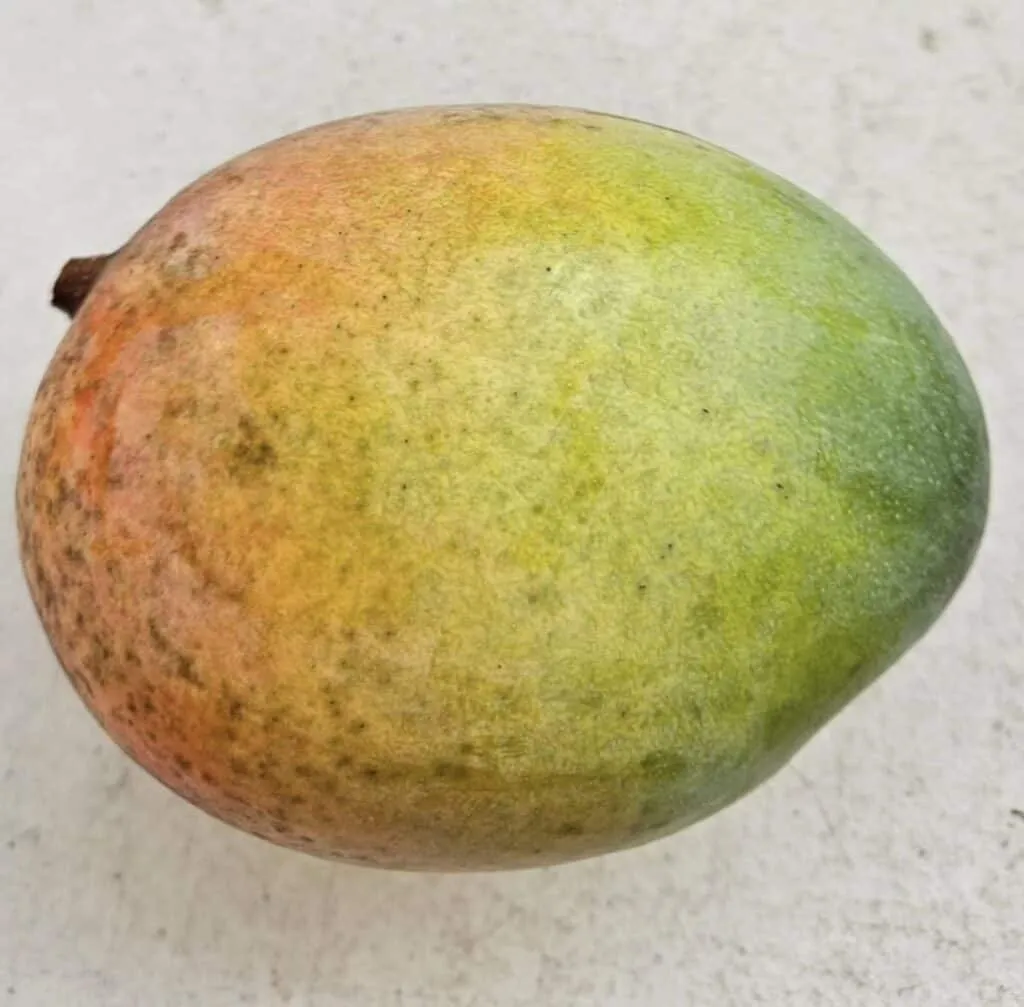
Key Differences: Kent vs Keitt
The fundamental difference between Keitt and Kent mangoes is in their skin color when ripe, fruit size, and flavor profile. Kent is a mid-season, medium-to-large mango that turns vibrant golden-yellow with a deep crimson blush, featuring an intensely sweet, rich tropical flavor and melting, tender pulp (16–19° Brix). In contrast, Keitt is a massive late-season cultivar that remains dark green with only a subtle pink blush even when perfectly ripe, offering a milder, refreshing, tangy-sweet flavor with a firmer, crisp, fiberless texture (14–17° Brix).
Botanical & Cultivar Comparison Table
| Feature | Kent | Keitt |
|---|---|---|
| Shape | Medium-to-large, plump oval-round | Very large, elongated oblong |
| Ripe Color | Turns rich golden-yellow with prominent crimson/purple blush | Remains dark green with slight pink blush (never turns full yellow) |
| Taste Profile | Intensely sweet, rich tropical candy notes (16°–19° Brix) | Mild, tangy-sweet, crisp & refreshing (14°–17° Brix) |
| Texture | Melting, juicy, tender, completely fiberless | Firm, crisp, completely fiberless, easy to cube |
| Size Category | Very-large | Large |
| Weight (Single Fruit) | 500g - 700g | 400g - 600g |
| Harvest Season | Mid-to-Late Season: June to August (Summer peak) J F M A M J J A S O N D | Late Season: August to October (Fall peak) J F M A M J J A S O N D |
| Average Price | Moderate ($1.50 – $2.50 per fruit in US/EU supermarkets) | Moderate ($1.50 – $2.50 per fruit in US/EU supermarkets) |
| State of Origin | Coconut Grove, Florida, USA (1932 seedling of Brooks) | Homestead, Florida, USA (1939 seedling of Brooks) |
| GI Tag Protected | Commercial cultivar (widely grown across Florida, Mexico, Ecuador, Peru) | Commercial cultivar (widely grown across Florida, Mexico, Brazil, Peru) |
| Best Use Case | Fresh eating, mango smoothies, baking, tarts, and ice cream | Salads, salsa, dehydrating, pickling, and late-season fresh snacking |
| Adulteration Risk | Low (Naturally ripens with high ethylene sensitivity) | Low (Thick natural skin enables steady on-tree and transit ripening) |
| Vulnerable Pests/Diseases | Vulnerable to Anthracnose and Thrips | Vulnerable to Bacterial Canker and Fruit Fly |
🛡️ Chemical Ripening & Adulteration Guide
Artificial ripening using Calcium Carbide and Ethylene is common in commercial mango trades. Use our Food Guard tool to check for chemical traces, verify natural ripening signs, and protect your family's health.
Which is Better For...?
Kent is preferred for dessert gifting and fresh fruit platters due to its vibrant crimson-gold presentation and melting sweetness.
Kent produces richer, smoother smoothies and juices due to its higher sugar concentration (up to 19° Brix) and softer, tender flesh.
Kent is favored by sweet-tooth lovers wanting a melting tropical spoon fruit, while Keitt is ideal for people who prefer large slices, mild sweetness, and a crisp, firm bite.
Both are global export powerhouses grown across Florida, Mexico, Peru, and Ecuador, with Keitt possessing a longer post-harvest shelf life due to its thicker skin.
How to Spot the Differences (Visual Spotting Guide)
Examine these visual markers and close-up identification features to tell them apart:
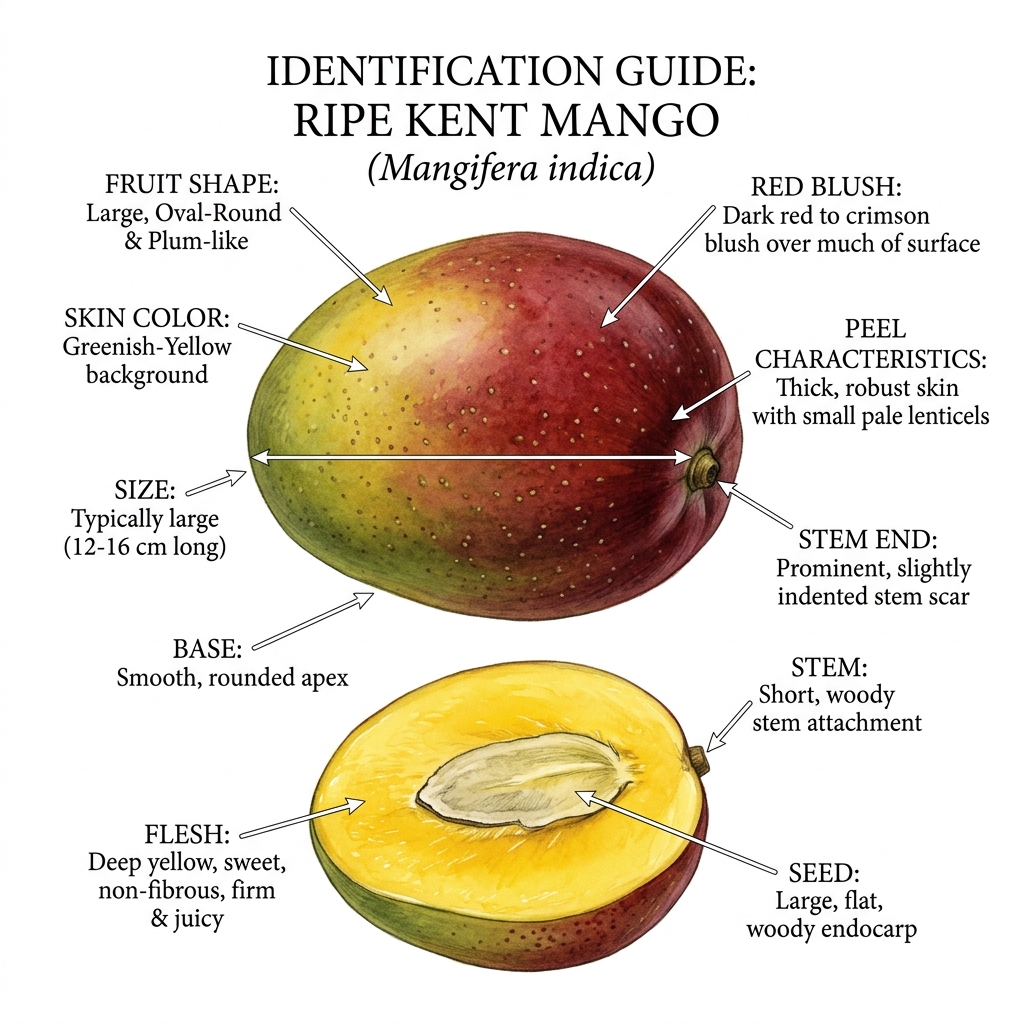 Kent Guide
- Golden-yellow with crimson-red blush: Background turns rich golden-yellow with a dark red or purple blush when fully ripe.
- Symmetrical oval-round shape: Medium-to-large (400g to 600g) with a rounded base and plump, symmetrical shoulders.
- Melting, buttery, juicy pulp: Incredibly tender, fiberless deep-yellow flesh that yields a luscious, sweet, mango-perfume mouthfeel.
- Peak mid-summer harvest: Dominates retail markets during peak summer months (June to August).
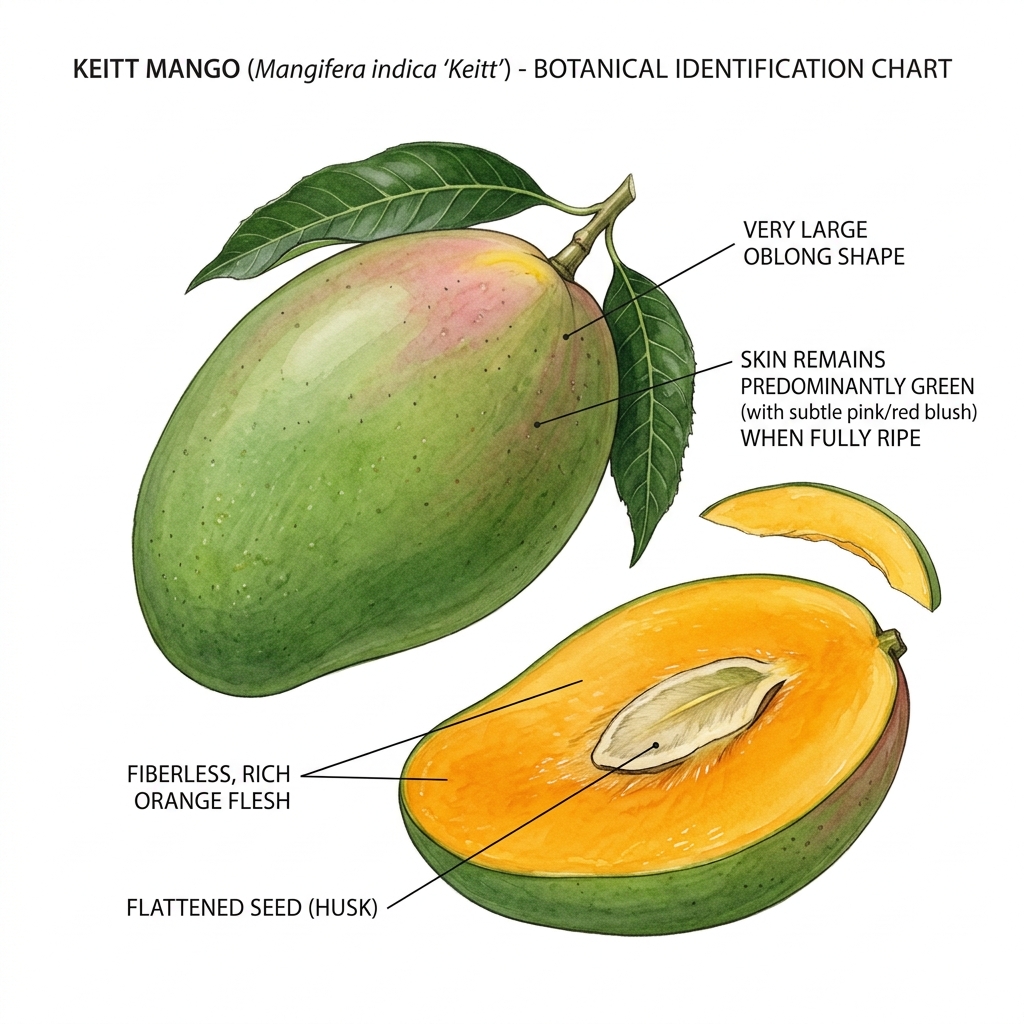 Keitt Guide
- Stays green when fully ripe: Unlike Kent, Keitt does not turn yellow. Ripe Keitt remains primarily dark green with occasional light pink or yellow blush.
- Massive oblong shape: Averages 500g to 1000g (over 1 to 2 lbs each), significantly larger and more elongated than Kent.
- Firm, crisp, fiberless bite: Dense, firm golden flesh that holds its shape cleanly when sliced or cubed for salads and charcuterie boards.
- Late-season availability: Dominates produce aisles from August through October when nearly all other fresh mango varieties are out of season.
Detailed Attribute Breakdown
👅 Flavor Comparison
Kent is a high-sugar, low-acid tropical indulgence with deep honey and peach notes (16–19° Brix). Keitt offers a balanced, milder sweetness (14–17° Brix) with a crisp, refreshing tartness that makes it less cloying in large quantities.
👃 Aroma Profile
Kent produces a pronounced sweet, fruity floral aroma at the stem cavity when ripe. Keitt has a very subtle, clean, herbal-fruity scent that requires close sniffing.
📦 Shelf Life & Storage
Keitt is the undisputed shelf-life champion among stone-free commercial varieties, lasting 8 to 14 days at cool room temperature due to its resilient green cuticle. Kent softens more rapidly, offering 5 to 7 days of prime eating window.
🛒 Market Availability
Kent arrives in retail markets in June and peaks in July/August. As Kent supplies wind down in late August, Keitt takes over the global supply chain, extending the fresh mango season through September and October.
Which Should You Choose?
- Choose Kent if you want the quintessential sweet, melting, juicy mango experience with rich tropical perfume for desserts, smoothies, or eating straight with a spoon.
- Choose Keitt if you want a massive fruit with firm, crisp flesh that slices cleanly for salads, sushi rolls, and salsa, or if you are buying mangoes during the late summer and fall (August–October).
- Grocery Shopping Tip: Never wait for a Keitt mango to turn yellow! To test ripeness on Keitt, gently press the shoulder near the stem—it is ripe when it yields slightly under gentle thumb pressure, regardless of its green color.