
Alphonso vs Badami
Is Badami same as Alphonso? Discover the differences in taste, aroma, look, origin, price, and learn how to identify fake Hapus in the market.
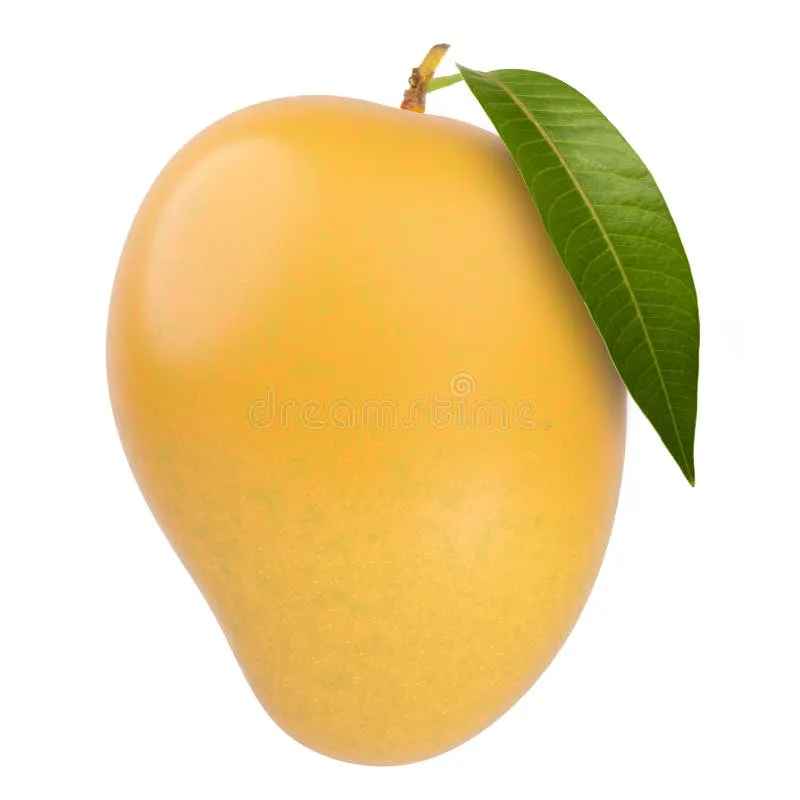
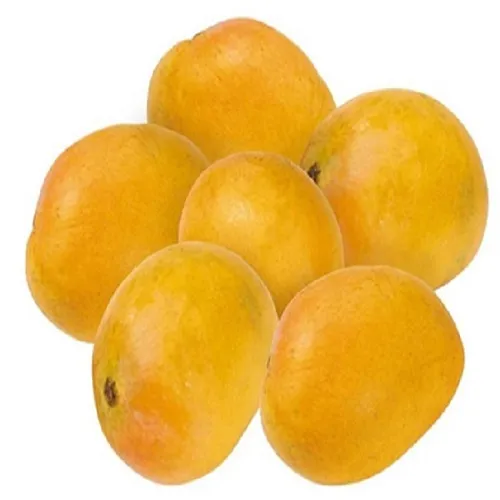
Key Differences: Alphonso vs Badami
Alphonso and Badami mangoes are often confused because Badami is commonly marketed as the 'Karnataka Alphonso' due to its close physical resemblance. However, they are distinct varieties grown in different regions. True Alphonso (Hapus) from Maharashtra features a deeper golden-orange color, an intensely rich buttery flavor, and a powerful perfume-like aroma. Badami from Karnataka is pale yellow, has a milder sweetness, a thinner skin, and is priced significantly lower, making it a common substitute for Alphonso.
Botanical & Cultivar Comparison Table
| Feature | Alphonso | Badami |
|---|---|---|
| Shape | Roundish-oval, thick base | Oblong-oval, slightly narrower |
| Ripe Color | Warm golden saffron-yellow | Bright pale canary-yellow |
| Taste Profile | Luxurious, complex sweet-creamy depth | Sweet, clean, pleasant but less complex |
| Texture | Buttery, completely fiberless, melt-in-the-mouth | Smooth, soft, minimal fiber |
| Size Category | Medium | Medium |
| Weight (Single Fruit) | 250g - 350g | 250g - 350g |
| Harvest Season | Early (April to May) J F M A M J J A S O N D | Very Early (March to May) J F M A M J J A S O N D |
| Average Price | Ultra-Premium (Rs 800 - 1500 per dozen) | Affordable (Rs 200 - 450 per dozen) |
| State of Origin | Maharashtra coast (Konkan) | Karnataka state districts |
| GI Tag Protected | Yes | No |
| Best Use Case | Fresh eating, luxury gifting, desserts | Everyday table fruit, affordable milkshakes |
| Adulteration Risk | High (Premature harvest & Calcium Carbide ripening) | Medium (Often ripened with chemicals to mimic early Hapus) |
| Vulnerable Pests/Diseases | Highly vulnerable to Anthracnose and Spongy Tissue | Vulnerable to Anthracnose and Mealybugs |
🛡️ Chemical Ripening & Adulteration Guide
Artificial ripening using Calcium Carbide and Ethylene is common in commercial mango trades. Use our Food Guard tool to check for chemical traces, verify natural ripening signs, and protect your family's health.
Which is Better For...?
Alphonso is the premium choice for luxury gifting. Giving Badami is fine for everyday family consumption but lacks the 'Hapus' prestige.
Both make excellent juice, but Badami is much more economical for large batches.
Alphonso wins easily on richness and flavor depth, while Badami offers a lighter, clean sweetness.
Alphonso has a massive global export footprint. Badami is mostly consumed domestically and in Middle-Eastern markets.
How to Spot the Differences (Visual Spotting Guide)
Examine these visual markers and close-up identification features to tell them apart:
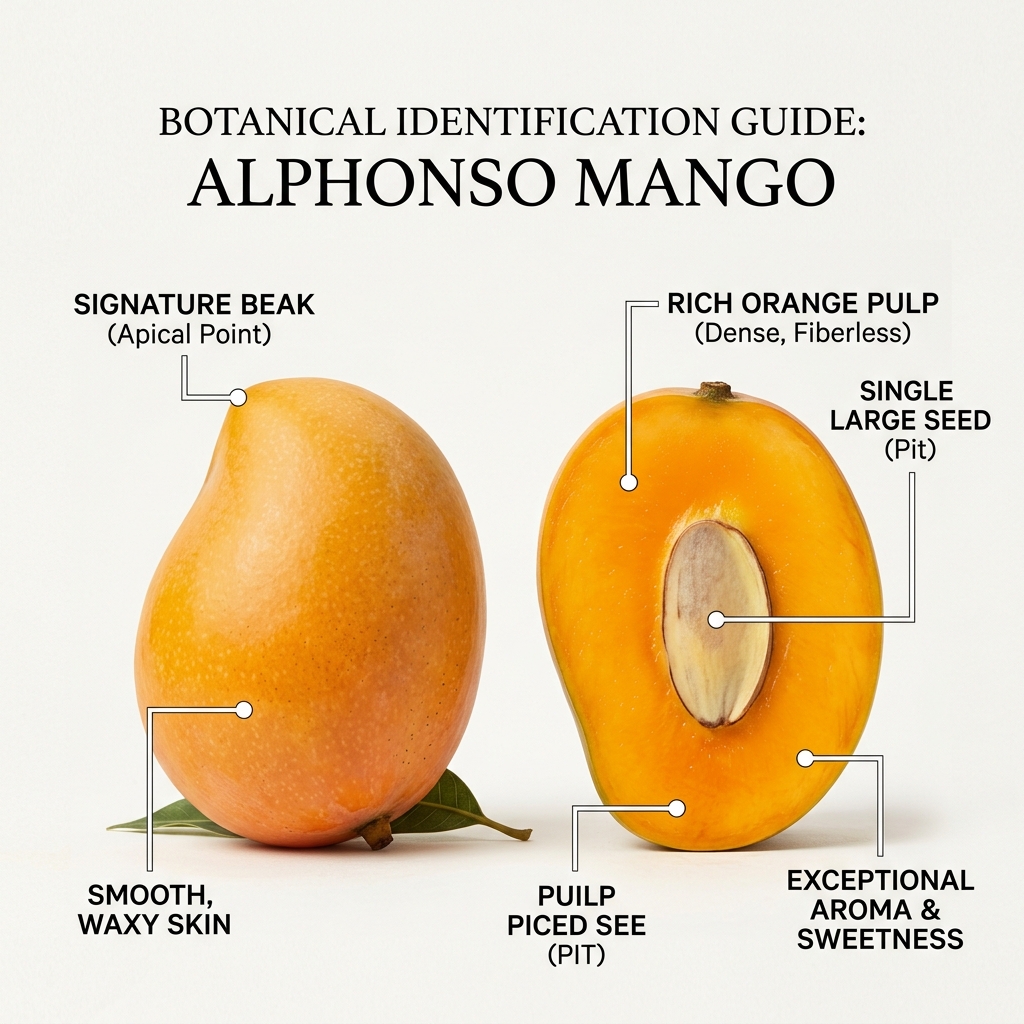 Alphonso Guide
- Deeper golden-orange color: Ripe Alphonso turns a solid, warm yellow-orange skin color.
- Rich, heavy aroma: Easily detectable sweet fragrance even from a distance.
- Thicker skin: The skin is smooth but sturdy enough to resist light finger pressure.
- Konkan soil origin: Typically bears a GI-tagged stamp of Ratnagiri or Devgad origin.
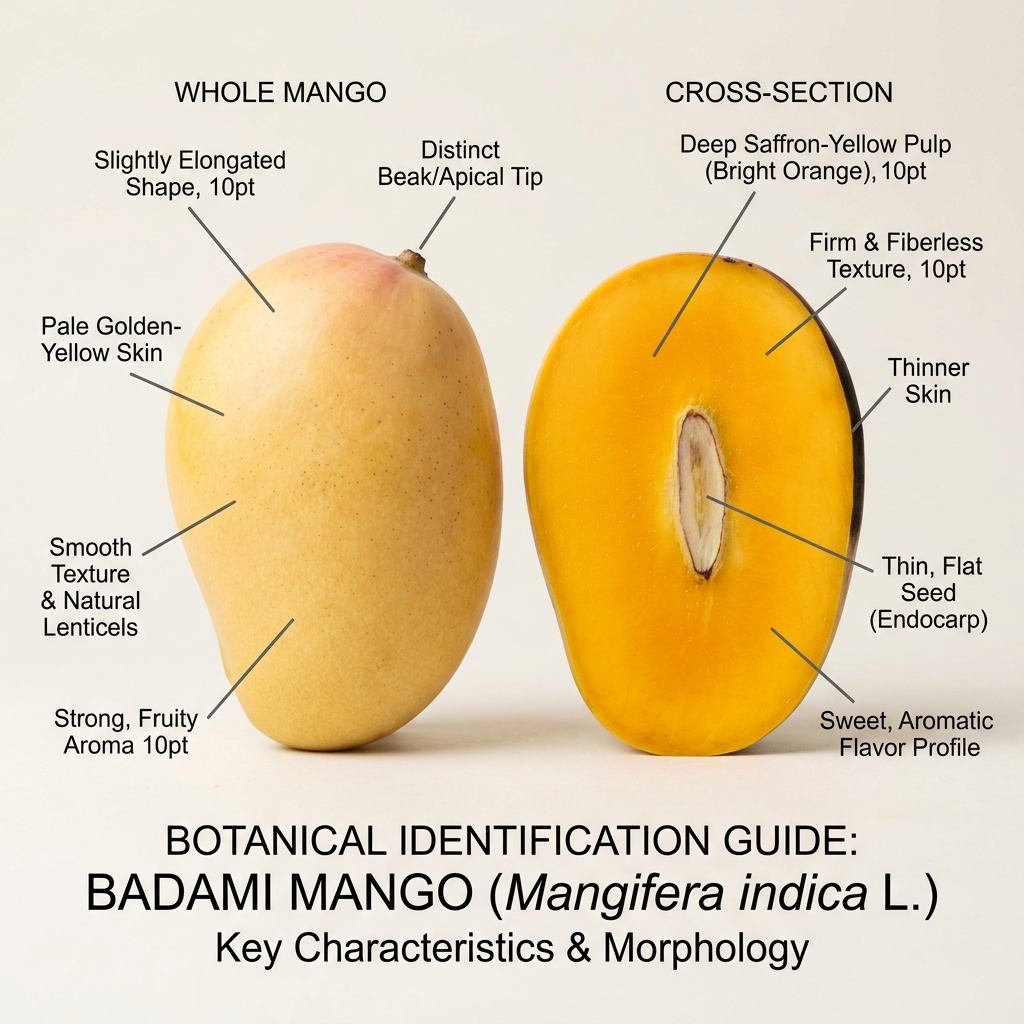 Badami Guide
- Pale canary-yellow color: Badami has a brighter, lighter yellow skin, often with tiny green-grey speckles.
- Faint, mild aroma: Scent is fresh but much lighter and does not fill a room.
- Thinner skin: Stems and skin are delicate; yields easily to pressure when ripe.
- Karnataka origin: Sourced primarily from orchards in Karnataka, appearing slightly earlier in the season.
Detailed Attribute Breakdown
👅 Flavor Comparison
Alphonso has a luxurious, rich buttery paste texture with a balanced sweetness. Badami is sweet and very pleasant but lacks that specific heavy butter fat quality and complex acid-sweet finish.
👃 Aroma Profile
Alphonso's aroma is powerful and tropical. Badami has a much milder, lighter sweet scent that is only noticeable up close.
📦 Shelf Life & Storage
Both have moderate shelf lives, but Badami's thinner skin means it must be consumed quickly once fully ripe to avoid bruising.
🛒 Market Availability
Badami hits the markets about 2-3 weeks before Maharashtra Alphonso, offering an early option for mango lovers in March.
Which Should You Choose?
Is Badami the same as Alphonso? No. While Badami behaves and looks like Alphonso, it is a different variety grown in Karnataka. It is less aromatic, less buttery, and much cheaper. Unscrupulous vendors sometimes sell Badami as 'Hapus' to maximize profit.
- Choose Alphonso if you want the authentic, premium Konkan flavor, rich buttery mouthfeel, and are willing to pay for genuine certified GI Hapus.
- Choose Badami if you want a budget-friendly alternative that looks and tastes very similar to Alphonso, perfect for daily milkshakes and family snacks.