
📚 Regional Mango Names Guide
Did you know that Alphonso is called Badami in Karnataka and Hapus in Maharashtra? Explore our complete state-by-state guide mapping 30+ regional names across India.
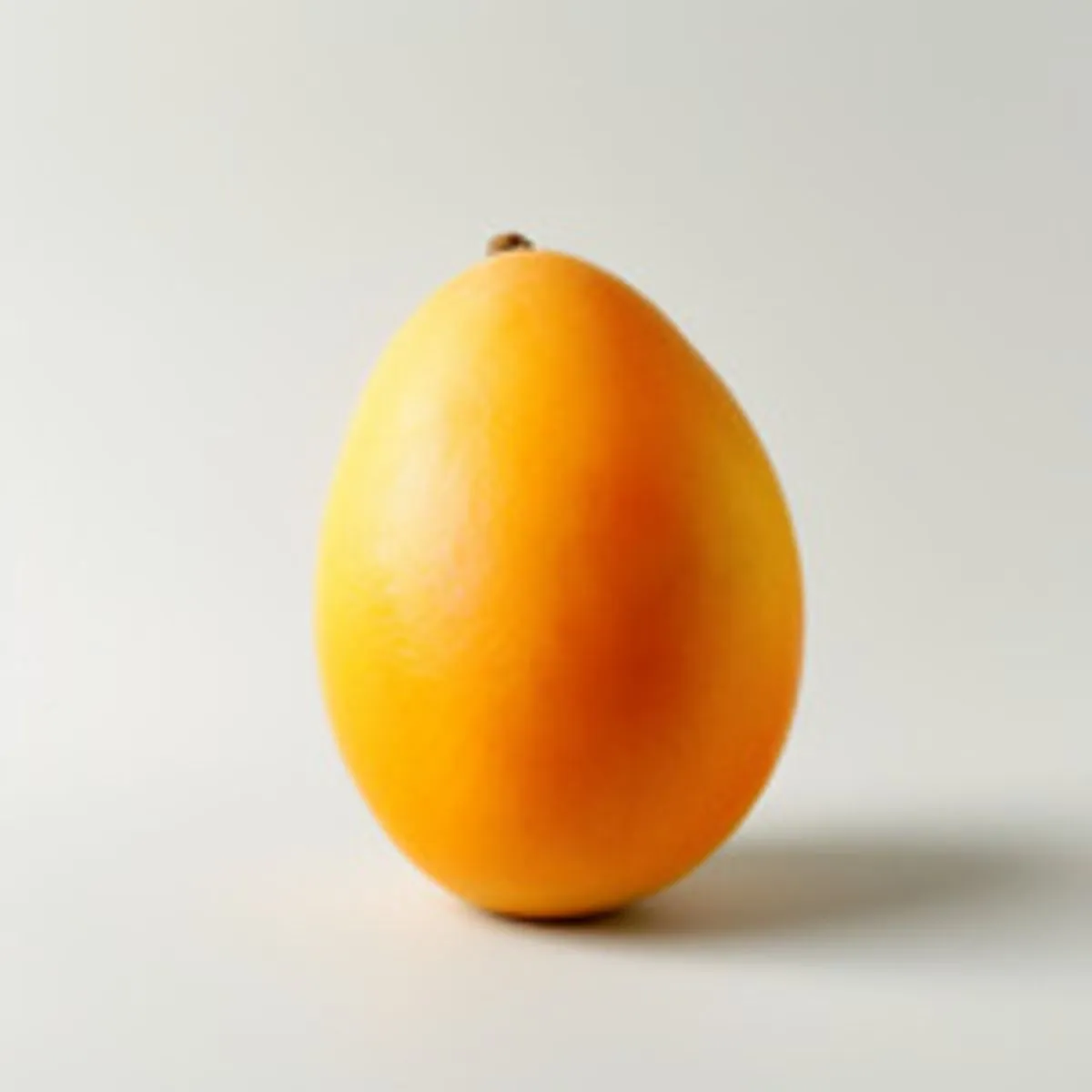
Typical diseases and disorders affecting this variety:
Detect these early using our Plant Guard AI.
Read our detailed Mango Diseases & Safety Guide.
Mingolo is a premium international tropical mango variety that originated in the Caribbean, particularly the Dominican Republic. Valued for its robust growth, regular bearing, and exceptional golden pulp, it is grown in specialized trial orchards and progressive farms along the coastal belts of southern and western India.
Physically, Mingolo is a medium-sized mango, weighing between 250 and 350 grams, with a clean oblong-oval shape and a smooth, rounded bottom. The skin is smooth, glossy, and turns a brilliant, uniform deep canary-yellow upon ripening, with tiny, barely visible lenticels.
The flavor is richly sweet, tropical, and highly satisfying, balanced by a very light, pleasing tartness near the skin. The pulp is a deep golden-yellow, remarkably firm, meaty, and contains a minimal to none fiber content. It carries a pleasant, clean fruity aroma that is sweet but not overpowering.
The Mingolo season is late-mid, commencing in early June, peaking during July, and wrapping up by mid-August. In India, it thrives in coastal microclimates, including coastal Karnataka, Goa, and coastal Tamil Nadu, where the humid marine climate mimics its native Caribbean home.
Compared to Banganapalli and Alphonso, Mingolo is firmer and holds its shape exceptionally well after slicing, making it highly prized for commercial food service. While Alphonso is soft and melting, Mingolo offers a more substantial, meaty bite with a clean, tropical-citrus sweetness.
Post-harvest characteristics of Mingolo are highly rated. It has a solid shelf life of 7 to 9 days at room temperature, ripening slowly and evenly. Its firm skin and dense flesh make it highly resistant to compression damage, making it suitable for long-distance shipping and exports.
For comparisons with other regional and international mango cultivars, explore our profiles on Edward and Francis.
Very sweet with peach and tropical notes
Sweet, fruity, peachy
Smooth, firm
Minimal
How to tell if it's a genuine Mingolo:
Did you know that Alphonso is called Badami in Karnataka and Hapus in Maharashtra? Explore our complete state-by-state guide mapping 30+ regional names across India.
Mingolo is one of the most commercially successful mango varieties in the Dominican Republic, praised globally for its high yield and export quality.
Its introduction to Indian tropical coastlines has provided farmers with a highly productive late-mid season alternative that excels in high humidity.
It is favored by high-end hotels and fruit processing units for its consistent pulp firmness and brilliant golden-yellow color.
Quick reference for identifying common healthy vs. problematic conditions:
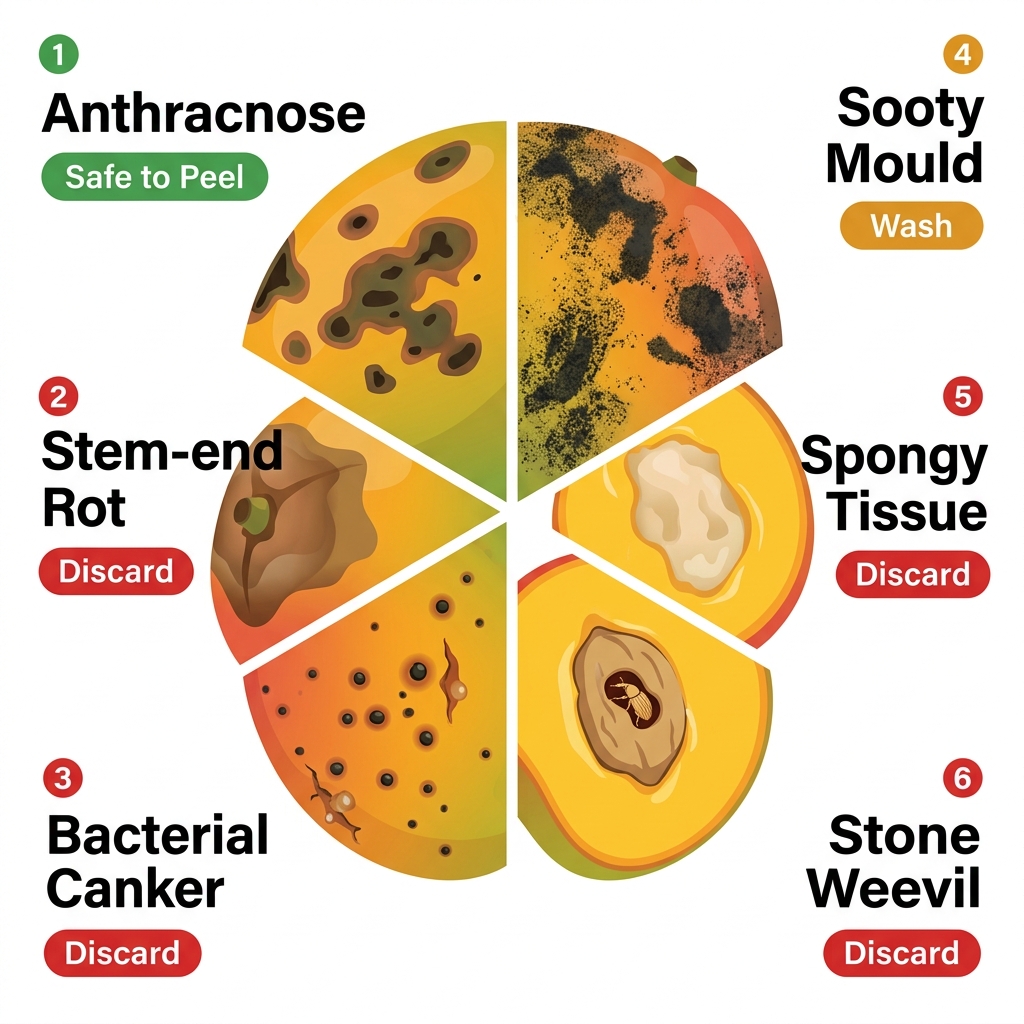
Pro Tip: Surface spots like Anthracnose are often harmless to the fruit inside, while Bacterial Canker or Stem-end Rot usually require discarding the fruit.
Ensure your Mingolo mango is naturally ripened. Use Food Guard to detect Calcium Carbide and other chemical ripeners.