
📚 Regional Mango Names Guide
Did you know that Alphonso is called Badami in Karnataka and Hapus in Maharashtra? Explore our complete state-by-state guide mapping 30+ regional names across India.
Also known as: Nadusali, Tamil Nadu Nadusalai
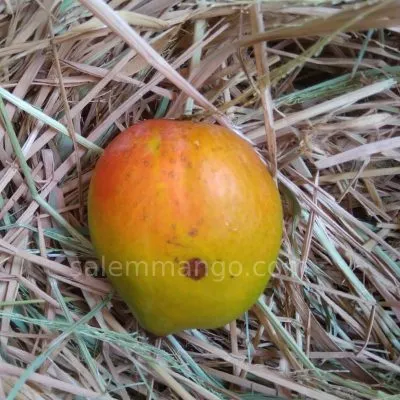
Typical diseases and disorders affecting this variety:
Detect these early using our Plant Guard AI.
Read our detailed Mango Diseases & Safety Guide.
Nadusalai is a prized regional specialty mango variety originating from the Salem district of Tamil Nadu. Highly celebrated by local consumers, it is known as the 'Alphonso of Tamil Nadu' due to its superlative eating quality, intensely sweet taste, and traditional heritage.
Physically, Nadusalai is a small to medium-sized mango, typically weighing between 180 and 250 grams, with a neat, round shape and a slightly flattened top. The skin is remarkably thin, delicate, and turns a light green-yellow or uniform pale yellow when fully ripe, with fine whitish lenticels.
The flavor is intensely sweet and rich, mimicking the honeyed richness of Alphonso but with a highly distinct, traditional floral aroma that is unique to the Salem region. The orange-yellow pulp is incredibly juicy, soft, and completely fiberless (none), with a melting texture.
The Nadusalai season starts in mid-April, peaks during the month of May, and concludes by early June. It is almost exclusively cultivated in the Salem, Dharmapuri, Krishnagiri, and Namakkal districts of northwestern Tamil Nadu, thriving in the region's dry, warm foothills.
In comparison to Alphonso and Raspuri, Nadusalai is slightly rounder and has a much thinner skin. While Alphonso has a firm, meaty texture suitable for commercial export, Nadusalai has a softer, far more juicy flesh that is prized locally for eating fresh and making traditional desserts.
Due to its thin skin and exceptionally soft, juicy flesh, Nadusalai has a short post-harvest shelf life of 3 to 5 days. It requires highly gentle handling and is best consumed immediately after harvest, which is why it remains a prized regional delicacy that is rarely shipped long distances.
For comparisons with other regional and specialized cultivars, explore our profiles on Priyoor Mango and Arka Neelkiran.
Sweet, balanced
Sweet, pleasant
Juicy, minimal fiber
Minimal
How to tell if it's a genuine Nadusalai:
Did you know that Alphonso is called Badami in Karnataka and Hapus in Maharashtra? Explore our complete state-by-state guide mapping 30+ regional names across India.
Nadusalai has a long history in Salem, often cultivated in traditional temple orchards and family gardens where its superior taste was prized over yield.
It is considered a highly traditional delicacy in Salem, with locals eagerly awaiting its arrival in May as the pinnacle of the local mango season.
It is widely used in northwest Tamil Nadu for family feasts, weddings, and traditional summer mango festivals.
Quick reference for identifying common healthy vs. problematic conditions:
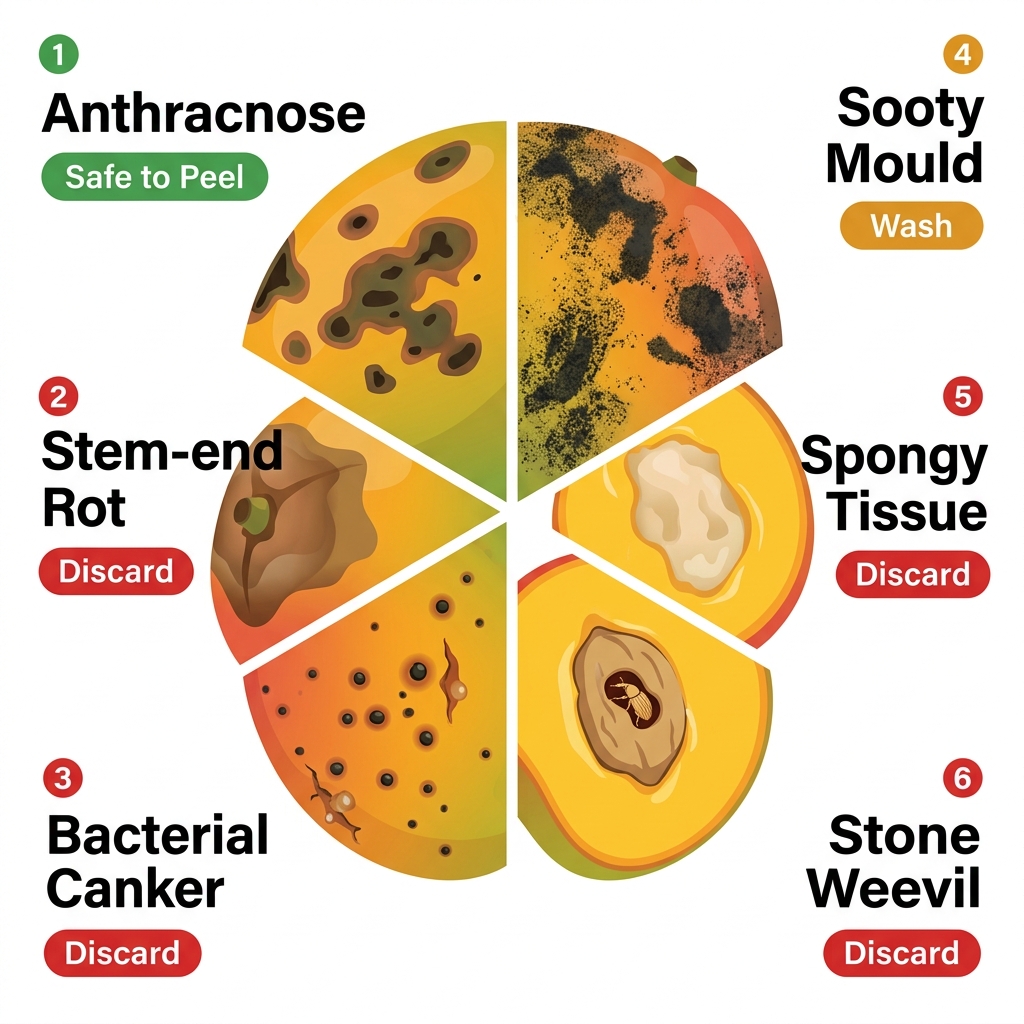
Pro Tip: Surface spots like Anthracnose are often harmless to the fruit inside, while Bacterial Canker or Stem-end Rot usually require discarding the fruit.
Ensure your Nadusalai mango is naturally ripened. Use Food Guard to detect Calcium Carbide and other chemical ripeners.