
📚 Regional Mango Names Guide
Did you know that Alphonso is called Badami in Karnataka and Hapus in Maharashtra? Explore our complete state-by-state guide mapping 30+ regional names across India.
Also known as: Champagne Mango, Honey Mango
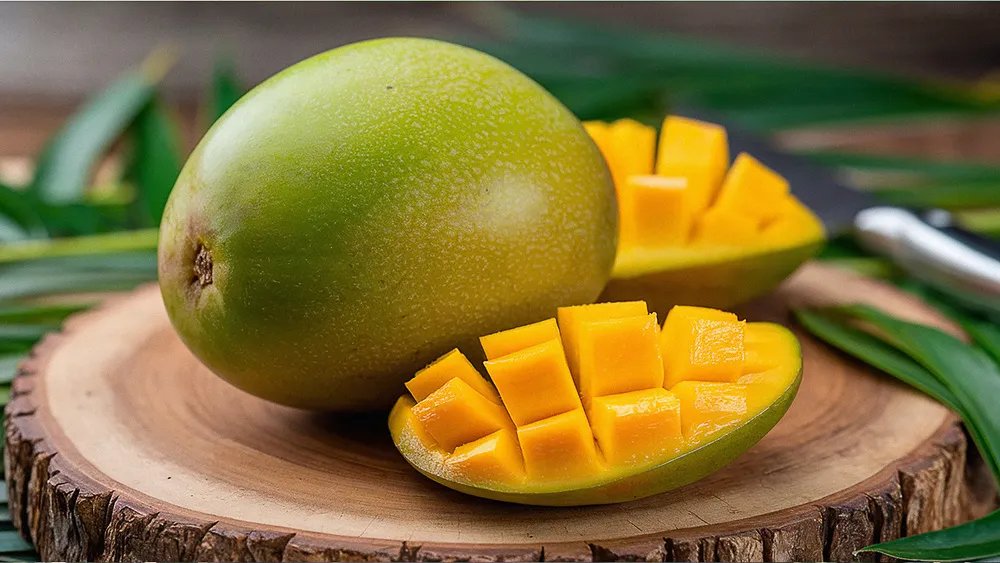
Typical diseases and disorders affecting this variety:
Detect these early using our Plant Guard AI.
Read our detailed Mango Diseases & Safety Guide.
Ataulfo (also known as Honey, Champagne, or Yellow Mango) is a premium and highly popular variety native to the state of Chiapas, Mexico. It is globally celebrated for its exceptional sweetness, small pit, and its silky-smooth, completely fiberless texture, making it a favorite in the North American market.
Physically, Ataulfo is a small to medium-sized mango, typically weighing between 200 and 300 grams. It has a distinctive, slender, kidney-like shape with a slight curve. The skin is thin, smooth, and ripens to a brilliant, uniform deep golden-yellow without any blush.
The flavor profile is intensely sweet and rich with a pleasant, mild aroma. The pulp is a vibrant, deep yellow, incredibly creamy, and 100% fiberless (none). It has one of the smallest pits of any commercial variety, resulting in an exceptionally high pulp-to-stone ratio.
The Ataulfo season is early, typically starting in March and peaking in April and May. It is cultivated primarily in the Soconusco region of Chiapas, Mexico, and is a major export variety to the United States and Canada. Its premium quality has earned it a Geographical Indication (GI) tag in Mexico.
When comparing it to Manila Super or Nam Doc Mai, Ataulfo is prized for its high sugar content and buttery texture. While Nam Doc Mai is more elongated and floral, Ataulfo is richer and more 'honey-like'. Discover more honey-sweet varieties at our Mango Identifier hub.
Post-harvest, Ataulfo has a good shelf life of 6-8 days. Its thin skin requires careful handling, but its firm, meaty pulp remains stable during transport. It is a preferred variety for fresh table consumption, making premium smoothies, and for high-end desserts where its buttery texture can be showcased.
Exceptionally sweet, honey-like, rich
Very strong, sweet, honey-like
Creamy, buttery, zero fiber
None
How to tell if it's a genuine Ataulfo:
Did you know that Alphonso is called Badami in Karnataka and Hapus in Maharashtra? Explore our complete state-by-state guide mapping 30+ regional names across India.
Named after its developer, Ataulfo Morales Gordillo, a grower in Chiapas, Mexico, who discovered the variety in the 1960s.
Granted the 'Mango Ataulfo del Soconusco Chiapas' Geographical Indication in 2003, protecting its regional identity.
Often marketed as the 'Champagne' mango in high-end supermarkets due to its refined flavor and quality.
Quick reference for identifying common healthy vs. problematic conditions:
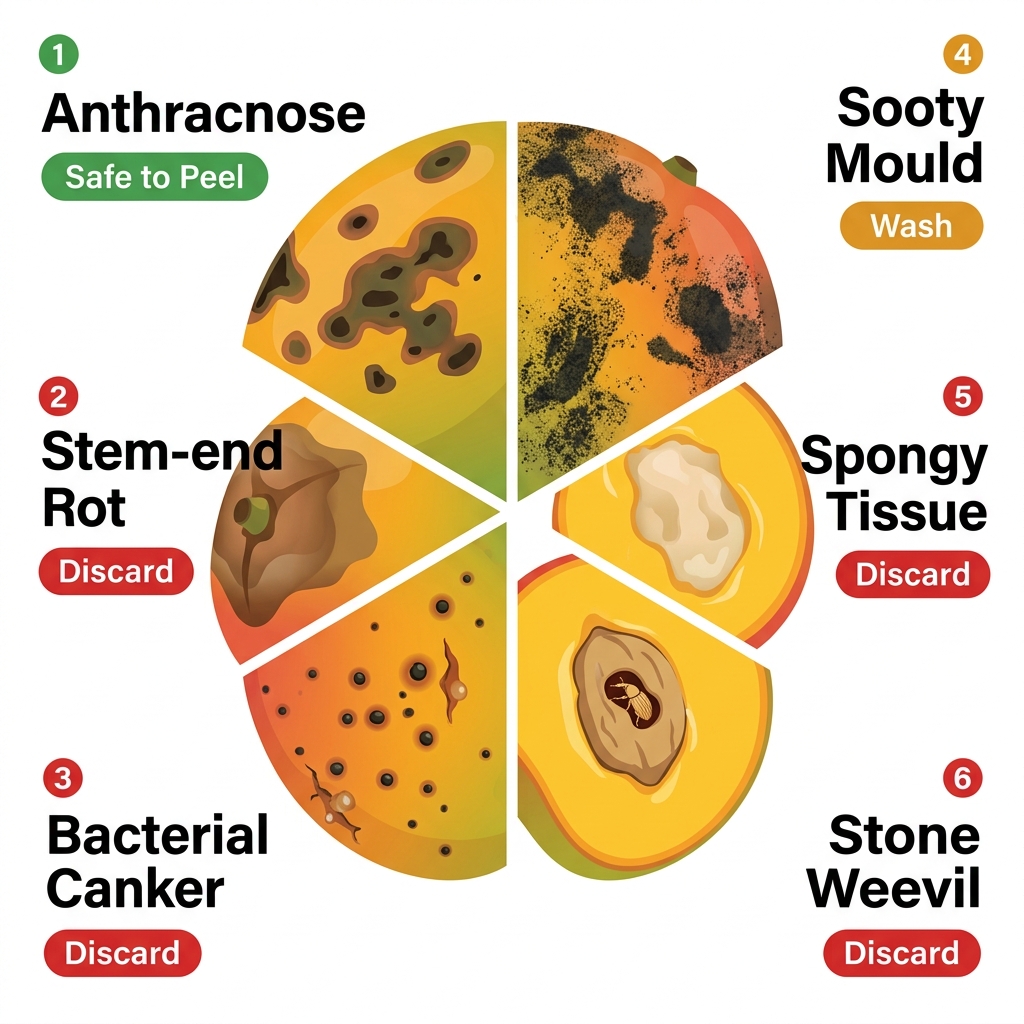
Pro Tip: Surface spots like Anthracnose are often harmless to the fruit inside, while Bacterial Canker or Stem-end Rot usually require discarding the fruit.
Ensure your Ataulfo mango is naturally ripened. Use Food Guard to detect Calcium Carbide and other chemical ripeners.