
📚 Regional Mango Names Guide
Did you know that Alphonso is called Badami in Karnataka and Hapus in Maharashtra? Explore our complete state-by-state guide mapping 30+ regional names across India.
Also known as: Kaat Ambe, Kaat Ambo, Gontu Ambo, Tanthi Ambe, Kaadu Maavu, Nekkaro Ambo
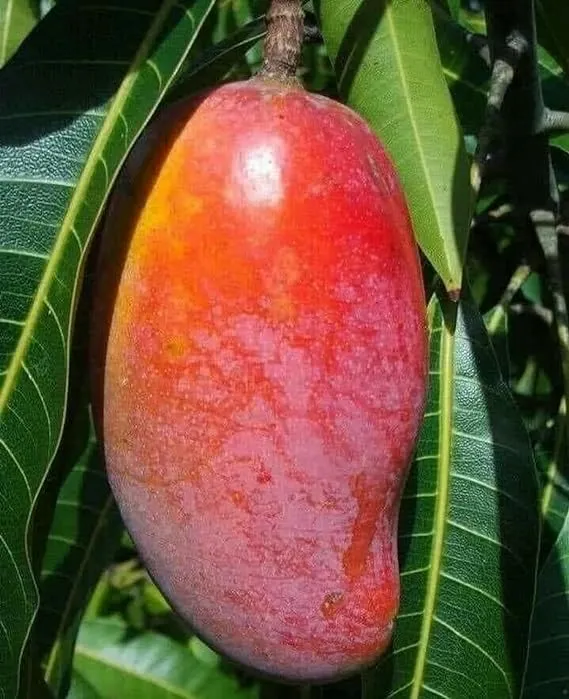
Typical diseases and disorders affecting this variety:
Detect these early using our Plant Guard AI.
Read our detailed Mango Diseases & Safety Guide.
Nekkare is a unique and rare regional mango variety native to the coastal regions of Karnataka, particularly in the Dakshina Kannada and Udupi districts. It is a traditional favorite known for its distinct flavor, high juice content, and its status as a heritage cultivar adapted to the humid, marine climate of the Western Ghats.
Physically, Nekkare is a medium-sized mango, typically weighing between 250 and 350 grams. It has an attractive round-oval shape with a smooth, medium-thick skin. The skin ripens to a beautiful greenish-yellow color, often marked by fine brown or black lenticels that are characteristic of the variety.
The flavor profile is intensely sweet with a refreshing, slightly acidic tang that is unique to coastal mangoes. The pulp is a vibrant orange-yellow, very juicy, and contains a minimal to moderate amount of fine fiber. It carries a pleasant, aromatic scent that is sweet with subtle spicy notes.
The Nekkare season is early-to-mid, typically starting in April and peaking in May. It is grown almost exclusively along the coastal belt of Karnataka. Its hardiness and ability to thrive in high-rainfall zones make it a reliable choice for local farmers.
When comparing it to Alphonso, Banganapalli, and Malgova, Nekkare is prized for its local adaptation. While Alphonso is the commercial leader, Nekkare offers a more traditional and robust coastal flavor profile. Discover more regional heritage varieties at our Mango Identifier hub.
Post-harvest, Nekkare has a respectable shelf life of 5-7 days. Its juicy pulp and thin skin mean it requires careful handling during local transport. It is a preferred variety for fresh table consumption, making traditional coastal mango dishes, and for fresh juices and milkshakes.
For comparisons with other regional and specialized cultivars, explore our profiles on Safdar Pasand and Pusa Arunima.
Richly sweet with refreshing coastal tanginess
Sweet, tropical, fruity with wild floral undertones
Ultra-juicy, soft, melting pulp with fine edible fiber
Minimal
How to tell if it's a genuine Nekkare:
Did you know that Alphonso is called Badami in Karnataka and Hapus in Maharashtra? Explore our complete state-by-state guide mapping 30+ regional names across India.
A traditional variety of the coastal Tulu-speaking community of Karnataka, deeply integrated into local agricultural lore.
Valued for its resistance to the heavy pre-monsoon showers that can often damage more delicate cultivars in the region.
Often used in the preparation of traditional coastal desserts and salted mango preserves (Ambo).
Quick reference for identifying common healthy vs. problematic conditions:
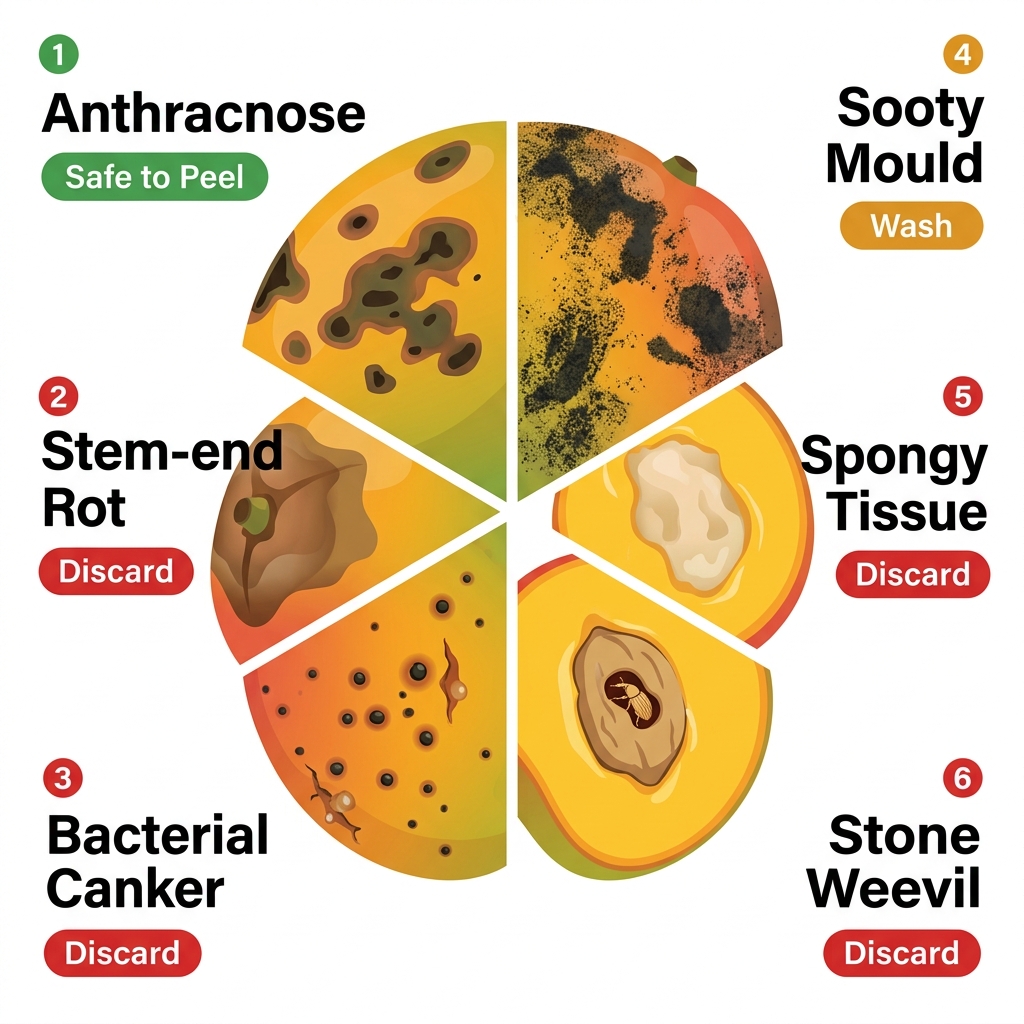
Pro Tip: Surface spots like Anthracnose are often harmless to the fruit inside, while Bacterial Canker or Stem-end Rot usually require discarding the fruit.
Ensure your Nekkare mango is naturally ripened. Use Food Guard to detect Calcium Carbide and other chemical ripeners.