
📚 Regional Mango Names Guide
Did you know that Alphonso is called Badami in Karnataka and Hapus in Maharashtra? Explore our complete state-by-state guide mapping 30+ regional names across India.
Also known as: Samar Bahisht Chaunsa, Chousa, Chaunsa, Khajri, Samar Bahisht
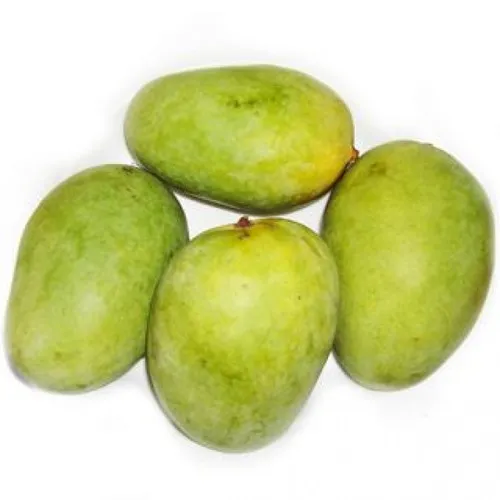
Typical diseases and disorders affecting this variety:
Detect these early using our Plant Guard AI.
Read our detailed Mango Diseases & Safety Guide.
Chausa (also spelled Chaunsa or Chousa) is widely revered as the 'King of Late-Season Mangoes'. Originating from the fertile orchards of Sandila in Hardoi district and Malihabad in Uttar Pradesh, Chausa arrives late in the monsoon season—peaking during August and September when legendary early cultivars like Alphonso, Kesar, and Dasheri are long gone.
Historical lore traces the variety's fame to the 16th century: Afghan Emperor Sher Shah Suri was so enamored by its extraordinary honey sweetness that he named it 'Samar Bahisht' (Fruit of Paradise) and ordered its propagation after defeating Mughal Emperor Humayun at the Battle of Chausa in Bihar in 1539.
In terms of sweetness, Chausa stands at the pinnacle of Indian mangoes. Its Total Soluble Solids (TSS) regularly test between 22° and 24° Brix, making it one of the sweetest fruits on earth. Its flesh is deep yellow, luxuriously soft, and dripping with fragrant juice.
Because of its remarkably soft and juicy pulp, Chausa is traditionally enjoyed as a 'sucking mango' (*Choosne wala Aam*). Mango connoisseurs gently knead the fruit to liquefy the internal pulp, nip off the stem tip, and savor the luscious nectar directly from the skin. It is also an exquisite choice for fresh mango nectar and gourmet desserts.
When shopping for authentic Chausa during its August–September peak, look for medium-sized oval fruits with smooth golden skin that retain a faint greenish-yellow shoulder and emit a powerful sweet fragrance. For side-by-side variety evaluations, explore our dedicated Langra vs Chausa Comparison Guide.
Supremely sweet and syrupy with deep wild honey notes and zero sour tang (22°-24° Brix)
Intensely potent, sweet, and heavily musky floral aroma that perfumes an entire room
Ultra-soft, silky, melting, and dripping with nectar; negligible fine fiber
Minimal
How to tell if it's a genuine Chausa:
Did you know that Alphonso is called Badami in Karnataka and Hapus in Maharashtra? Explore our complete state-by-state guide mapping 30+ regional names across India.
Named 'Samar Bahisht' (Fruit of Paradise) by Emperor Sher Shah Suri in 1539 after the decisive Battle of Chausa on the banks of the Ganges.
Patronized by Mughal royalty and celebrated in classical Urdu literature and poetry across Lucknow, Delhi, and Lahore.
The undisputed pride of Uttar Pradesh (Malihabad, Sandila, Saharanpur) and Bihar (Bhagalpur) mango growers.
Regarded across Northern India and Pakistan as the crown jewel of monsoon fruit harvests.
Quick reference for identifying common healthy vs. problematic conditions:
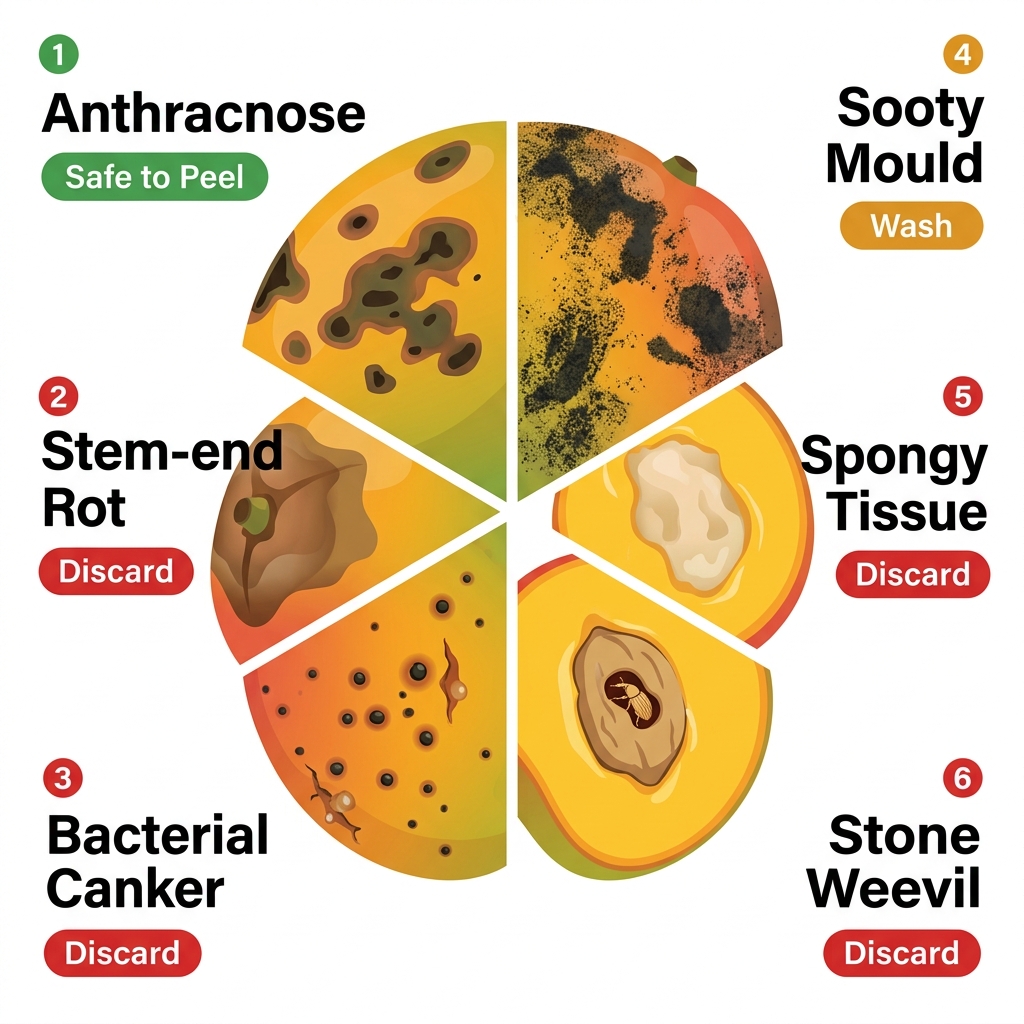
Pro Tip: Surface spots like Anthracnose are often harmless to the fruit inside, while Bacterial Canker or Stem-end Rot usually require discarding the fruit.
Ensure your Chausa mango is naturally ripened. Use Food Guard to detect Calcium Carbide and other chemical ripeners.