
📚 Regional Mango Names Guide
Did you know that Alphonso is called Badami in Karnataka and Hapus in Maharashtra? Explore our complete state-by-state guide mapping 30+ regional names across India.
Also known as: Bangalora, Kili Mooku, Collector, Sandersha, Gilli, Kallamai, Mukku, Ottu,Collector's Choice
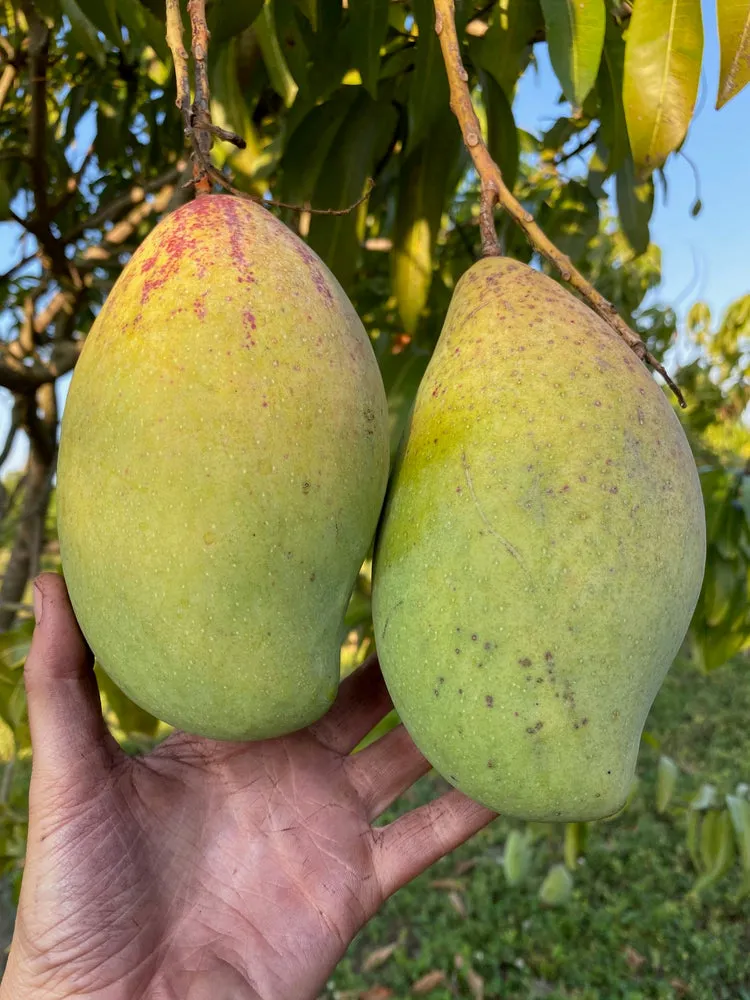
Typical diseases and disorders affecting this variety:
Detect these early using our Plant Guard AI.
Read our detailed Mango Diseases & Safety Guide.
Totapuri (also known as Bangalora, Ginimoothi, Collector, or Kallamai) is an iconic, highly productive commercial mango variety. Its name translates to 'parrot face', directly referring to its highly distinctive shape. It is the backbone of the Indian mango processing industry.
Physically, Totapuri is impossible to mistake. It is a large to very large mango, weighing between 400 and 600 grams, with a prominent, curved, beak-like tip that strongly resembles a parrot's beak. The skin is exceptionally thick, tough, and ripens to a brilliant golden-yellow, often tinged with a beautiful red or green blush on the shoulders.
The flavor profile of Totapuri is unique; it is not meant to be a premium dessert mango. It has a tangy, slightly acidic, and mildly sweet taste. The pale yellow pulp is highly firm, crisp, and contains a moderate amount of fiber. Unlike dessert mangoes, it lacks a strong, sweet aroma.
The Totapuri season is mid-to-late, typically arriving in June and lasting through July. It is cultivated extensively across southern India, dominating the orchards of Andhra Pradesh (Chittoor), Karnataka, and Tamil Nadu (Krishnagiri).
When comparing it to Banganapalli, Neelum, or Rajapuri, its utility is different. While Banganapalli is prized for fresh eating, Totapuri's firm, acidic flesh makes it the absolute best variety for processing into pulps, concentrates, and spicy pickles. See more processing varieties at the Mango Identifier hub.
Totapuri has arguably the best post-harvest life of any Indian mango. Its incredibly thick skin makes it highly resistant to bruising, transit damage, and fruit flies, allowing it to be transported in bulk across the country with minimal losses.
Tangy with less sweetness, acidic
Mild
Firm, slightly fibrous
Moderate
How to tell if it's a genuine Totapuri:
Did you know that Alphonso is called Badami in Karnataka and Hapus in Maharashtra? Explore our complete state-by-state guide mapping 30+ regional names across India.
Totapuri's history is deeply tied to the industrialization of mango processing. It was selected for its massive size, high yield, and tough skin.
It is the primary variety used by multinational beverage companies (like Maaza and Slice) for mango juice concentrates.
In South India, raw Totapuri is a popular street food, often sliced and eaten with salt and chili powder.
Quick reference for identifying common healthy vs. problematic conditions:
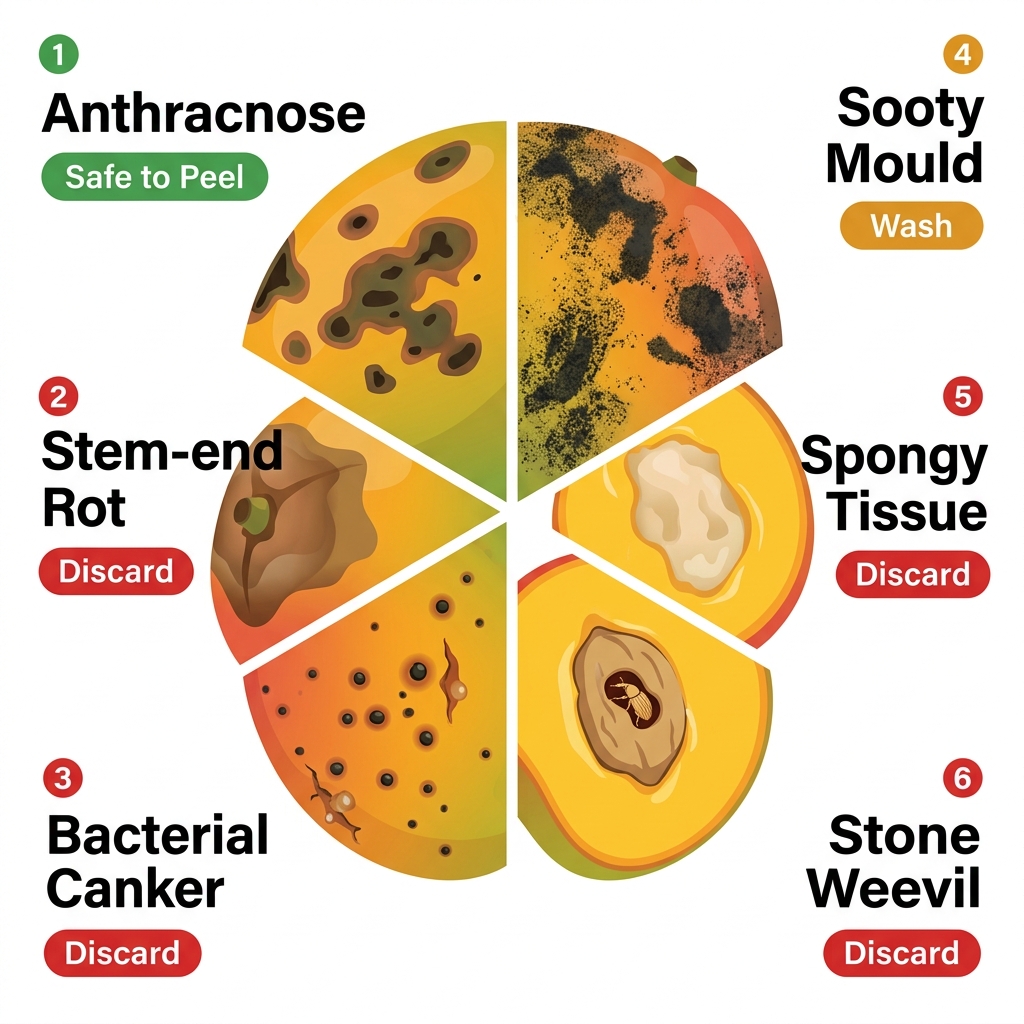
Pro Tip: Surface spots like Anthracnose are often harmless to the fruit inside, while Bacterial Canker or Stem-end Rot usually require discarding the fruit.
Ensure your Totapuri mango is naturally ripened. Use Food Guard to detect Calcium Carbide and other chemical ripeners.