
📚 Regional Mango Names Guide
Did you know that Alphonso is called Badami in Karnataka and Hapus in Maharashtra? Explore our complete state-by-state guide mapping 30+ regional names across India.
Also known as: Simmonds Edward, Florida Edward
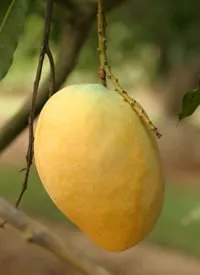
Typical diseases and disorders affecting this variety:
Detect these early using our Plant Guard AI.
Read our detailed Mango Diseases & Safety Guide.
Edward is a highly acclaimed, classic premium mango cultivar developed in 1930 in Miami, Florida, by pioneer Edward Simmonds. It is believed to be a cross of Haden (Indian lineage) with Carabao (Philippine lineage). This hybridization successfully combined the beautiful red-blushed appearance and rich sweetness of Haden with the delicate, fiberless texture and disease resistance of Carabao. Today, it is widely considered by international mango experts to be one of the finest-tasting Florida cultivars ever created.
Physically, Edward is a medium-to-large mango, weighing between 350 and 480 grams. It has a rounded, oval shape with thick, smooth golden-yellow skin highlighted by a striking pinkish-red blush on the shoulder. The flesh is a beautiful, deep orange-salmon color, firm, melting, and entirely free of fiber. The stone is thin and monoembryonic, leaving a massive portion of the fruit available as edible pulp.
The flavor profile of Edward is outstanding, offering an intensely sweet, rich, and complex taste with hints of citrus, sweet melon, and a delicate spicy finish. Total soluble solids (TSS) range from 18° to 20° Brix. What makes Edward exceptionally prized among backyard growers is its excellent natural resistance to Anthracnose — a devastating fungal disease that ruins other cultivars. However, it is not grown extensively on a commercial scale because it has a low-yielding bearing habit.
The ripening season for Edward is mid-season, beginning in early June and running through late July, with peak flavor profiles occurring in mid-June. It has a solid post-harvest shelf life of 7 to 9 days, and its thick peel protects it well from environmental decay. To discover more premium international cultivars, explore the Mango Identifier Hub, or view profiles on Palmer, Chausa, and Badami.
For comparisons with other regional and international mango cultivars, explore our profiles on Miyazaki and Mingolo.
Sweet, rich, with mild tart balance and spicy-citrus notes
Rich, sweet, highly pleasant tropical aroma with citrus esters
Firm, dense, melting, zero-fiber pulp
None
How to tell if it's a genuine Edward:
Did you know that Alphonso is called Badami in Karnataka and Hapus in Maharashtra? Explore our complete state-by-state guide mapping 30+ regional names across India.
Edward was bred during the golden era of Florida mango selection in the early 20th century. Edward Simmonds, director of the USDA Plant Introduction Station in Miami, successfully grafted and raised the seedling, which was officially named in his honor.
While it failed to become a major commercial shipping mango due to its light bearing habit, it became a legend among home gardeners. Its superior eating quality and clean, fungus-free skin made it the benchmark for Florida backyard fruit selection.
Today, it is actively collected by tropical fruit connoisseurs worldwide, serving as parent stock for newer, highly productive Florida hybrids.
Quick reference for identifying common healthy vs. problematic conditions:
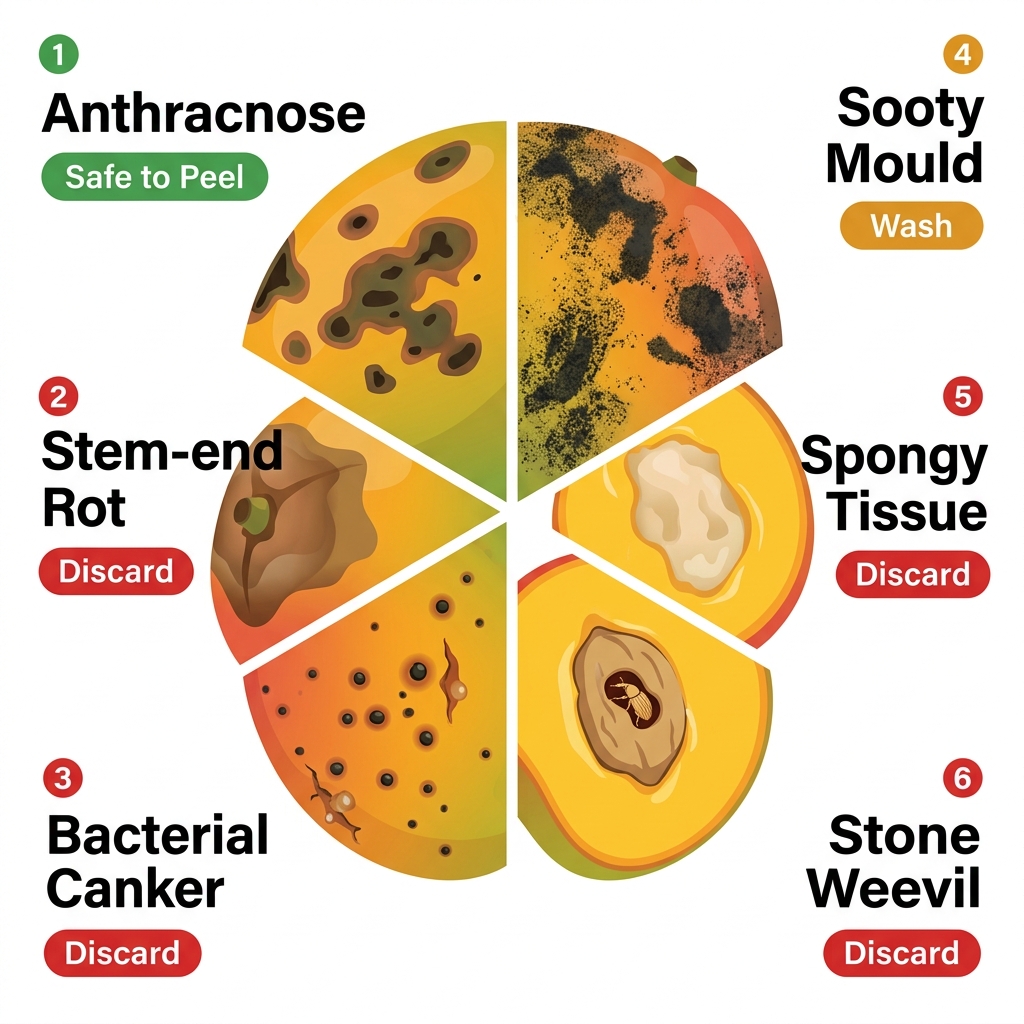
Pro Tip: Surface spots like Anthracnose are often harmless to the fruit inside, while Bacterial Canker or Stem-end Rot usually require discarding the fruit.
Ensure your Edward mango is naturally ripened. Use Food Guard to detect Calcium Carbide and other chemical ripeners.