
📚 Regional Mango Names Guide
Did you know that Alphonso is called Badami in Karnataka and Hapus in Maharashtra? Explore our complete state-by-state guide mapping 30+ regional names across India.
Also known as: Hybrid of Amrapali x Sensation, H-13-1
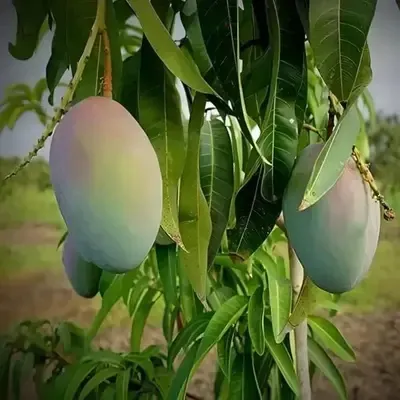
Typical diseases and disorders affecting this variety:
Detect these early using our Plant Guard AI.
Read our detailed Mango Diseases & Safety Guide.
Pusa Arunima is a premium, high-quality hybrid mango variety developed at the prestigious Indian Agricultural Research Institute (IARI) in New Delhi. It is a controlled cross between Amrapali and Sensation, specifically bred to combine the intense sweetness and fiberless texture of Indian varieties with the spectacular red blush and good shelf life of Florida cultivars.
Physically, Pusa Arunima is a medium-sized mango, typically weighing between 250 and 350 grams. It has an attractive, symmetric oval-oblong shape. Its most defining characteristic is its stunning appearance: a vibrant, deep purple-red blush that covers almost the entire surface of the fruit upon ripening, making it one of the most visually appealing varieties in the country.
The flavor profile is exceptionally sweet with a pleasant, mild aroma. The pulp is a vibrant orange-yellow, firm, and meaty. It is 100% fiberless (none), offering a smooth and melting texture that is highly satisfying. It possesses a high total soluble solids (TSS) content, often exceeding 20° Brix.
The Pusa Arunima season is mid-to-late, typically starting in late June and peaking in July. It is cultivated primarily in North India, particularly in Delhi, Haryana, and Uttar Pradesh. Its resistance to common post-harvest diseases and its regular-bearing habit make it a very attractive choice for modern commercial orchards.
When comparing it to Amrapali or Dasheri, Pusa Arunima stands out for its visual appeal and shelf life. While Amrapali is intensely sweet but small, Pusa Arunima offers a larger fruit with a spectacular red blush. Discover more IARI hybrids at our Mango Identifier hub.
Post-harvest, Pusa Arunima has an excellent shelf life of 10-12 days at room temperature. Its firm flesh and sturdy skin provide superior resistance to bruising and transit damage, allowing it to be shipped to distant markets and even exported. It is a top choice for fresh table consumption and premium retail displays.
For comparisons with other regional and specialized cultivars, explore our profiles on Nekkare and Vanraj.
Sweet, aromatic
Moderate, pleasant
Smooth, minimal fiber
Minimal
How to tell if it's a genuine Pusa Arunima:
Did you know that Alphonso is called Badami in Karnataka and Hapus in Maharashtra? Explore our complete state-by-state guide mapping 30+ regional names across India.
A landmark achievement of the Division of Fruits and Horticultural Technology, IARI, New Delhi (Amrapali x Sensation).
Bred specifically to meet the global demand for colorful, red-blushed mangoes without sacrificing traditional Indian sweetness.
Highly valued by growers for its 'regular-bearing' habit, ensuring a consistent yield every year.
Quick reference for identifying common healthy vs. problematic conditions:
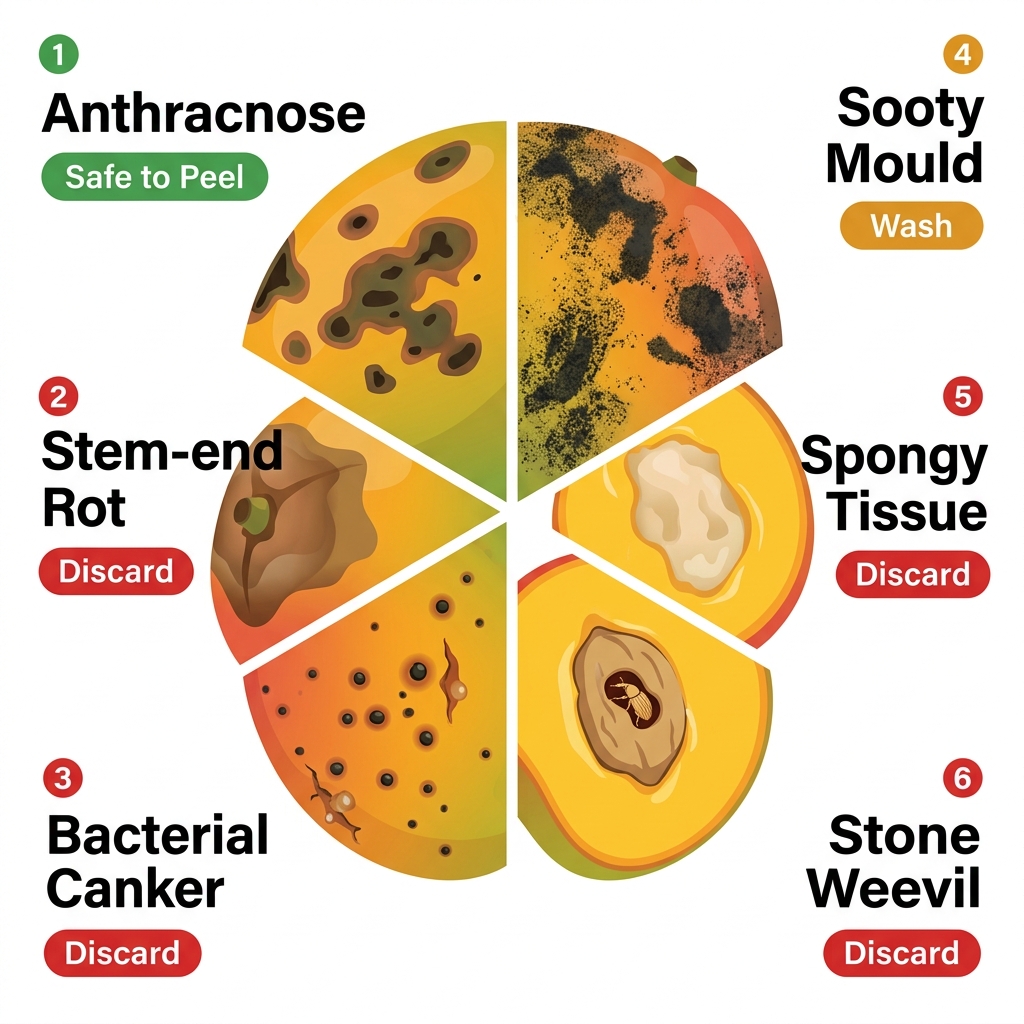
Pro Tip: Surface spots like Anthracnose are often harmless to the fruit inside, while Bacterial Canker or Stem-end Rot usually require discarding the fruit.
Ensure your Pusa Arunima mango is naturally ripened. Use Food Guard to detect Calcium Carbide and other chemical ripeners.