
📚 Regional Mango Names Guide
Did you know that Alphonso is called Badami in Karnataka and Hapus in Maharashtra? Explore our complete state-by-state guide mapping 30+ regional names across India.
Also known as: Alphonso of Karnataka, Badam Aam
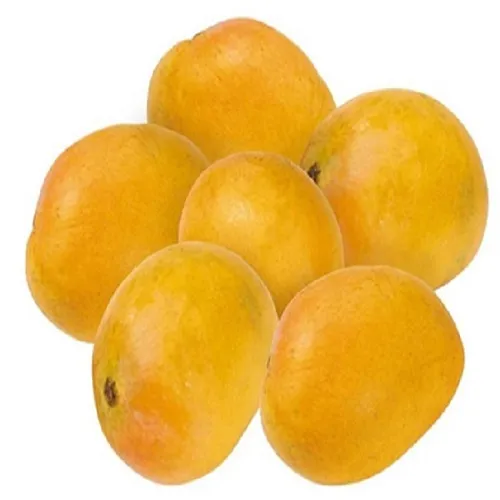
Typical diseases and disorders affecting this variety:
Detect these early using our Plant Guard AI.
Read our detailed Mango Diseases & Safety Guide.
Badami is Karnataka's premier answer to the Alphonso, widely celebrated as the 'Alphonso of Karnataka' due to its strikingly similar flavor profile and buttery, fiberless texture. Primarily grown in the southern districts of Karnataka, including Mysuru, Bengaluru, and Kolar, this variety thrives in the region's semi-arid climate and red loamy soils. The fruit is highly sought after for its rich, creamy pulp and an aroma that can fill a room, making it a staple in premium fruit markets across South India.
Physically, the Badami is characterized by its medium-sized, oblong-oval shape and a smooth, attractive skin that turns from a dusty green to a magnificent golden-yellow as it ripens. The flesh is deep yellow to pale orange, offering a melting sensation on the palate with zero to minimal fiber. While it shares many characteristics with the Konkan Alphonso, connoisseurs often note that Badami has a slightly milder sweetness and a more balanced acidity, making it an excellent choice for those who find the intensity of Alphonso overwhelming.
The Badami season is relatively short, typically beginning in late April and peaking throughout May, before tapering off by mid-June. It is a commercial powerhouse for Karnataka farmers because of its excellent post-harvest characteristics; the fruit has a thick enough skin to withstand long-distance transportation and boasts a shelf life of 7-10 days under standard conditions. This resilience, combined with its high pulp-to-stone ratio, makes it a preferred choice for both fresh consumption and the high-end pulp processing industry.
For identification purposes, buyers should distinguish the Badami by its elongated form. When purchasing, gently press the fruit near the shoulder; a ripe Badami will yield slightly and give off an unmistakable sweet perfume. To explore more varieties or evaluate fruit diseases, consult our Mango Identifier Hub, or view related premium selections like Alphonso, Kesar, Banganapalli, and Sindoori.
Exceptionally sweet with a balanced, mild acidity and caramelized undertones
Strong, sweet, and aromatic
Smooth, melting, and virtually fiberless
Minimal
How to tell if it's a genuine Badami:
Did you know that Alphonso is called Badami in Karnataka and Hapus in Maharashtra? Explore our complete state-by-state guide mapping 30+ regional names across India.
Historically integrated into Southern Indian culture, Badami has been cultivated in Karnataka for generations. It is named after its smooth, almond-like shape (Badam) and has served as a cultural bridge, offering an affordable premium experience compared to the expensive Konkan Alphonso.
Today, it is a dominant force in the South Indian fruit trade and is highly valued by local pulp-processing units. Its consistent regular bearing habit makes it a savior for Karnataka farmers, avoiding the alternate-year crop failures of Alphonso.
Quick reference for identifying common healthy vs. problematic conditions:
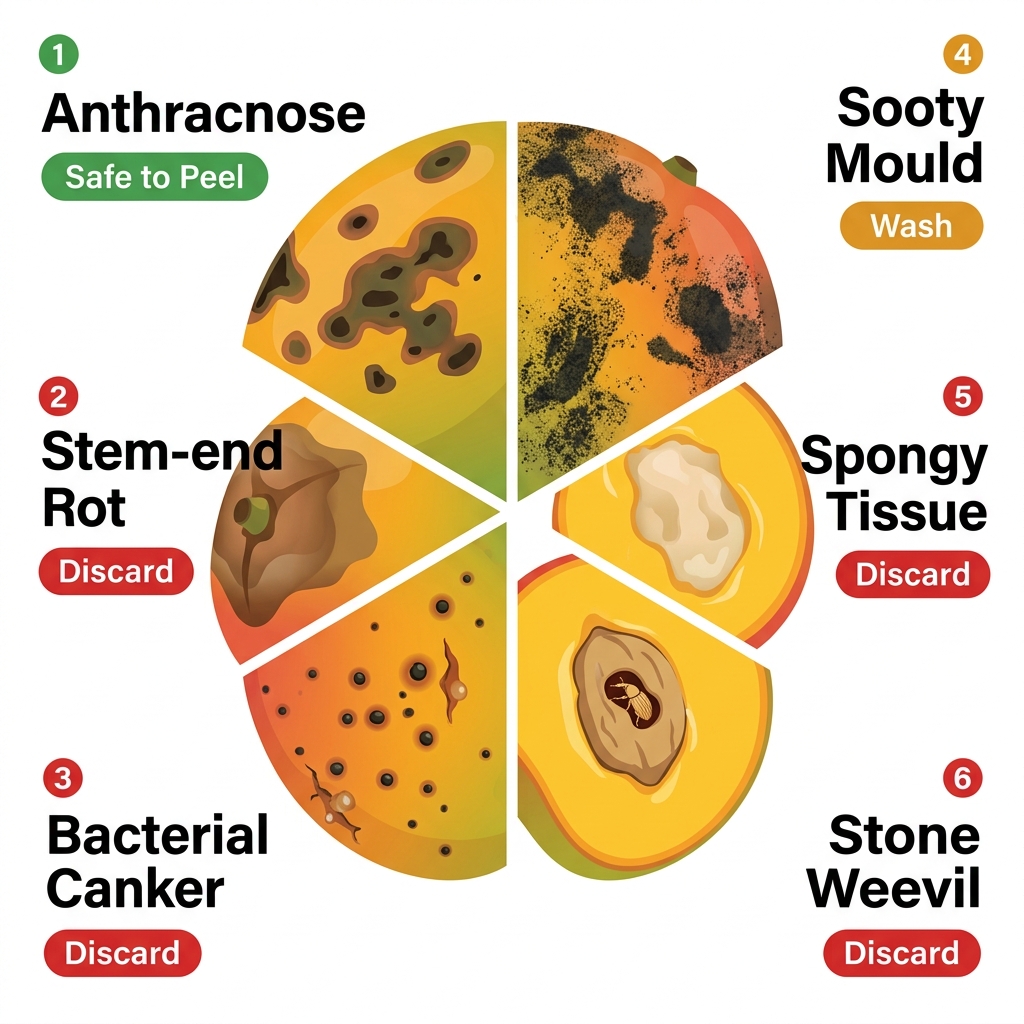
Pro Tip: Surface spots like Anthracnose are often harmless to the fruit inside, while Bacterial Canker or Stem-end Rot usually require discarding the fruit.
Ensure your Badami mango is naturally ripened. Use Food Guard to detect Calcium Carbide and other chemical ripeners.