
📚 Regional Mango Names Guide
Did you know that Alphonso is called Badami in Karnataka and Hapus in Maharashtra? Explore our complete state-by-state guide mapping 30+ regional names across India.
Also known as: Chinnasuvernarekha x Neelum Hybrid
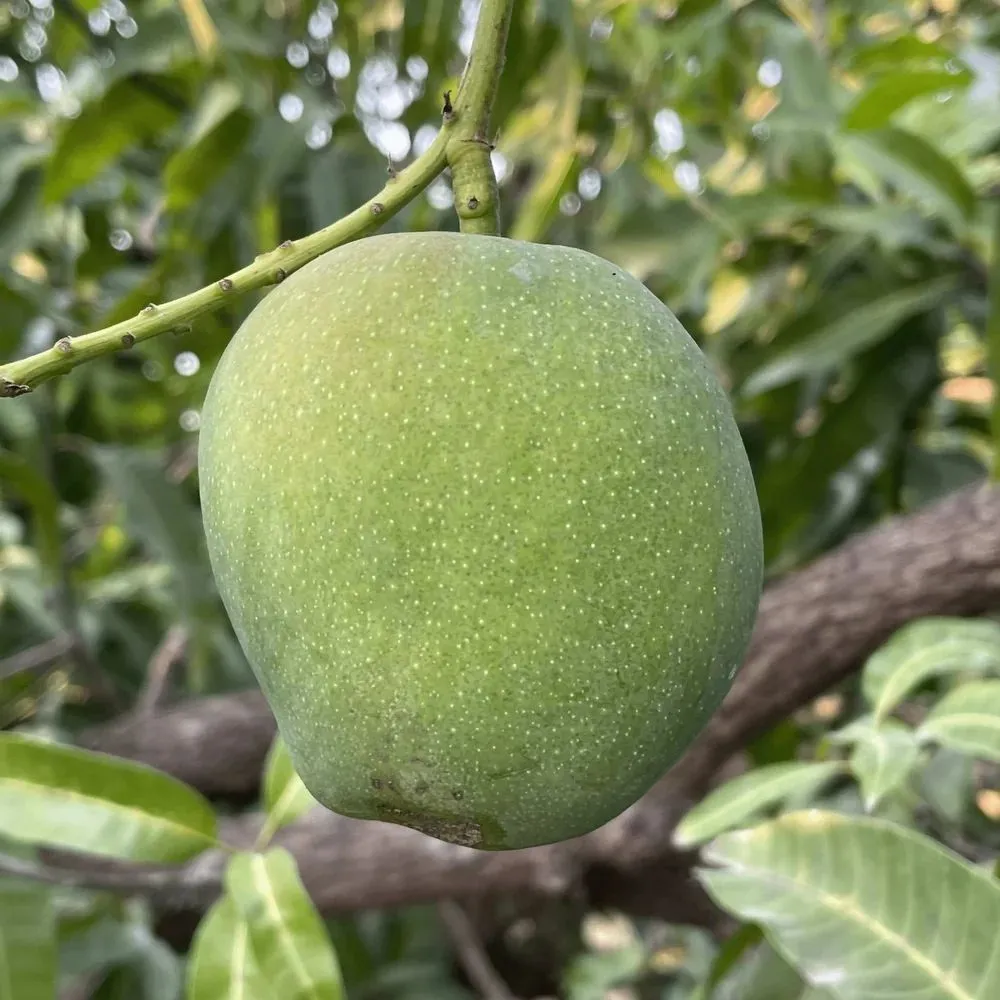
Typical diseases and disorders affecting this variety:
Detect these early using our Plant Guard AI.
Read our detailed Mango Diseases & Safety Guide.
PKM 1 (also written as PKM-1) is a highly successful, high-yielding hybrid mango variety developed at the Horticultural Research Station of Tamil Nadu Agricultural University (TNAU), Periyakulam. It is a controlled cross between Chinnasuvarnarekha and Neelum, bred to combine excellent commercial yielding with top-tier eating quality.
Physically, PKM 1 is a medium-sized mango, generally weighing between 250 and 320 grams, with an attractive, neat round-oval shape and a smooth skin. Upon ripening, the skin turns a uniform, brilliant golden-yellow, highlighted by a beautiful, light reddish-orange blush near the shoulder.
The taste is highly sweet, rich, and slightly tangy, offering a wonderfully balanced flavor. The pulp is a deep orange, exceptionally firm, melting, and completely free of any fiber (none). It has a high pulp recovery rate of 75 percent and a total soluble solids (TSS) reading of 18-20° Brix.
The PKM 1 season is mid-to-late, commencing in mid-May, peaking during the month of June, and wrapping up by late July. It is extensively cultivated across the Madurai, Theni, Dindigul, and Salem districts of Tamil Nadu, as well as several southern districts of Andhra Pradesh.
Compared to its parent Neelum and other hybrids like Sindoori, PKM 1 is significantly sweeter, has a higher pulp-to-stone ratio, and has a much more attractive red blush. While Neelum can be small and acidic in early harvests, PKM 1 delivers reliable, premium sweetness throughout its season.
Post-harvest characteristics of PKM 1 are exceptional, inheriting the sturdy genetics of Neelum. It possesses an excellent shelf life of 10 to 12 days at room temperature and is highly resistant to transit injury, making it a major commercial favorite for shipping across India.
Sweet, slightly tangy
Sweet, pleasant
Firm, smooth
Minimal
How to tell if it's a genuine PKM 1:
Did you know that Alphonso is called Badami in Karnataka and Hapus in Maharashtra? Explore our complete state-by-state guide mapping 30+ regional names across India.
PKM 1 was developed at TNAU Periyakulam (PKM) under the ICAR hybridisation program, representing a landmark achievement in southern Indian fruit breeding.
The cross (Chinnasuvarnarekha × Neelum) was carefully selected: Chinnasuvarnarekha contributes the gorgeous reddish blush and early sweetness, while Neelum contributes the high shelf life and regular bearing habit.
It has become one of Tamil Nadu's most popular commercial hybrids, actively replacing older, lower-yielding varieties in southern orchards.
Quick reference for identifying common healthy vs. problematic conditions:
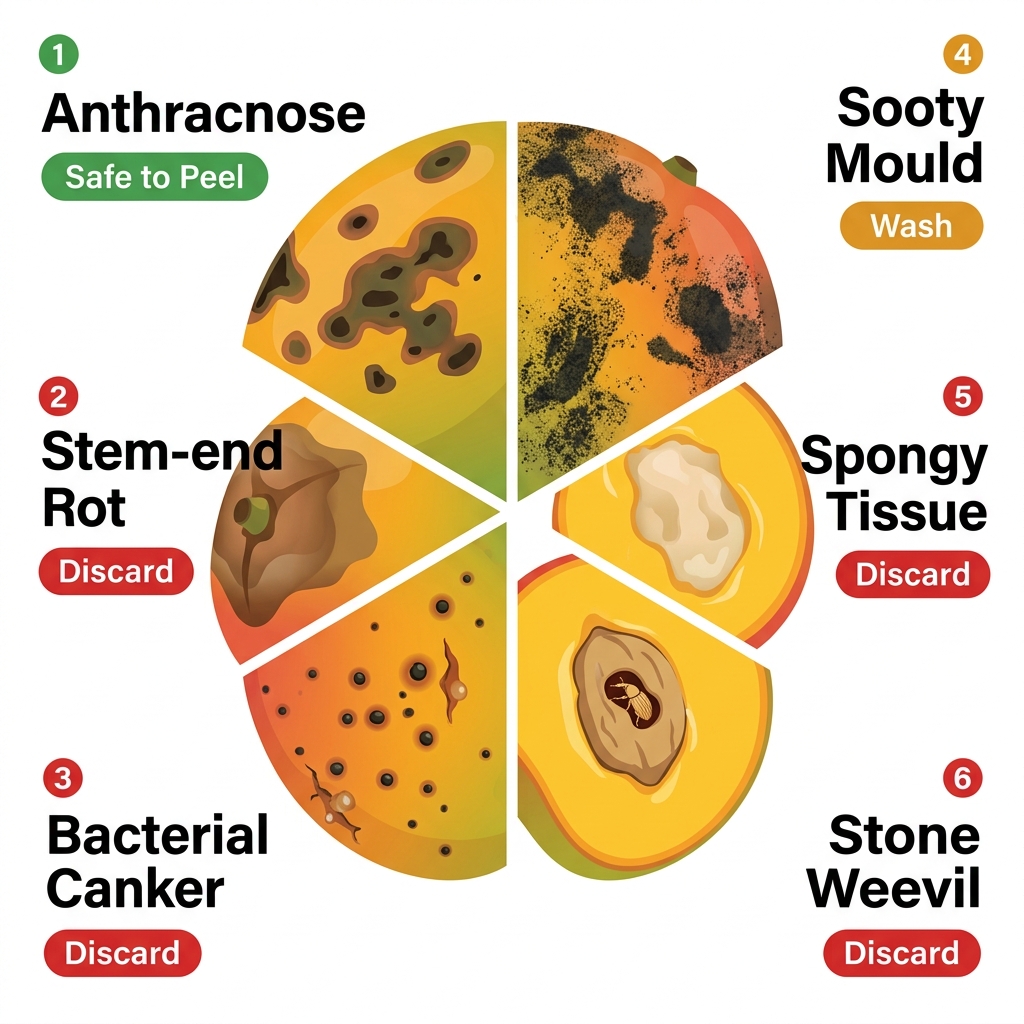
Pro Tip: Surface spots like Anthracnose are often harmless to the fruit inside, while Bacterial Canker or Stem-end Rot usually require discarding the fruit.
Ensure your PKM 1 mango is naturally ripened. Use Food Guard to detect Calcium Carbide and other chemical ripeners.