
📚 Regional Mango Names Guide
Did you know that Alphonso is called Badami in Karnataka and Hapus in Maharashtra? Explore our complete state-by-state guide mapping 30+ regional names across India.
Also known as: Sundari, Chinna suvarna rekha, Lal Sundari,Suvarna Sundari, Golden beauty, Lat sundar, Suvarnabhoomi, Suvarna Mohan
Typical diseases and disorders affecting this variety:
Detect these early using our Plant Guard AI.
Read our detailed Mango Diseases & Safety Guide.
Suvarnarekha (also known as Sundari, Chinnasuvarnarekha, or Lal Sundari) is a spectacularly beautiful and highly productive commercial mango variety native to the coastal regions of Andhra Pradesh. Its name translates to 'Golden Line', referring to its brilliant appearance and the premium value it brings to southern growers.
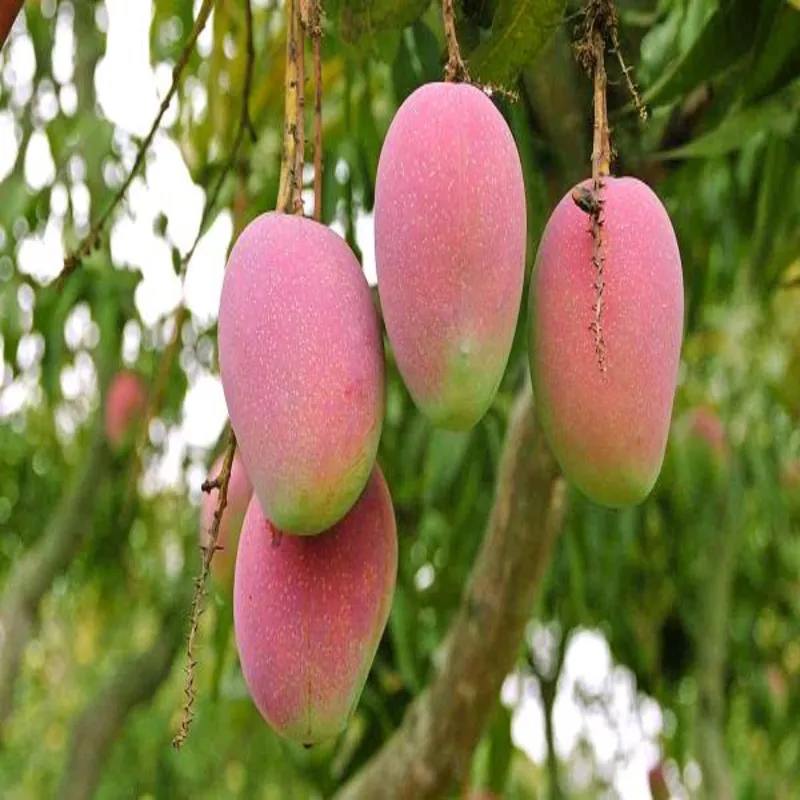
Physically, Suvarnarekha is a medium to large mango, typically weighing between 300 and 450 grams. It has an attractive oval shape with a smooth, medium-thick skin. Its most striking feature is its color: a vibrant golden-yellow background highlighted by a brilliant, eye-catching red-purple blush that covers the upper part of the fruit.
The flavor profile is sweet with a pleasant, refreshing tang that is typical of many coastal varieties. The pulp is a deep yellow-orange, firm, and very juicy. While it has a minimal amount of fine fiber, it is generally considered smooth and enjoyable. It carries a mild, sweet tropical aroma.
The Suvarnarekha season is early-to-mid, typically starting in April and peaking in May. It is cultivated extensively along the coastal districts of Andhra Pradesh, particularly in Vishakhapatnam, Srikakulam, and East Godavari. Its hardiness and attractive appearance make it a major export variety from the region.
When comparing it to Banganapalli, Totapuri, Himsagar, and Langra, Suvarnarekha is prized for its early arrival and stunning color. While Banganapalli is larger and milder, Suvarnarekha offers a more vibrant visual appeal and a slightly tangier sweetness. It is also one of the parents to the popular Periyakulam hybrid PKM 1. Discover more coastal varieties at our Mango Identifier hub.
Post-harvest, Suvarnarekha has an excellent shelf life of 8-10 days. Its firm flesh and sturdy skin make it highly resistant to transit damage and fruit fly infestation, allowing it to be shipped across North and East India where it is a popular and visually appealing early-season choice.
Sweet with balanced flavor
Moderate, sweet
Smooth, minimal fiber
Minimal
How to tell if it's a genuine Suvarnarekha:
Did you know that Alphonso is called Badami in Karnataka and Hapus in Maharashtra? Explore our complete state-by-state guide mapping 30+ regional names across India.
A staple of the Andhra coastal mango industry, known for its consistent performance in the humid, marine climate.
Historically one of the first red-blushed varieties to gain large-scale commercial success in Southern India.
Often referred to as 'Sundari' (Beautiful) in local markets due to its striking, colorful skin.
Quick reference for identifying common healthy vs. problematic conditions:
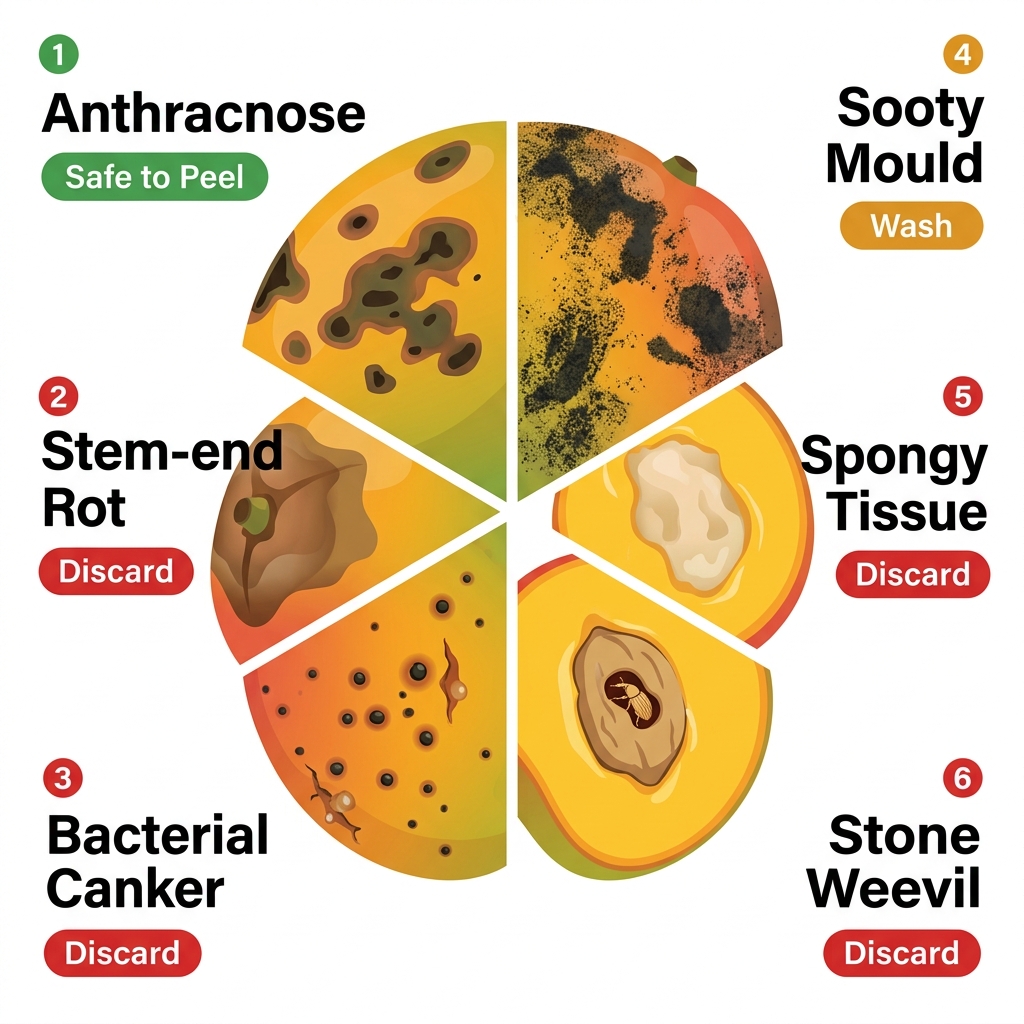
Pro Tip: Surface spots like Anthracnose are often harmless to the fruit inside, while Bacterial Canker or Stem-end Rot usually require discarding the fruit.
Ensure your Suvarnarekha mango is naturally ripened. Use Food Guard to detect Calcium Carbide and other chemical ripeners.