
📚 Regional Mango Names Guide
Did you know that Alphonso is called Badami in Karnataka and Hapus in Maharashtra? Explore our complete state-by-state guide mapping 30+ regional names across India.
Also known as: Dussehri, Dashehari, Dusehri, Dusari, Desari
Typical diseases and disorders affecting this variety:
Detect these early using our Plant Guard AI.
Read our detailed Mango Diseases & Safety Guide.
The Dasheri mango is legally protected under India's Geographical Indications of Goods Act. Genuine Dasheri mangoes must originate from the certified soils of its designated region (e.g., Konkan coast for Alphonso, Saurashtra for Kesar) to carry this designation.
Dasheri (also spelled Dussehri) is a legendary, historically significant mango variety that originated in the gardens of the Nawab of Lucknow in the 18th century. It is the pride of North India and remains one of the most commercially successful and widely consumed mangoes in the country.
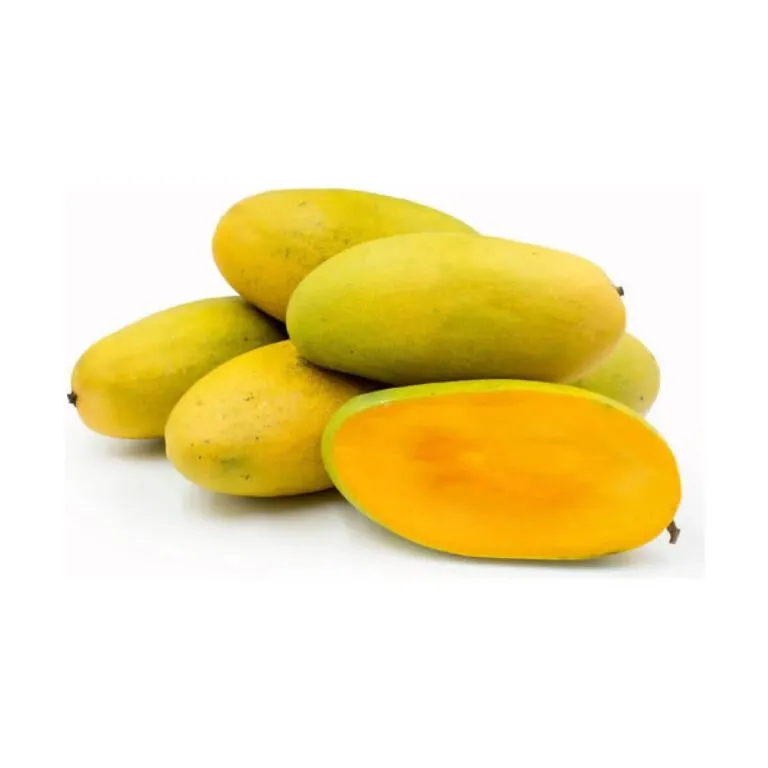
Physically, Dasheri is a small to medium-sized mango, typically weighing between 150 and 250 grams. It has a very distinct, elongated, straight shape with a slight curve at the tip. The skin is thin, smooth, and ripens from a bright green to a beautiful, vibrant lemon-yellow.
The flavor of Dasheri is exceptionally sweet, often described as honey-like, with a strong, highly pleasant, and distinct aroma. The pulp is a peach-yellow, firm, completely fiberless (none), and has a very small, remarkably thin stone, resulting in an excellent pulp-to-stone ratio.
The Dasheri season is mid-season, beginning in late May, peaking in June, and lasting until mid-July. It is the dominant commercial variety in Uttar Pradesh, particularly in the Malihabad region near Lucknow, which is globally famous for its Dasheri orchards.
Compared to other North Indian heavyweights like Langra, Chausa, and Bombay Green, Dasheri is earlier and smaller. While Langra remains green and has a citrus-turpentine note, Dasheri is bright yellow and purely honey-sweet. Explore all North Indian varieties at the Mango Identifier hub.
Dasheri has excellent keeping quality and post-harvest durability, making it perfect for long-distance transport. It is best enjoyed by gently squeezing the fruit to soften the pulp, removing the top, and sucking the juice directly—a traditional method known as 'Choosne wala aam'.
Sweet with succulent flavor
Sweet, fragrant
Smooth, minimal fiber
Minimal
How to tell if it's a genuine Dasheri:
Did you know that Alphonso is called Badami in Karnataka and Hapus in Maharashtra? Explore our complete state-by-state guide mapping 30+ regional names across India.
The mother tree of all Dasheri mangoes is believed to be over 200 years old, located in the village of Dasheri near Kakori, Lucknow, and is still bearing fruit today.
It was patronized by the Nawabs of Awadh and heavily propagated in the famous mango belt of Malihabad.
Malihabadi Dasheri holds a Geographical Indication (GI) tag, representing the finest quality of this cultivar.
Quick reference for identifying common healthy vs. problematic conditions:
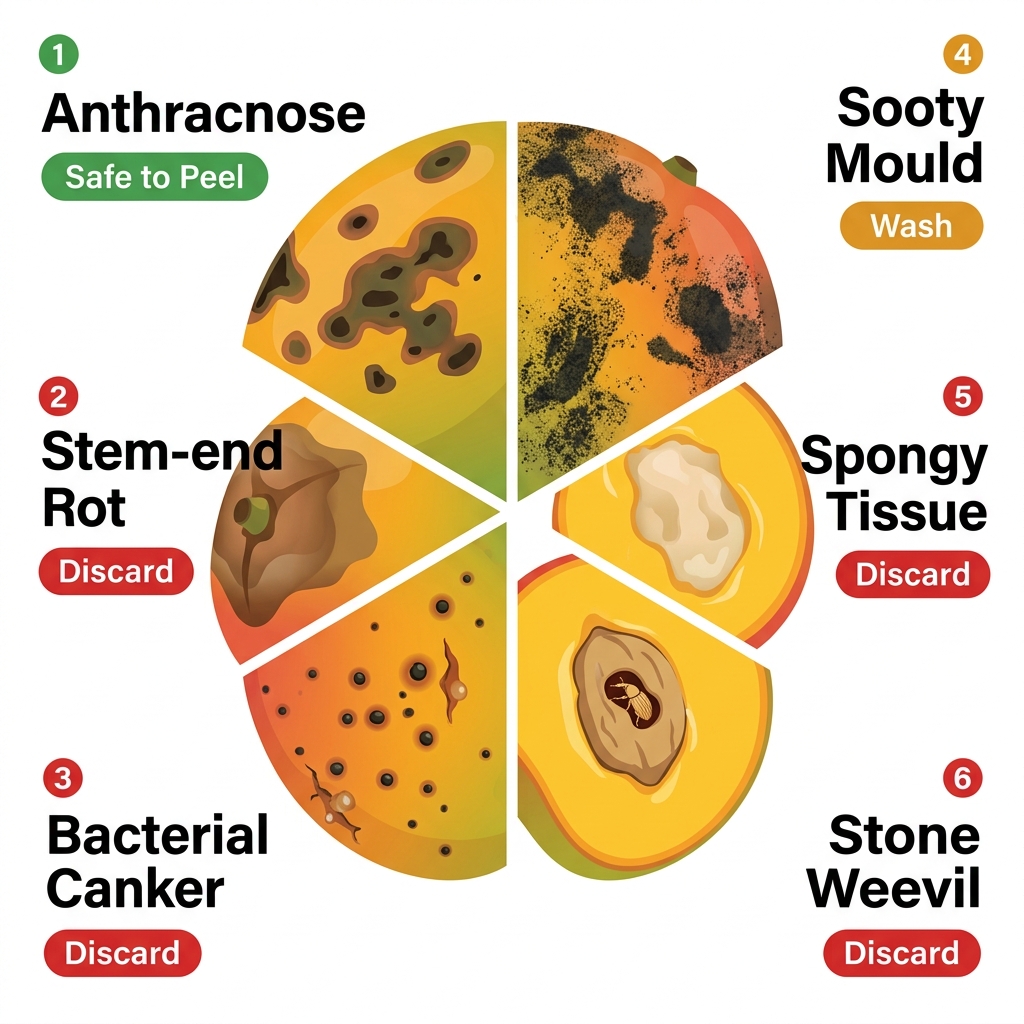
Pro Tip: Surface spots like Anthracnose are often harmless to the fruit inside, while Bacterial Canker or Stem-end Rot usually require discarding the fruit.
Ensure your Dasheri mango is naturally ripened. Use Food Guard to detect Calcium Carbide and other chemical ripeners.