
📚 Regional Mango Names Guide
Explore our complete state-by-state guide mapping 30+ regional names across India.
Also known as: Appe Midi, Halasinamidi
Typical diseases and disorders affecting this variety:
Detect these early using our Plant Guard AI. Plant Guard AI.
Read our detailed Mango Diseases & Safety Guide.
The Appemidi mango is legally protected under India's Geographical Indications of Goods Act. Genuine Appemidi mangoes must originate from the certified soils of its designated region (e.g., Konkan coast for Alphonso, Saurashtra for Kesar) to carry this designation.
Appemidi is the undisputed king of tender wild mangoes in Karnataka, originating from the pristine river banks of the Western Ghats (primarily in Uttara Kannada district). It holds a prestigious Geographical Indication (GI) tag.
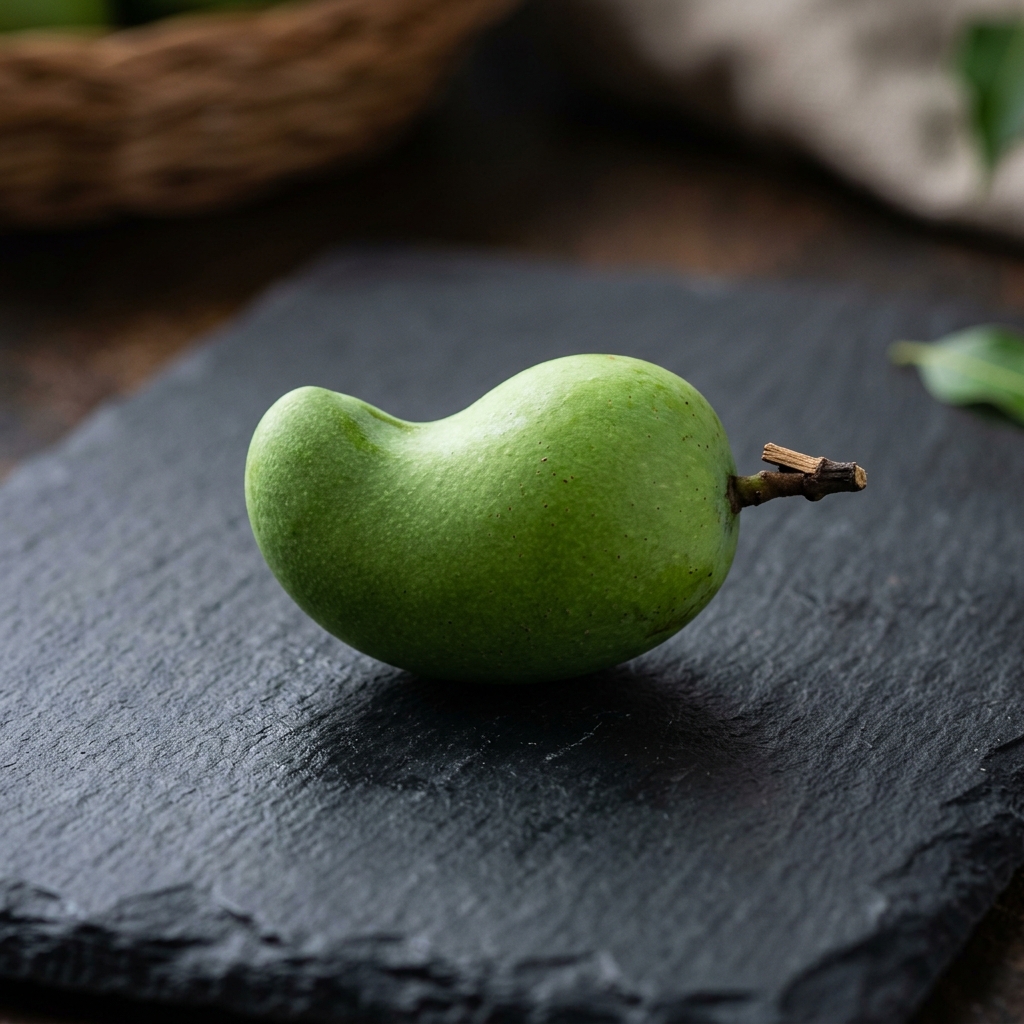
Unlike table mangoes, Appemidi is harvested and consumed almost exclusively in its raw, unripe state. It is small, typically weighing between 50 and 100 grams, with a curved kidney shape and thick green skin that retains its crunch.
The pulp is intensely sour, astringent, and highly aromatic with a distinct wild camphor scent. This combination makes it the most sought-after variety for traditional whole-mango pickling (Midi Uppinakayi), lasting for years without preservatives.
Very sour, astringent (eaten unripe)
Wild, camphor-like
Firm, crunchy when pickled
Minimal
How to tell if it is a genuine Appemidi:
Explore our complete state-by-state guide mapping 30+ regional names across India.
Grown wild on river banks in Sirsi, Siddapur, and Ankola regions of Karnataka.
Holds a Geographical Indication (GI) tag as a heritage crop unique to Karnataka's Western Ghats.
Central to traditional South Indian pickle culture, highly exported by local communities.
Quick reference for identifying common healthy vs. problematic conditions:
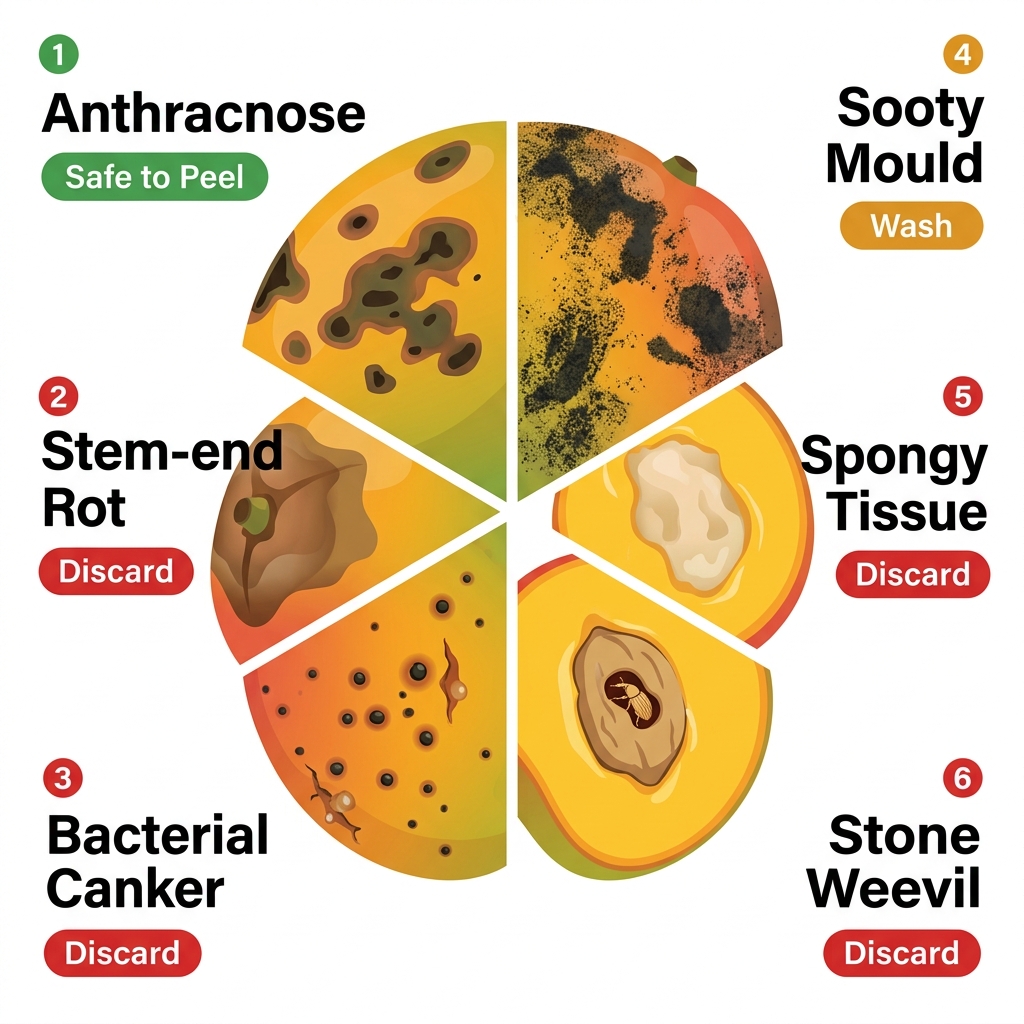
Pro Tip: Surface spots like Anthracnose are often harmless to the fruit inside, while Bacterial Canker or Stem-end Rot usually require discarding the fruit.
Ensure your Appemidi mango is naturally ripened. Use Food Guard to detect Calcium Carbide and other chemical ripeners.