
📚 Regional Mango Names Guide
Explore our complete state-by-state guide mapping 30+ regional names across India.
Also known as: Red King Mango, Shan-e-Khuda, Lal Badshah Multani
Typical diseases and disorders affecting this variety:
Detect these early using our Plant Guard AI. Plant Guard AI.
Read our detailed Mango Diseases & Safety Guide.
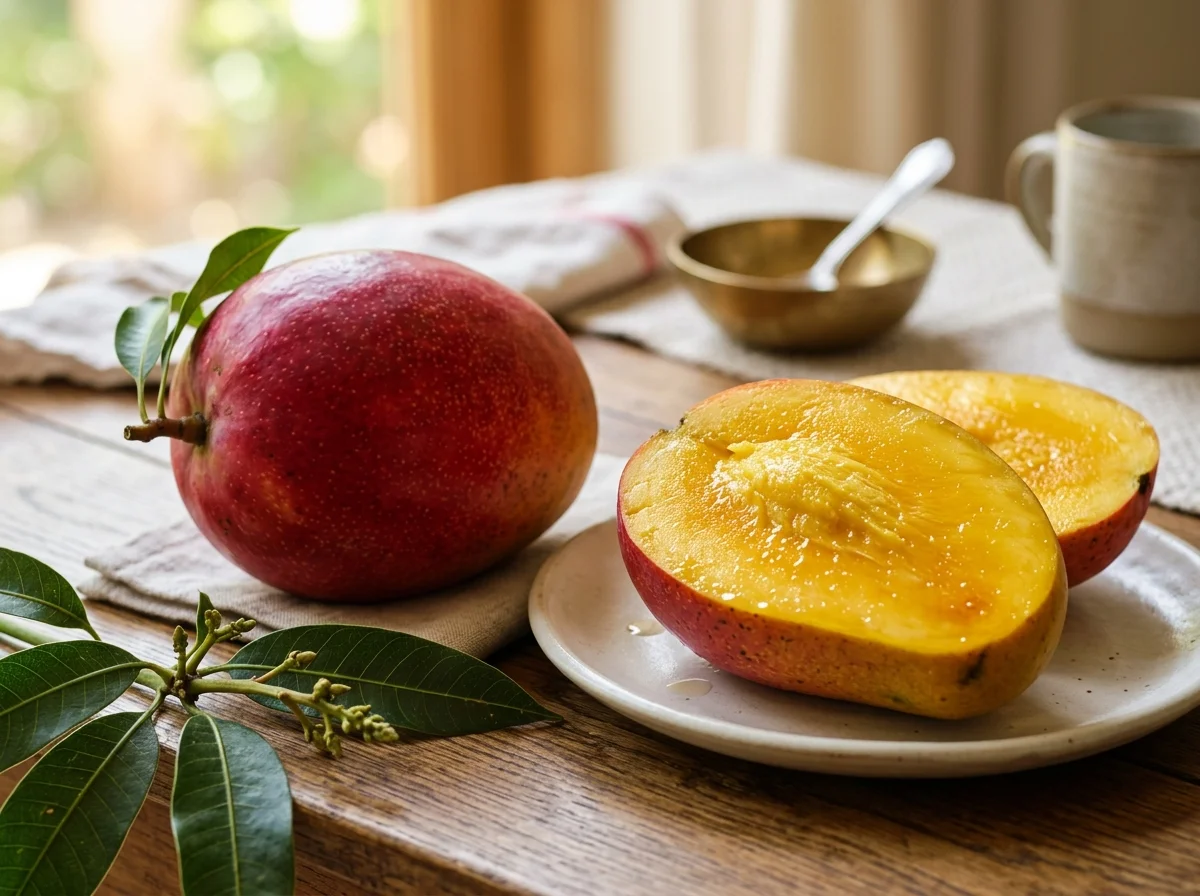
Lal Badshah (literally "The Red King"), also renowned in folklore as Shan-e-Khuda ("Glory of God"), is one of Pakistan's most visually breathtaking and sought-after boutique mango varieties. Grown predominantly in private heritage orchards around Multan and Shujabad in Punjab, it is celebrated for its stunning aesthetics and exquisite flavor.
Unlike the predominately yellow or green cultivars of the subcontinent, Lal Badshah displays an intense, glowing crimson-to-ruby blush that blankets its upper shoulders over a bright golden background. The fruit is large and heavy, commonly weighing between 380 and 550 grams.
Beneath its captivating peel lies a luscious, fiberless golden-orange flesh that delivers a sophisticated, honey-sweet flavor profile with hints of peach and tropical nectar. Because trees bear limited yields, Lal Badshah is treated as a collector's luxury fruit, prized for royal gifting hampers and upscale table displays.
Rich, honeyed sweetness balanced by nuanced tropical fruit acidity
Sweet floral with delicate berry and nectarine nuances
Creamy, dense, smooth, completely non-fibrous
None
How to tell if it is a genuine Lal Badshah:
Explore our complete state-by-state guide mapping 30+ regional names across India.
Cultivated in the ancient orchards of Multan, recognized locally as the "City of Saints and Mangoes".
Bears the affectionate epithet Shan-e-Khuda due to its miraculous crimson coloration.
Highly restricted production volume makes it a coveted delicacy among connoisseurs across Pakistan and the UAE.
Quick reference for identifying common healthy vs. problematic conditions:
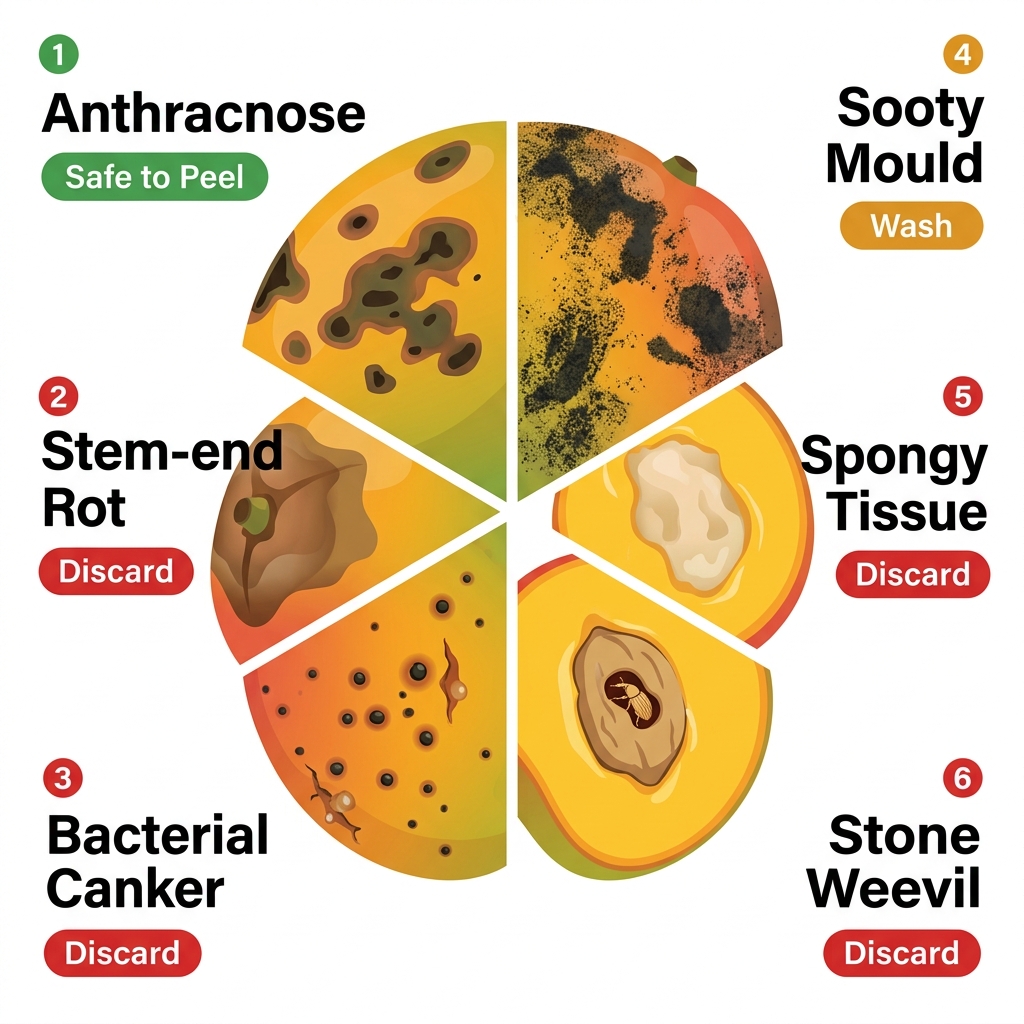
Pro Tip: Surface spots like Anthracnose are often harmless to the fruit inside, while Bacterial Canker or Stem-end Rot usually require discarding the fruit.
Ensure your Lal Badshah mango is naturally ripened. Use Food Guard to detect Calcium Carbide and other chemical ripeners.