
📚 Regional Mango Names Guide
Did you know that Alphonso is called Badami in Karnataka and Hapus in Maharashtra? Explore our complete state-by-state guide mapping 30+ regional names across India.
Also known as: Khirsapati, Kapat
Typical diseases and disorders affecting this variety:
Detect these early using our Plant Guard AI.
Read our detailed Mango Diseases & Safety Guide.
The Himsagar mango is legally protected under India's Geographical Indications of Goods Act. Genuine Himsagar mangoes must originate from the certified soils of its designated region (e.g., Konkan coast for Alphonso, Saurashtra for Kesar) to carry this designation.
Himsagar is the crown jewel of Bengal's mango varieties. This highly premium, immensely popular dessert mango is considered an absolute delicacy in Eastern India, often outranking Alphonso in local preference due to its unmatched sweetness and completely fiberless texture.
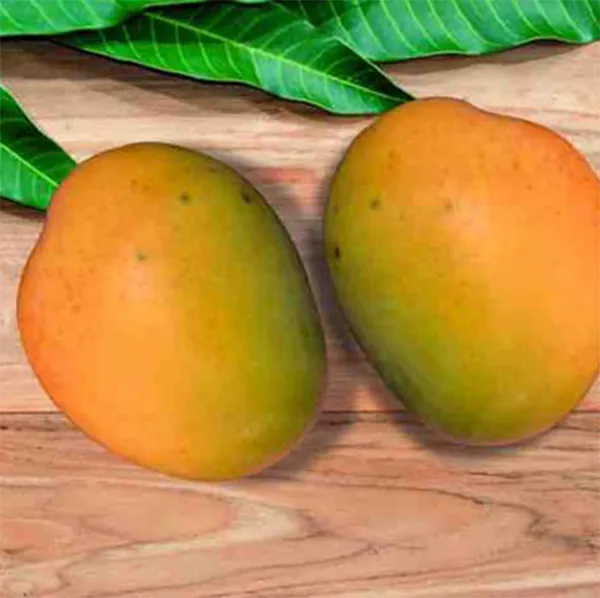
Physically, Himsagar is a medium-sized mango, weighing between 250 and 350 grams, with a neat oval shape. Like Langra, its skin remains predominantly green when ripe, occasionally developing a slight yellow tinge. The skin is incredibly thin and delicate.
The flavor is pure magic. It is exceptionally sweet, intensely rich, and completely devoid of any tartness or turpentine notes. The pulp is a vibrant yellow-orange, extremely smooth, buttery, and 100% fiberless (none). It carries a highly refined, sweet floral aroma.
The Himsagar season is famously short and highly anticipated. It begins in late May, peaks in early June, and is usually gone by the end of June. It is cultivated almost exclusively in the Nadia, Murshidabad, Malda, and Hooghly districts of West Bengal.
When comparing it to Langra, Alphonso, Gulabkhas, and Kishen Bhog, it stands out for its pure, unadulterated sweetness. Langra has a complex citrus-pine note, while Himsagar is purely sweet and floral. Explore more Eastern varieties at the Mango Identifier hub.
The greatest drawback of Himsagar is its highly perishable nature. Due to its paper-thin skin and soft, melting pulp, it has a very short shelf life of just 3 to 5 days. It requires extremely careful handling and cannot be easily exported long distances, making it a highly regional luxury.
Exceptionally sweet, rich
Sweet, pleasant
Creamy, smooth, no fiber
None
How to tell if it's a genuine Himsagar:
Did you know that Alphonso is called Badami in Karnataka and Hapus in Maharashtra? Explore our complete state-by-state guide mapping 30+ regional names across India.
Himsagar translates to 'Sea of Ice/Snow', a poetic name highlighting its smooth, melting, and cooling nature when eaten in the peak of the Bengal summer.
It is inextricably linked with Bengali culture, featured in literature, sweets (like Mango Sandesh), and summer festivals.
Himsagar from Malda and Murshidabad has been awarded a Geographical Indication (GI) tag for its unique quality.
Quick reference for identifying common healthy vs. problematic conditions:
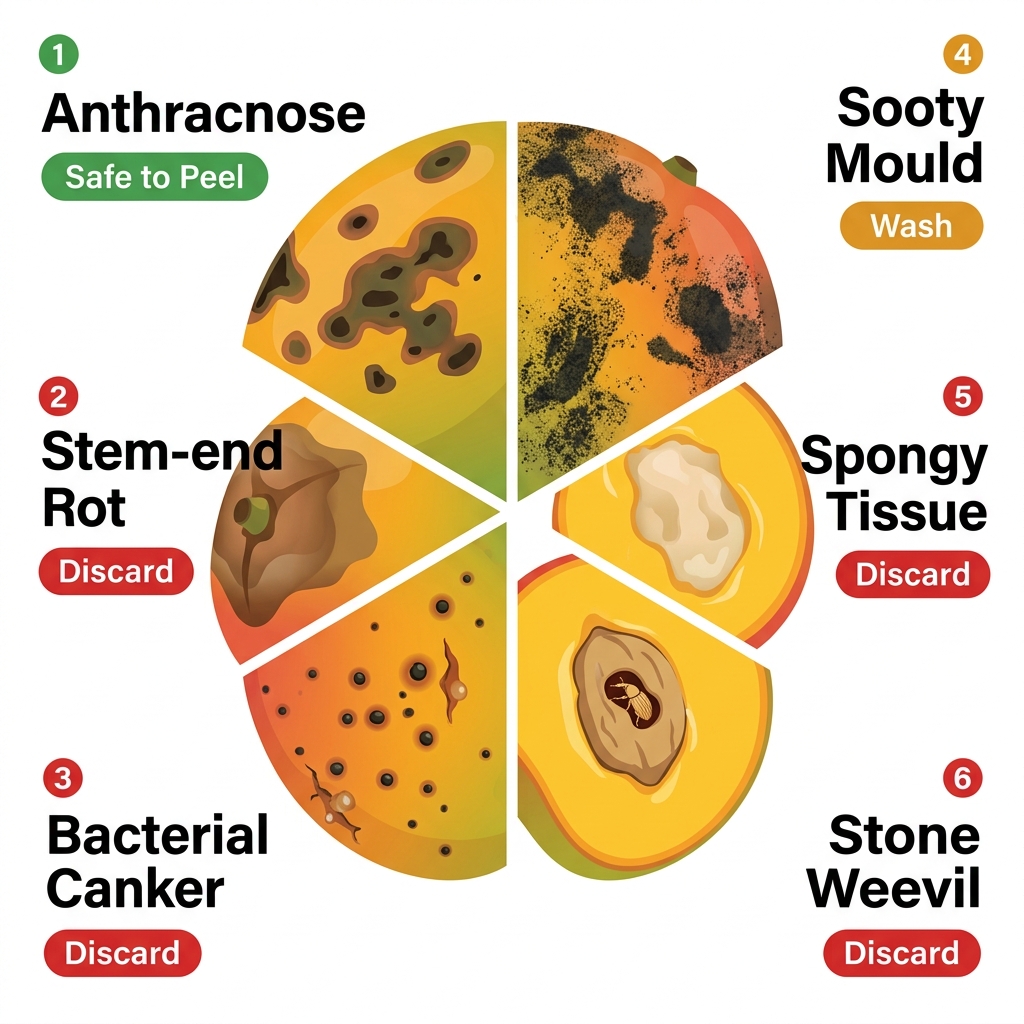
Pro Tip: Surface spots like Anthracnose are often harmless to the fruit inside, while Bacterial Canker or Stem-end Rot usually require discarding the fruit.
Ensure your Himsagar mango is naturally ripened. Use Food Guard to detect Calcium Carbide and other chemical ripeners.