
📚 Regional Mango Names Guide
Did you know that Alphonso is called Badami in Karnataka and Hapus in Maharashtra? Explore our complete state-by-state guide mapping 30+ regional names across India.
Also known as: Vengurla Seedless, DBSKKV Seedless
Typical diseases and disorders affecting this variety:
Detect these early using our Plant Guard AI.
Read our detailed Mango Diseases & Safety Guide.
Sindhu is a world-renowned, nearly 'seedless' premium mango hybrid developed in 1992 at the Regional Fruit Research Station (RFRS) in Vengurla, under the Dr. Balasaheb Sawant Konkan Krishi Vidyapeeth (DBSKKV), Maharashtra. This agricultural breakthrough is a backcross of Ratna (Neelum × Alphonso) with Alphonso. The defining feature of Sindhu is its parthenocarpic nature, resulting in a flat, paper-thin, non-viable seed (stone) that accounts for less than 3% of the total fruit weight — maximizing the amount of edible pulp.
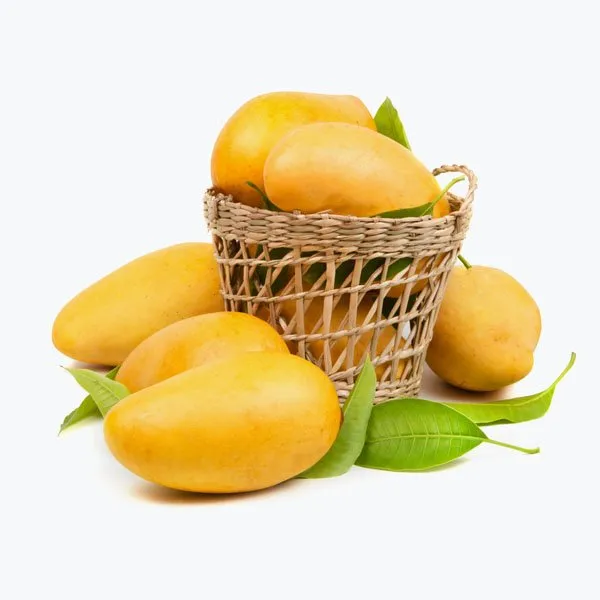
Visually, Sindhu is a medium-sized mango weighing between 220 and 260 grams, with a classic oblong-oval shape and smooth green skin that ripens to a brilliant yellow with a soft crimson blush on the shoulders. The pulp is a deep saffron-orange, melting, and completely fiberless. Because the stone is so thin, Sindhu delivers an extraordinary 83% to 85% pulp recovery, significantly outperforming both of its parents and making it highly efficient for culinary preparation and direct consumption.
Scent and taste profiles are deeply tied to its Alphonso lineage, offering a highly aromatic tropical bouquet with high brix levels of 18–20° Brix and a balanced, low-acid sweetness. Commercial farmers favor Sindhu because it is naturally immune to spongy tissue — a physiological disorder that severely limits Alphonso's export potential — and it exhibits a prolific, regular annual bearing habit rather than the alternate-bearing cycle of Alphonso.
The harvesting season for Sindhu begins in early May and extends through mid-June, with peak availability around late May in the Konkan belt of Maharashtra. Post-harvest shelf life is moderate, lasting 6 to 8 days under ambient conditions. Its extremely thin peel means it requires careful hand-harvesting and soft packaging to prevent skin bruising. To discover other unique varieties, explore the Mango Identifier Hub, or view profiles on Alphonso, Mallika, and Badami.
For comparisons with other regional and specialized cultivars, explore our profiles on Arka Neelkiran and Ambika.
Intensely sweet with rich tropical notes and low acidity
Sweet, rich, highly aromatic Alphonso-like scent
Creamy, melting, entirely fiberless pulp
None
How to tell if it's a genuine Sindhu:
Did you know that Alphonso is called Badami in Karnataka and Hapus in Maharashtra? Explore our complete state-by-state guide mapping 30+ regional names across India.
The development of Sindhu represents one of the most celebrated milestones in modern Indian pomology. Bred at DBSKKV's Vengurla station, researchers aimed to synthesize Alphonso's premier culinary traits with a regular bearing habit and a minimal seed size. The result was a sterile, parthenocarpic hybrid that produces regular crops year after year.
In Maharashtra's Sindhudurg and Ratnagiri districts, Sindhu is highly prized as a premium specialty mango, often carrying a high price in Mumbai and Pune markets. Its high pulp recovery has also attracted the interest of gourmet food processors who package single-origin, premium seedless mango pulp for export markets.
The variety is recommended for high-density planting in the coastal districts of Western India and has shown excellent adaptability in parts of Karnataka and southern Gujarat under dry-subtropical climates.
Quick reference for identifying common healthy vs. problematic conditions:
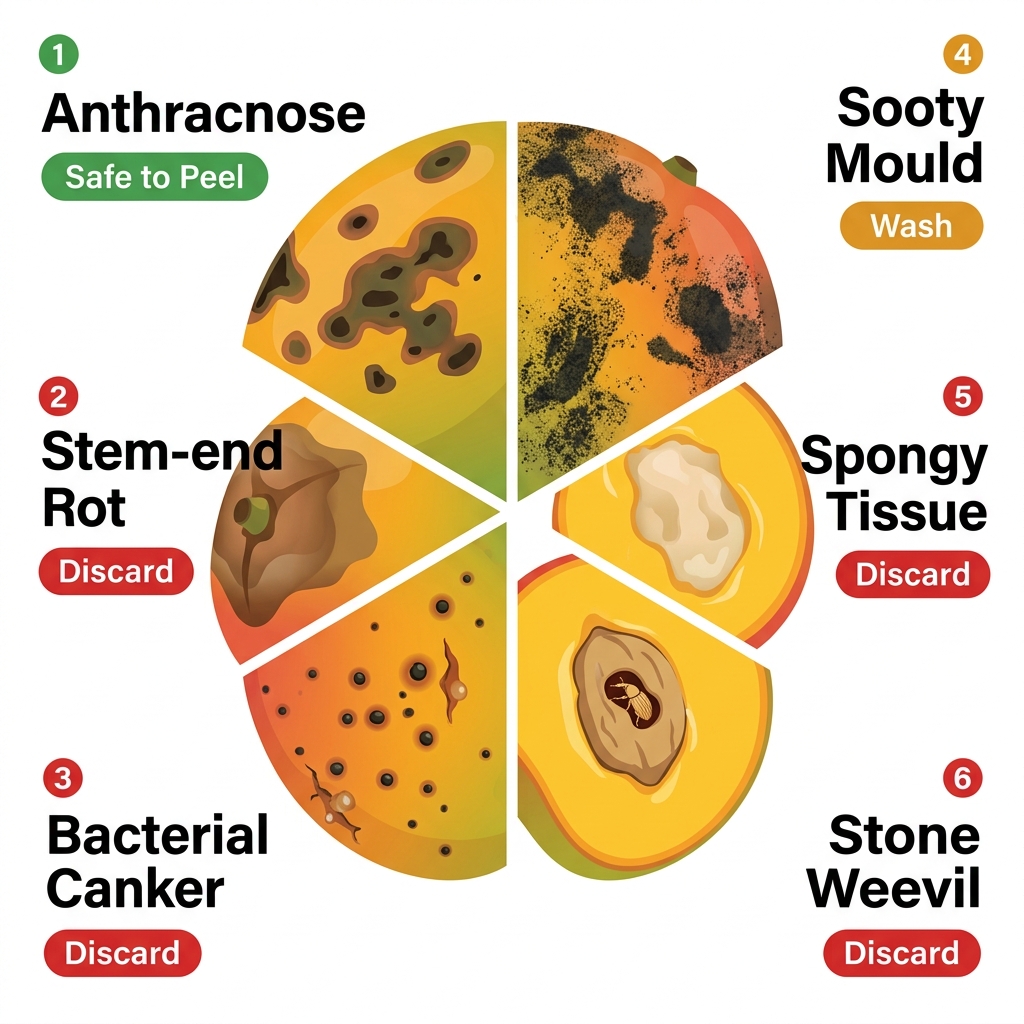
Pro Tip: Surface spots like Anthracnose are often harmless to the fruit inside, while Bacterial Canker or Stem-end Rot usually require discarding the fruit.
Ensure your Sindhu mango is naturally ripened. Use Food Guard to detect Calcium Carbide and other chemical ripeners.