
📚 Regional Mango Names Guide
Did you know that Alphonso is called Badami in Karnataka and Hapus in Maharashtra? Explore our complete state-by-state guide mapping 30+ regional names across India.
Also known as: Hapus, Salem Gundu, Badami, Gundu, Khader, Appas, Kagdi Happus
Typical diseases and disorders affecting this variety:
Detect these early using our Plant Guard AI.
Read our detailed Mango Diseases & Safety Guide.
The Alphonso mango is legally protected under India's Geographical Indications of Goods Act. Genuine Alphonso mangoes must originate from the certified soils of its designated region (e.g., Konkan coast for Alphonso, Saurashtra for Kesar) to carry this designation.
Alphonso (frequently called Hapus, Salem Gundu, or Badami in some regions) is globally celebrated as the 'King of Mangoes'. It is a premium heritage variety that traces its origin back to the Konkan region of Maharashtra, India, and was named after Afonso de Albuquerque, a Portuguese general and military expert who helped establish Portuguese colonies in India.
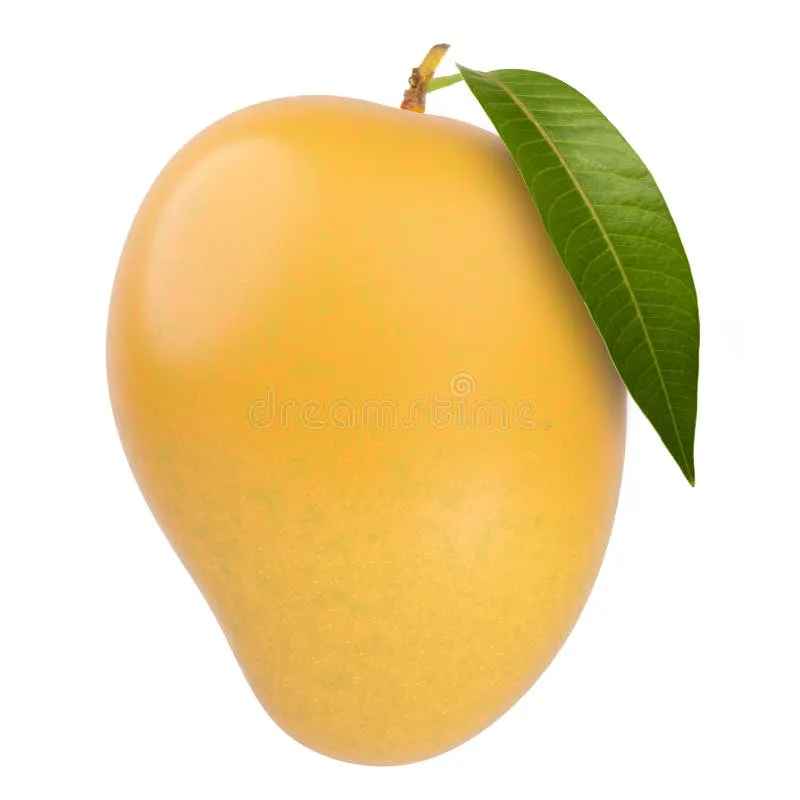
Physically, the Alphonso mango has a distinctive oblong shape with a rounded bottom. It is a medium-sized fruit, typically weighing between 250 and 350 grams. When perfectly ripe, its smooth, non-fibrous skin turns a breathtaking, vibrant golden-orange or saffron-yellow, free of any blush.
The flavor and aroma of Alphonso are unparalleled. It offers a rich, creamy, buttery texture that melts in the mouth, accompanied by an intensely sweet, rich, and highly aromatic perfume-like scent. The total soluble solids (TSS) are high, offering a luxurious sweetness. The pulp is a deep saffron color and completely fiberless (none).
The Alphonso season is early, commencing in April, reaching its peak in May, and tapering off by early June. It thrives in the lateritic soils of the Devgad and Ratnagiri districts in Maharashtra, as well as in Valsad (Gujarat) and parts of Karnataka and Tamil Nadu (Salem).
When comparing it to other varieties, Alphonso is often weighed against Kesar and Badami. While Badami (often called the Alphonso of Karnataka) looks similar, true Alphonso has a much deeper golden-orange hue and a stronger, more intoxicating aroma. Kesar is sweeter but lacks the dense buttery richness of Alphonso. Learn more about identifying authentic mangoes at our Mango Identifier hub.
Post-harvest, Alphonso has a good shelf life, making it highly suitable for export. However, it is uniquely susceptible to 'spongy tissue', a physiological disorder where internal tissue becomes white and spongy, which led to the breeding of spongy tissue-free hybrids like Arka Anmol.
Sweet, rich, non-fibrous
Strong & sweet
Smooth, creamy, buttery
None
How to tell if it's a genuine Alphonso:
Did you know that Alphonso is called Badami in Karnataka and Hapus in Maharashtra? Explore our complete state-by-state guide mapping 30+ regional names across India.
Named after Afonso de Albuquerque, the Portuguese general who introduced grafting techniques to Indian mangoes.
The Devgad and Ratnagiri Alphonso holds a prestigious Geographical Indication (GI) tag, guaranteeing its unique quality tied to the Konkan coast's terroir.
It is the most exported mango from India, highly prized in the Middle East, Europe, and America.
Quick reference for identifying common healthy vs. problematic conditions:
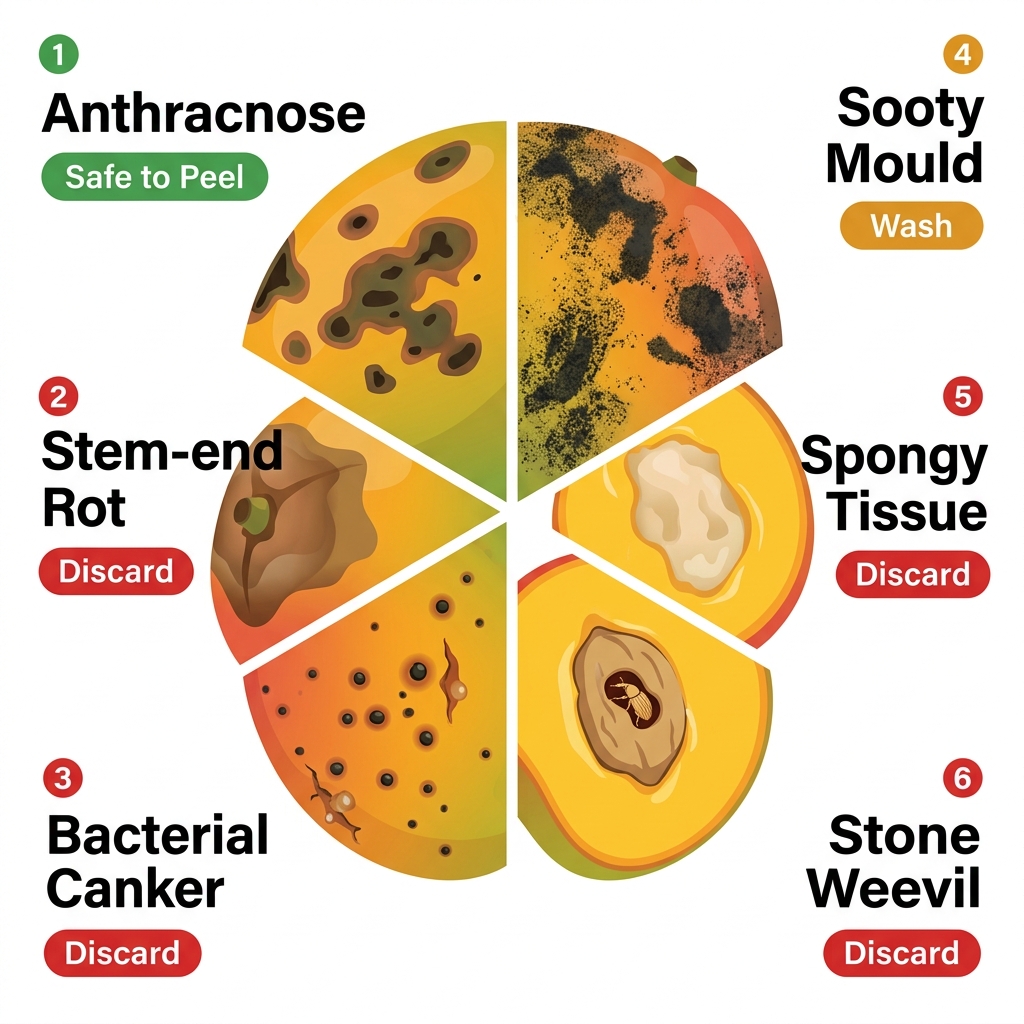
Pro Tip: Surface spots like Anthracnose are often harmless to the fruit inside, while Bacterial Canker or Stem-end Rot usually require discarding the fruit.
Ensure your Alphonso mango is naturally ripened. Use Food Guard to detect Calcium Carbide and other chemical ripeners.