
📚 Regional Mango Names Guide
Did you know that Alphonso is called Badami in Karnataka and Hapus in Maharashtra? Explore our complete state-by-state guide mapping 30+ regional names across India.
Also known as: Cherukku Rasalu, Pedda Rasalu, Chinna Rasalu, Rasam Aam, Sugarcane Sweet Rasalu, Rasbari, Chinnarasamulu
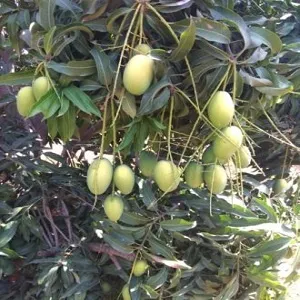
Typical diseases and disorders affecting this variety:
Detect these early using our Plant Guard AI.
Read our detailed Mango Diseases & Safety Guide.
Rasalu (also known as Cherukurasalu or Peddarasalu) is a group of premium and highly popular 'juicy' mango varieties native to the state of Andhra Pradesh, India. It is a cultural icon of the Andhra summer, cherished for its extraordinary sweetness, liquid-like pulp, and its role as the ultimate variety for making fresh mango juice and pulp.
Physically, Rasalu mangoes vary in size. The 'Cherukurasalu' is medium-sized (250-350g) and resembles a sugarcane (Cheruku) in its intense sweetness, while 'Peddarasalu' is much larger (500g+). They generally have an oval-oblong shape with a thin skin that ripens to a beautiful, uniform golden-yellow color.
The flavor profile is legendary—it is intensely sweet with a refreshing, honey-like syrupy consistency and a powerful, sweet tropical aroma. The pulp is deep orange-yellow and exceptionally juicy, often feeling like liquid gold inside the skin. It contains a minimal amount of soft fiber that helps hold the juice.
The Rasalu season is early-to-mid, typically starting in April and peaking in May. It is cultivated extensively across Andhra Pradesh, particularly in the Krishna, West Godavari, and Guntur districts. Its arrival signals the peak of the mango season in the Telugu-speaking regions.
When comparing it to Banganapalli or Suvarnarekha, Rasalu is prized for its juiciness. While Banganapalli is the commercial king for slicing, Rasalu is the undisputed king for juicing. Discover more juicy varieties at our Mango Identifier hub.
Post-harvest, Rasalu is a delicate fruit with a shelf life of 4-6 days. Its high juice content and thin skin mean it requires extremely careful handling and is usually transported in specialized crates. It is primarily used for fresh table consumption (sucking), making premium mango shakes, and for the traditional 'Aamras' of Andhra Pradesh.
Intensely sweet (sugarcane sweet)
Strong, sweet, nectar-like
Very juicy, soft, melting
Minimal
How to tell if it's a genuine Rasalu:
Did you know that Alphonso is called Badami in Karnataka and Hapus in Maharashtra? Explore our complete state-by-state guide mapping 30+ regional names across India.
A traditional heritage variety of Andhra Pradesh, deeply integrated into the local language and culinary culture.
Named 'Cherukurasalu' because of its intense sweetness, which is often compared to high-quality sugarcane juice.
A staple of the summer heat in the Deccan, providing a natural and refreshing source of hydration and sugar.
Quick reference for identifying common healthy vs. problematic conditions:
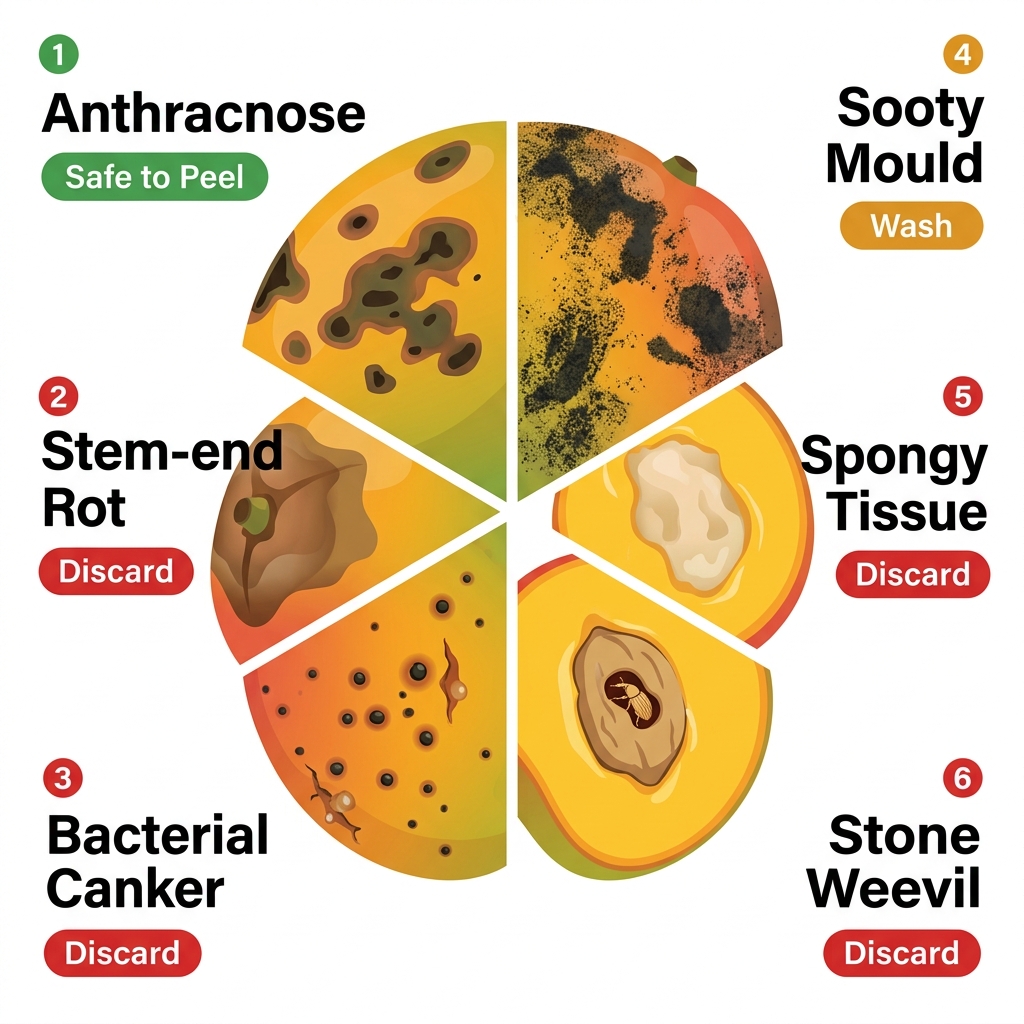
Pro Tip: Surface spots like Anthracnose are often harmless to the fruit inside, while Bacterial Canker or Stem-end Rot usually require discarding the fruit.
Ensure your Rasalu mango is naturally ripened. Use Food Guard to detect Calcium Carbide and other chemical ripeners.